Department of Pediatric Oncology, Dana-Farber Cancer Institute, 450 Brookline Avenue, Boston, Massachusetts 02115, USA.
Nature. 2012 Jan 18;482(7383):53-8. doi: 10.1038/nature10802.
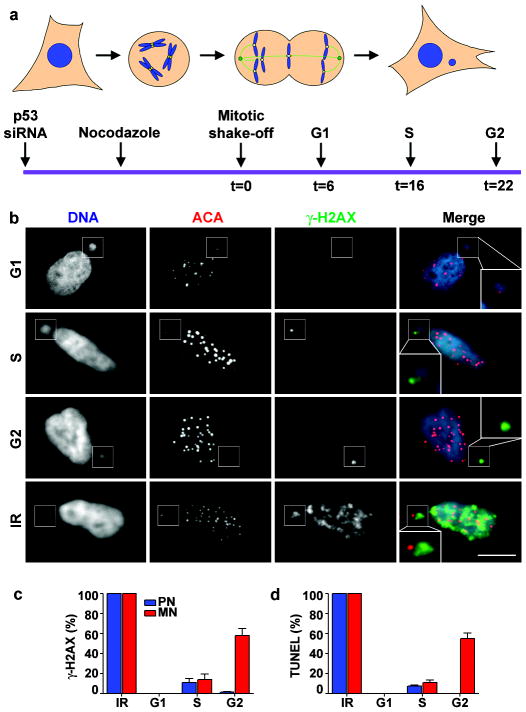
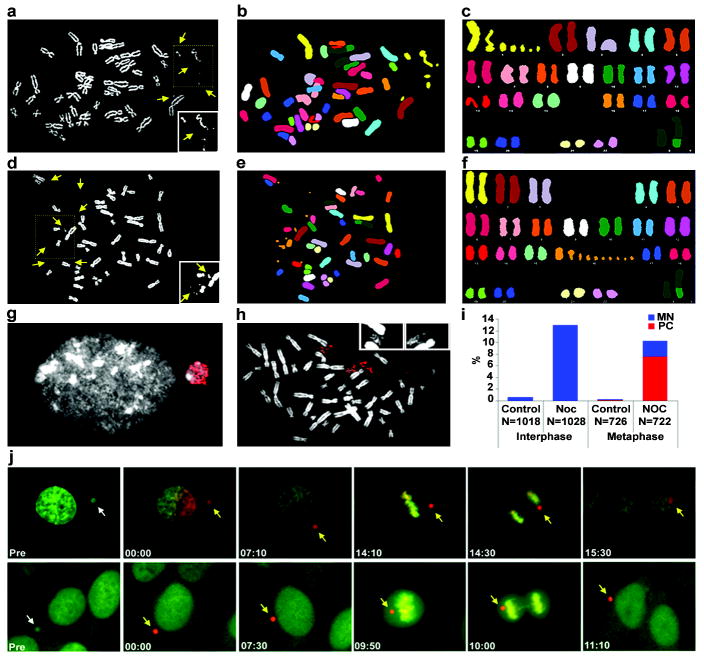
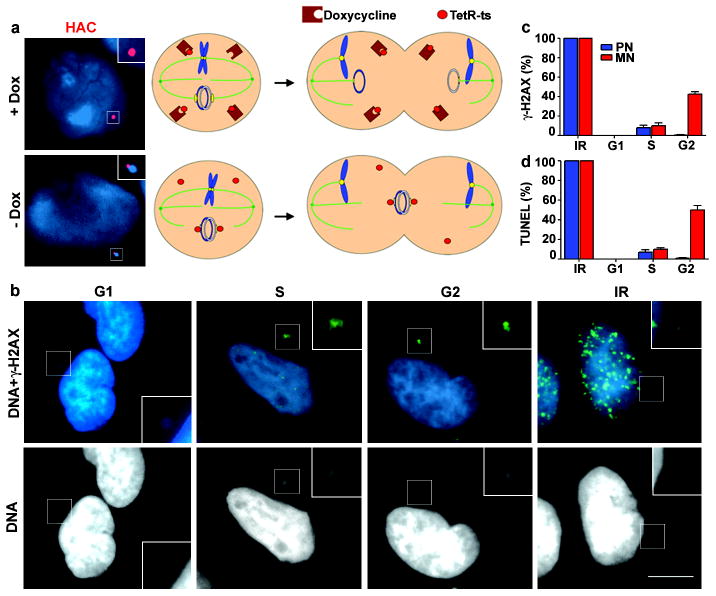
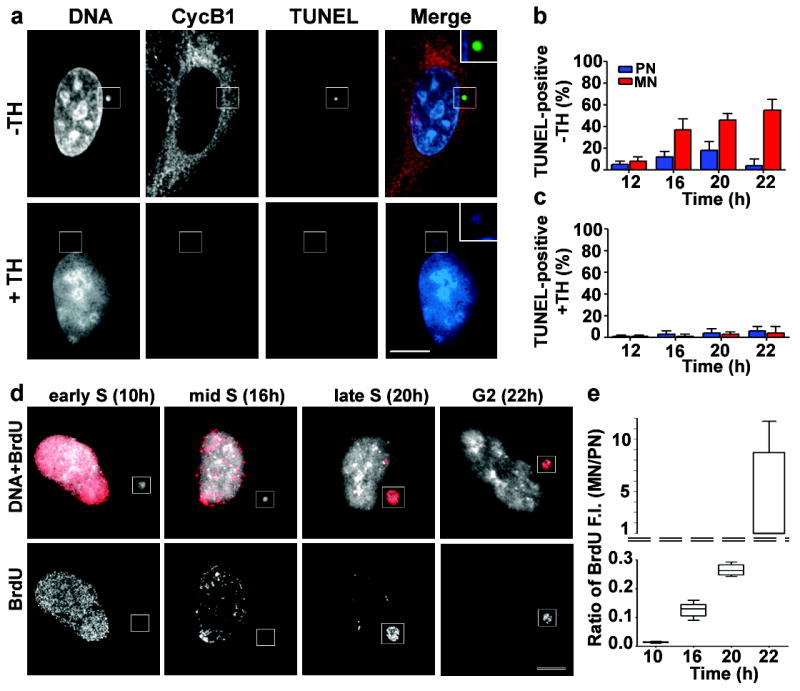
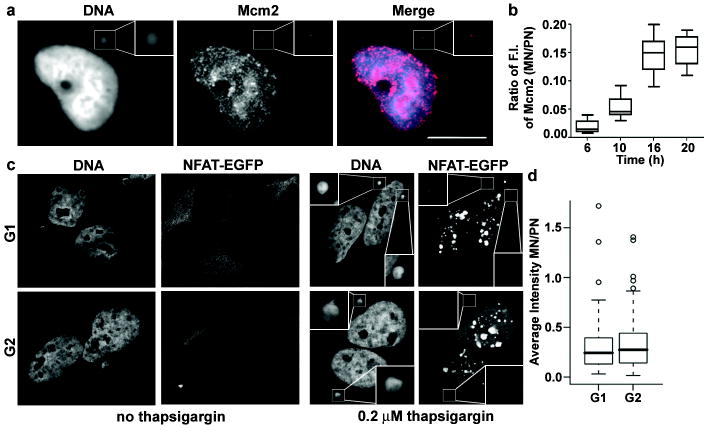
The involvement of whole-chromosome aneuploidy in tumorigenesis is the subject of debate, in large part because of the lack of insight into underlying mechanisms. Here we identify a mechanism by which errors in mitotic chromosome segregation generate DNA breaks via the formation of structures called micronuclei. Whole-chromosome-containing micronuclei form when mitotic errors produce lagging chromosomes. We tracked the fate of newly generated micronuclei and found that they undergo defective and asynchronous DNA replication, resulting in DNA damage and often extensive fragmentation of the chromosome in the micronucleus. Micronuclei can persist in cells over several generations but the chromosome in the micronucleus can also be distributed to daughter nuclei. Thus, chromosome segregation errors potentially lead to mutations and chromosome rearrangements that can integrate into the genome. Pulverization of chromosomes in micronuclei may also be one explanation for 'chromothripsis' in cancer and developmental disorders, where isolated chromosomes or chromosome arms undergo massive local DNA breakage and rearrangement.
全染色体非整倍体在肿瘤发生中的作用一直存在争议,主要是因为人们对其潜在机制缺乏了解。在这里,我们发现了一种机制,即有丝分裂染色体分离错误通过形成称为微核的结构产生 DNA 断裂。当有丝分裂错误产生滞后染色体时,就会形成包含整条染色体的微核。我们追踪了新形成的微核的命运,发现它们经历了有缺陷和不同步的 DNA 复制,导致 DNA 损伤,并且微核中的染色体经常发生广泛的碎片化。微核可以在细胞中存在几代,但微核中的染色体也可以分配到子核中。因此,染色体分离错误可能导致突变和染色体重排,这些突变和染色体重排可以整合到基因组中。微核中染色体的粉碎也可能是癌症和发育障碍中“染色体碎裂”的一个解释,在这种情况下,孤立的染色体或染色体臂会经历大规模的局部 DNA 断裂和重排。