Johnston A, Guzman A M, Swindell W R, Wang F, Kang S, Gudjonsson J E
Department of Dermatology, University of Michigan, Ann Arbor, MI, 48109, U.S.A.
Br J Dermatol. 2014 Jul;171(1):97-107. doi: 10.1111/bjd.12937. Epub 2014 Jun 24.
Antitumour necrosis factor (anti-TNF)-α therapy has made a significant impact on the treatment of psoriasis. Despite these agents being designed to neutralize TNF-α activity, their mechanism of action in the resolution of psoriasis remains unclear.
To understand better the mechanism of action of etanercept by examining very early changes in the lesional skin of patients with psoriasis responding to etanercept.
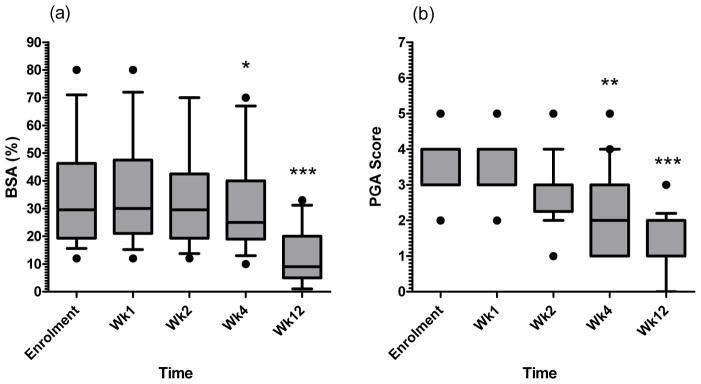
Twenty patients with chronic plaque psoriasis were enrolled and received etanercept 50 mg twice weekly. Skin biopsies were obtained before treatment and on days 1, 3, 7 and 14 post-treatment. Skin mRNA expression was analysed by quantitative reverse-transcription polymerase chain reaction and microarray; cytokine and phosphoprotein levels were assessed using multiplexed bead arrays.
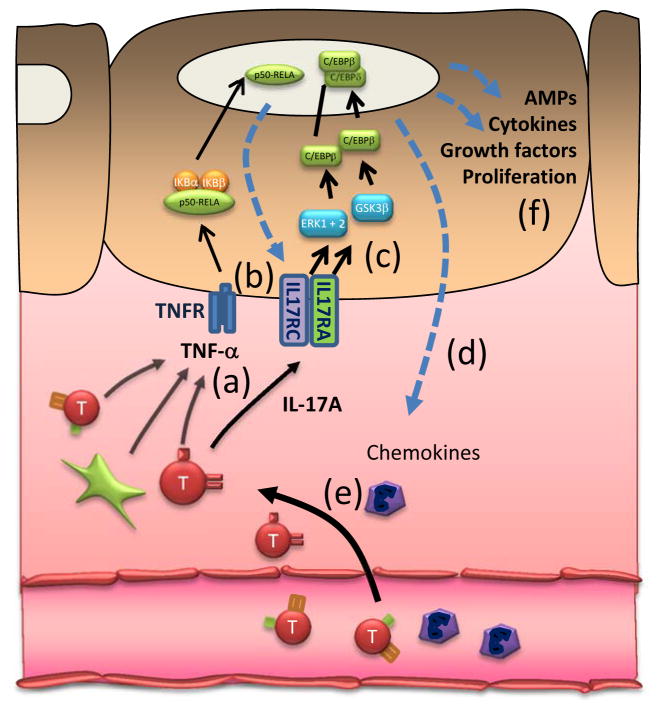
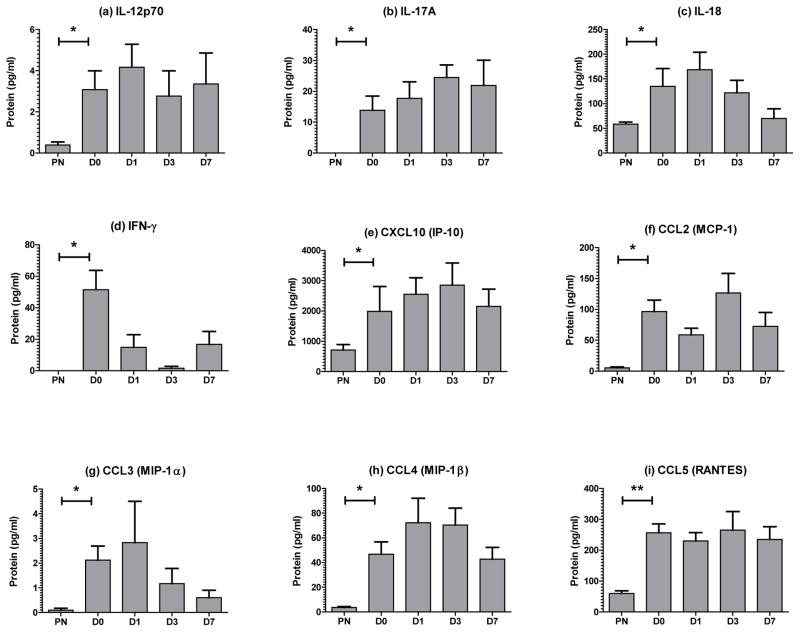
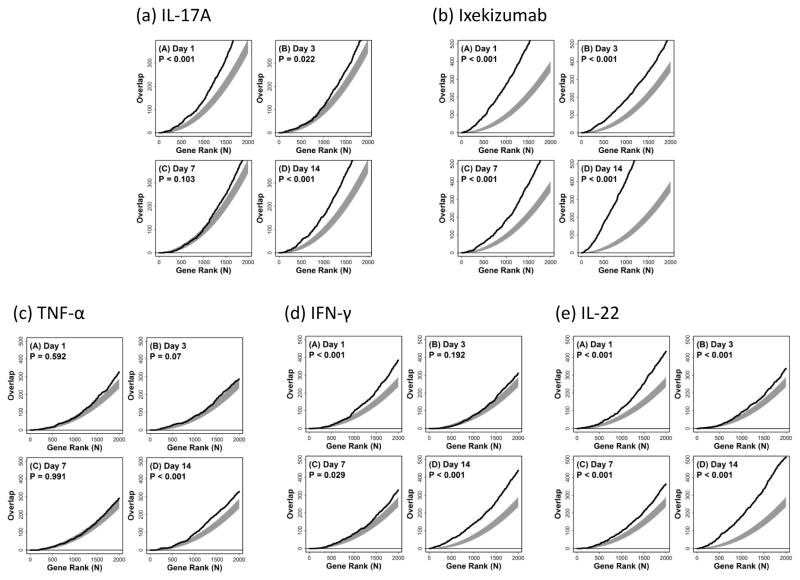
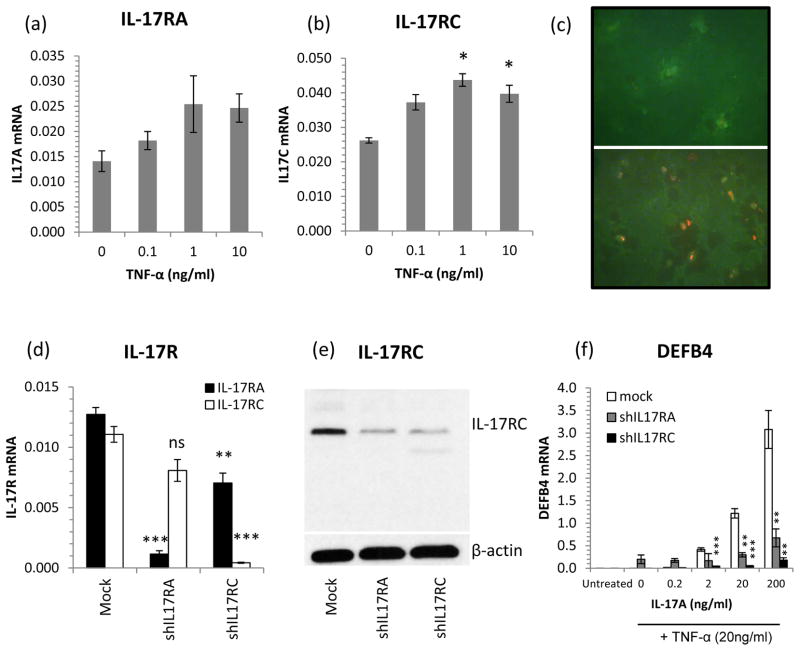
In etanercept responders, we observed no significant changes in interleukin (IL)-17A, IL-22 or interferon-γ mRNA or protein in the first week of treatment; however, there was a 2·5-fold downregulation of IL-17 receptor C (IL-17RC) mRNA (P < 0·05) after day 1, accompanied by decreased extracellular signal-regulated kinase-1/2 phosphorylation. Transcriptional analysis revealed that genes suppressed by etanercept significantly overlapped with IL-17A-induced genes, and a marked overlap was also observed between the genes suppressed by etanercept and by the anti-IL-17A agent ixekizumab. Finally we show that TNF-α enhances the expression of IL-17RC, and short hairpin RNA inhibition of IL-17R expression abrogates synergistic gene induction by TNF and IL-17A.
These results suggest that the early responses of psoriasis plaques to etanercept may be due to decreased tissue responsiveness to IL-17A due to suppressed IL-17RC expression in keratinocytes, blunting the strong synergy between TNF-α and IL-17, which contributes to the maintenance of psoriasis lesions.
抗肿瘤坏死因子(抗TNF)-α疗法对银屑病的治疗产生了重大影响。尽管这些药物旨在中和TNF-α活性,但其在银屑病消退中的作用机制仍不清楚。
通过研究银屑病患者皮损对依那西普治疗的早期变化,更好地了解依那西普的作用机制。
招募20例慢性斑块状银屑病患者,每周两次接受50mg依那西普治疗。在治疗前以及治疗后第1、3、7和14天进行皮肤活检。通过定量逆转录聚合酶链反应和微阵列分析皮肤mRNA表达;使用多重微珠阵列评估细胞因子和磷酸化蛋白水平。
在依那西普治疗有效的患者中,我们观察到治疗第一周白细胞介素(IL)-17A、IL-22或干扰素-γ的mRNA或蛋白无显著变化;然而,第1天后IL-17受体C(IL-17RC)mRNA下调了2.5倍(P<0.05),同时细胞外信号调节激酶-1/2磷酸化减少。转录分析显示,依那西普抑制的基因与IL-17A诱导的基因有显著重叠,依那西普和抗IL-17A药物司库奇尤单抗抑制的基因之间也观察到明显重叠。最后我们发现,TNF-α可增强IL-17RC的表达,短发夹RNA抑制IL-17R表达可消除TNF和IL-17A的协同基因诱导作用。
这些结果表明,银屑病斑块对依那西普的早期反应可能是由于角质形成细胞中IL-17RC表达受抑制,导致组织对IL-17A的反应性降低,削弱了TNF-α和IL-17之间的强协同作用,而这种协同作用有助于维持银屑病皮损。