Kim S Y, Shim M S, Kim K-Y, Weinreb R N, Wheeler L A, Ju W-K
Laboratory for Optic Nerve Biology, Department of Ophthalmology, Hamilton Glaucoma Center, University of California San Diego, La Jolla, CA, USA.
Center for Research on Biological Systems, National Center for Microscopy and Imaging Research and Department of Neuroscience, University of California San Diego, La Jolla, CA, USA.
Cell Death Dis. 2014 Mar 6;5(3):e1105. doi: 10.1038/cddis.2014.80.
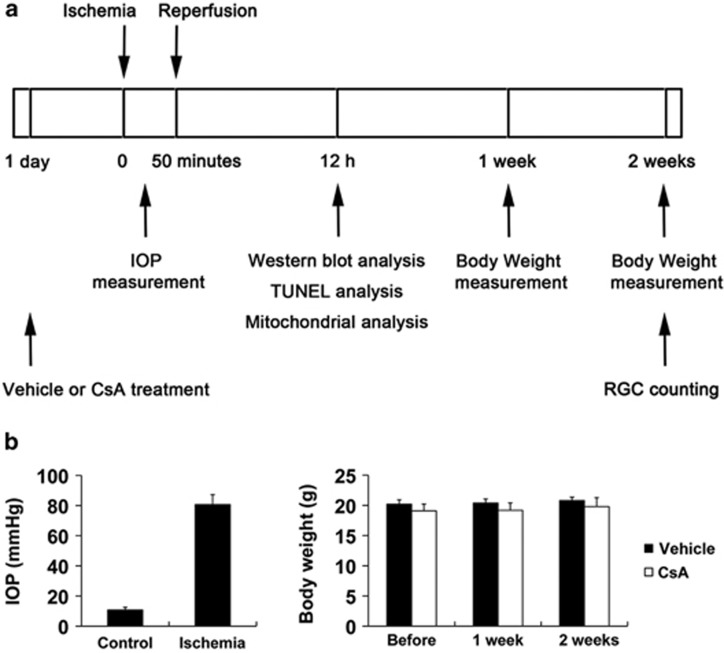
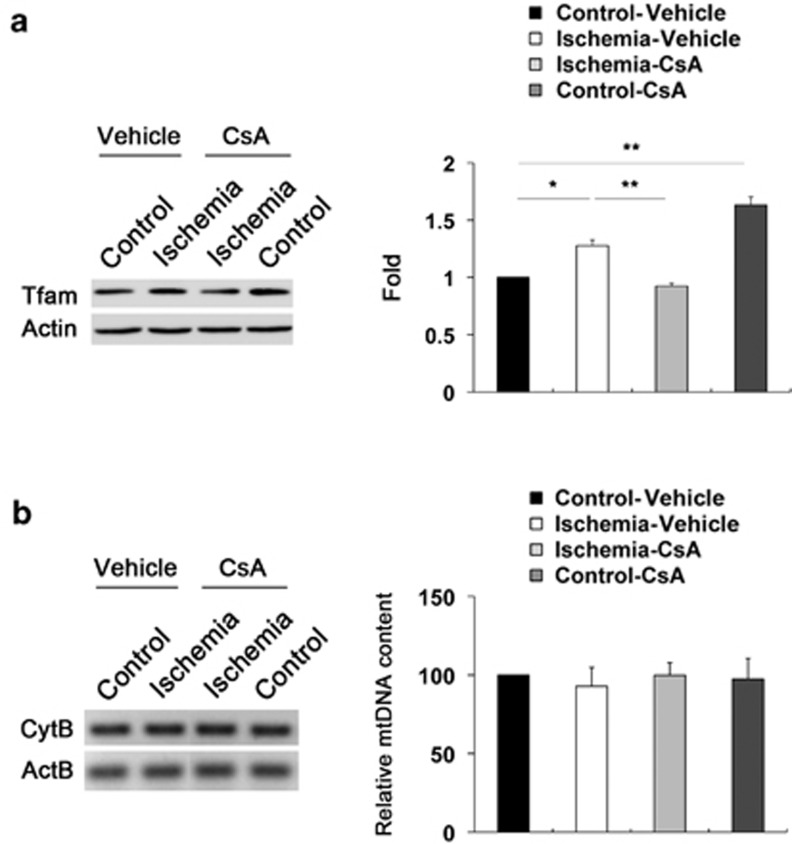
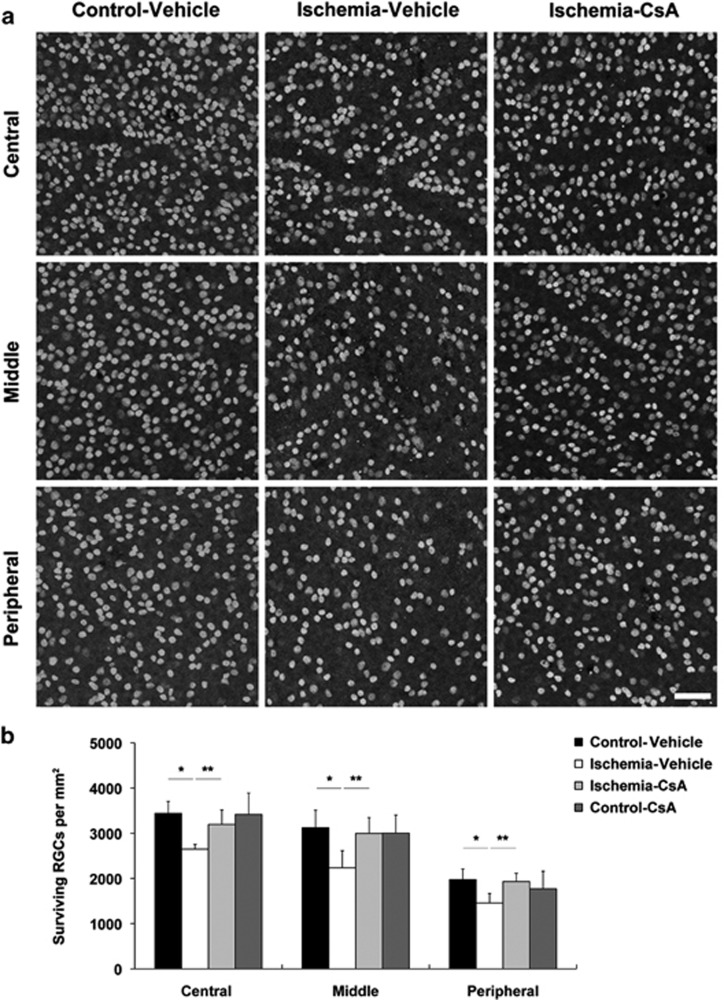
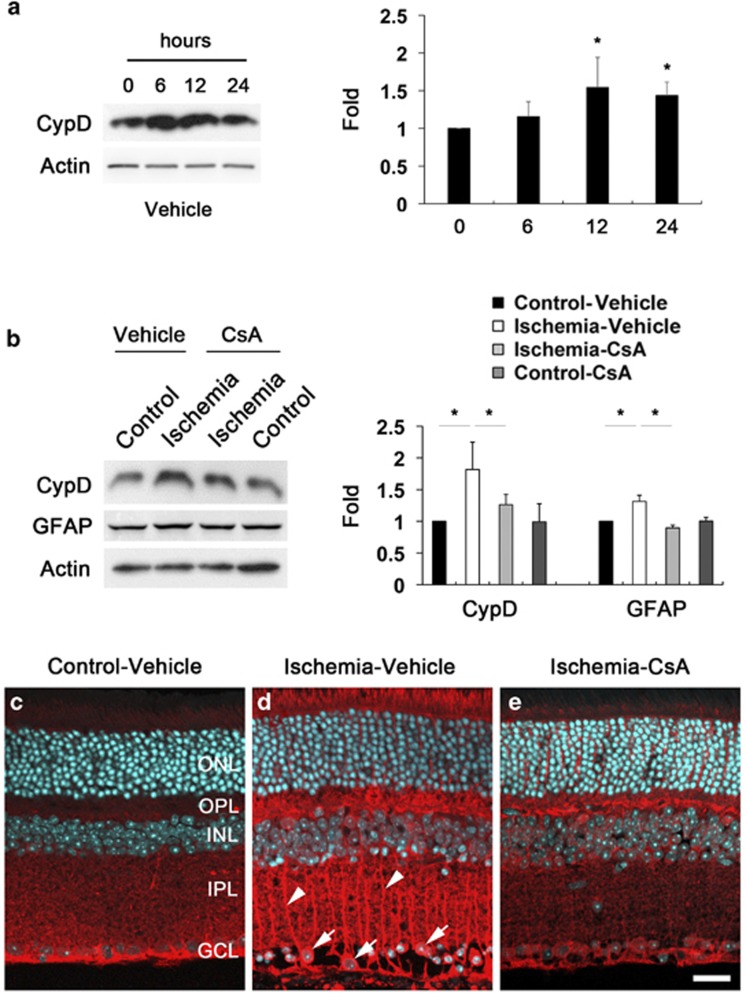
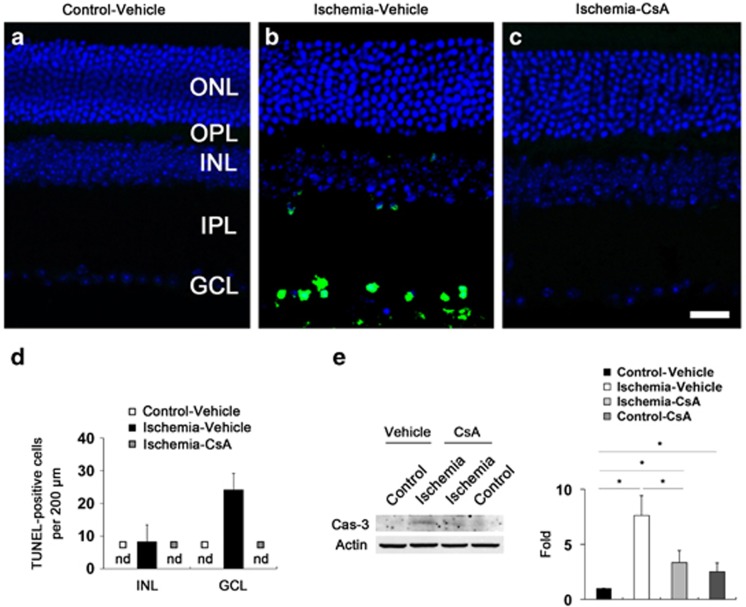
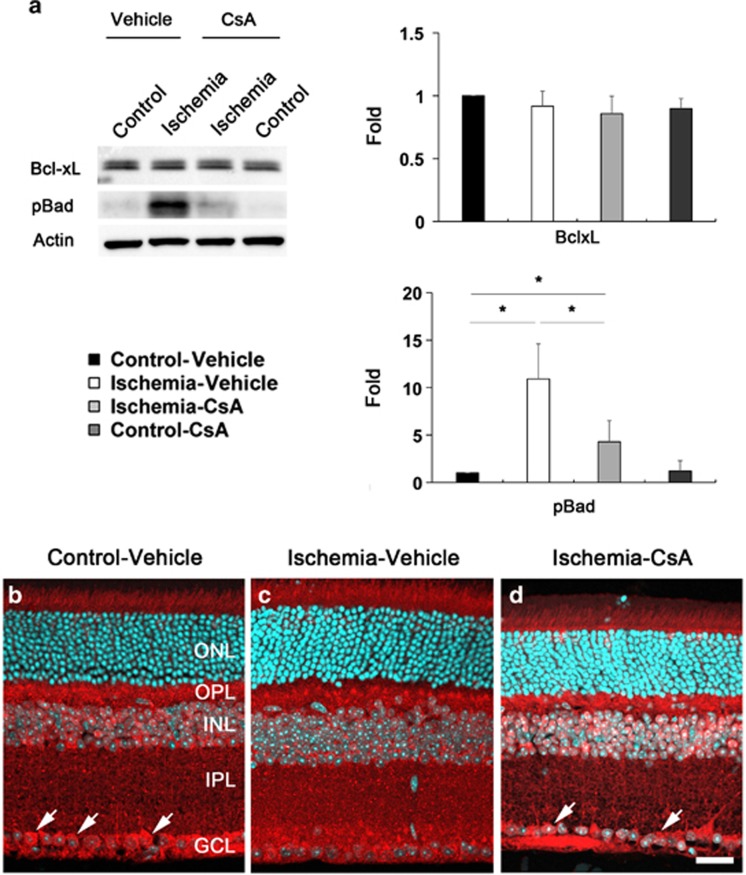
Cyclosporin A (CsA) inhibits the opening of the mitochondrial permeability transition pore (MPTP) by interacting with cyclophilin D (CypD) and ameliorates neuronal cell death in the central nervous system against ischemic injury. However, the molecular mechanisms underlying CypD/MPTP opening-mediated cell death in ischemic retinal injury induced by acute intraocular pressure (IOP) elevation remain unknown. We observed the first direct evidence that acute IOP elevation significantly upregulated CypD protein expression in ischemic retina at 12 h. However, CsA prevented the upregulation of CypD protein expression and promoted retinal ganglion cell (RGC) survival against ischemic injury. Moreover, CsA blocked apoptotic cell death by decreasing cleaved caspase-3 protein expression in ischemic retina. Of interest, although the expression level of Bcl-xL protein did not show a significant change in ischemic retina treated with vehicle or CsA at 12 h, ischemic damage induced the reduction of Bcl-xL immunoreactivity in RGCs. More importantly, CsA preserved Bcl-xL immunoreactivity in RGCs of ischemic retina. In parallel, acute IOP elevation significantly increased phosphorylated Bad (pBad) at Ser112 protein expression in ischemic retina at 12 h. However, CsA significantly preserved pBad protein expression in ischemic retina. Finally, acute IOP elevation significantly increased mitochondrial transcription factor A (Tfam) protein expression in ischemic retina at 12 h. However, CsA significantly preserved Tfam protein expression in ischemic retina. Studies on mitochondrial DNA (mtDNA) content in ischemic retina showed that there were no statistically significant differences in mtDNA content among control and ischemic groups treated with vehicle or CsA. Therefore, these results provide evidence that the activation of CypD-mediated MPTP opening is associated with the apoptotic pathway and the mitochondrial alteration in RGC death of ischemic retinal injury. On the basis of these observations, our findings suggest that CsA-mediated CypD inhibition may provide a promising therapeutic potential for protecting RGCs against ischemic injury-mediated mitochondrial dysfunction.
环孢素A(CsA)通过与亲环蛋白D(CypD)相互作用抑制线粒体通透性转换孔(MPTP)的开放,并改善中枢神经系统中神经元细胞因缺血性损伤而发生的死亡。然而,由急性眼内压(IOP)升高引起的缺血性视网膜损伤中,CypD/MPTP开放介导的细胞死亡的分子机制仍不清楚。我们观察到首个直接证据,即急性IOP升高在12小时时显著上调了缺血视网膜中CypD蛋白的表达。然而,CsA可防止CypD蛋白表达上调,并促进视网膜神经节细胞(RGC)在缺血性损伤中存活。此外,CsA通过降低缺血视网膜中裂解的半胱天冬酶-3蛋白的表达来阻止凋亡细胞死亡。有趣的是,尽管在12小时时用载体或CsA处理的缺血视网膜中Bcl-xL蛋白的表达水平没有显著变化,但缺血损伤导致RGC中Bcl-xL免疫反应性降低。更重要的是,CsA保留了缺血视网膜RGC中的Bcl-xL免疫反应性。同时,急性IOP升高在12小时时显著增加了缺血视网膜中Ser112位点磷酸化Bad(pBad)蛋白的表达。然而,CsA显著保留了缺血视网膜中pBad蛋白的表达。最后,急性IOP升高在12小时时显著增加了缺血视网膜中线粒体转录因子A(Tfam)蛋白的表达。然而,CsA显著保留了缺血视网膜中Tfam蛋白的表达。对缺血视网膜中线粒体DNA(mtDNA)含量的研究表明,对照组以及用载体或CsA处理的缺血组之间的mtDNA含量没有统计学上的显著差异。因此,这些结果提供了证据,表明CypD介导的MPTP开放的激活与缺血性视网膜损伤中RGC死亡的凋亡途径和线粒体改变有关。基于这些观察结果,我们的研究结果表明,CsA介导的CypD抑制可能为保护RGC免受缺血性损伤介导的线粒体功能障碍提供有前景的治疗潜力。