Amato Eliana, Molin Marco Dal, Mafficini Andrea, Yu Jun, Malleo Giuseppe, Rusev Borislav, Fassan Matteo, Antonello Davide, Sadakari Yoshihiko, Castelli Paola, Zamboni Giuseppe, Maitra Anirban, Salvia Roberto, Hruban Ralph H, Bassi Claudio, Capelli Paola, Lawlor Rita T, Goggins Michael, Scarpa Aldo
ARC-Net Research Centre and Department of Pathology and Diagnostics, University and Hospital Trust of Verona, Italy.
J Pathol. 2014 Jul;233(3):217-27. doi: 10.1002/path.4344.
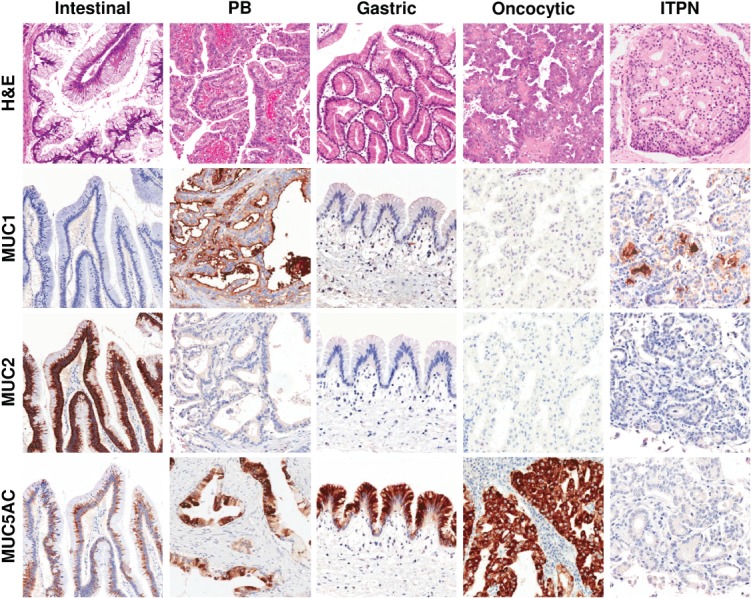
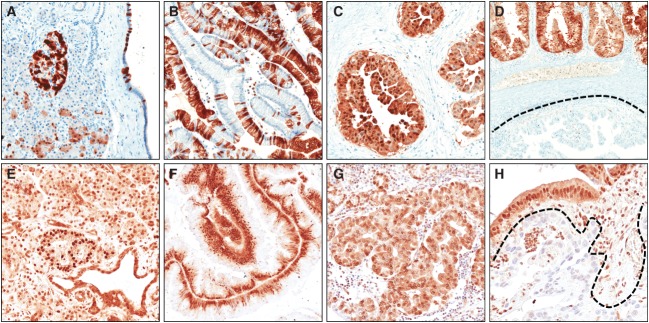
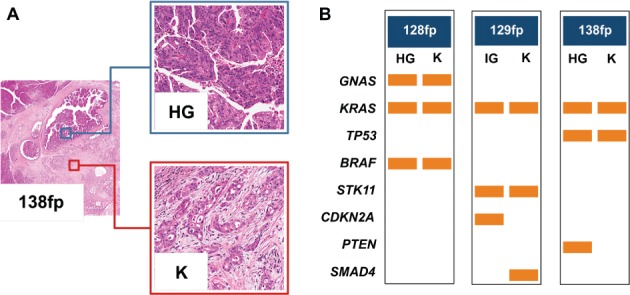
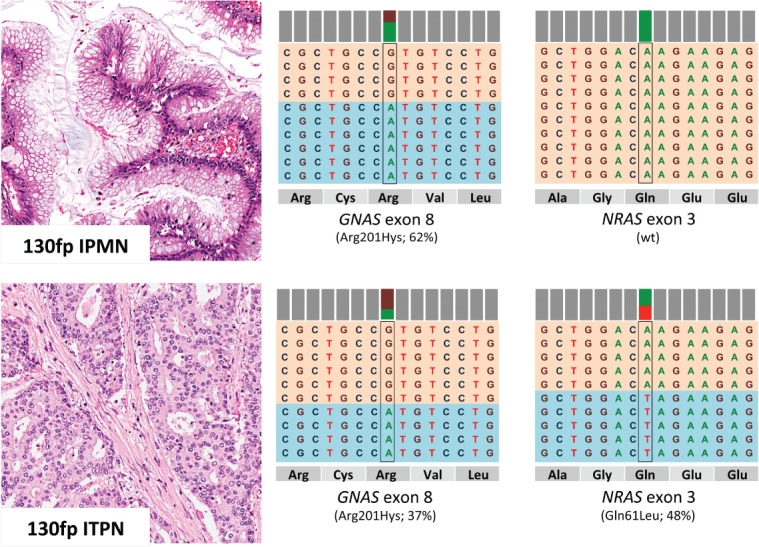
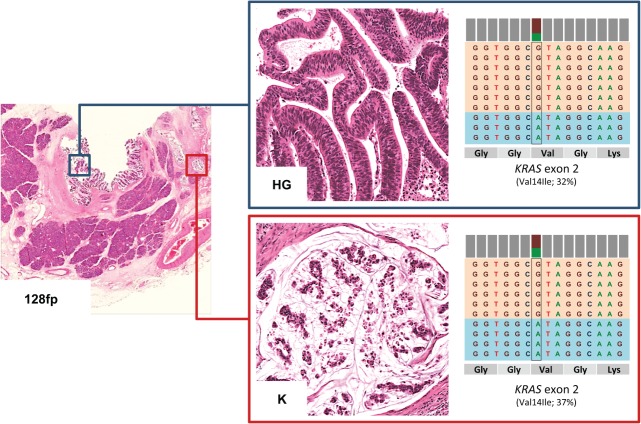
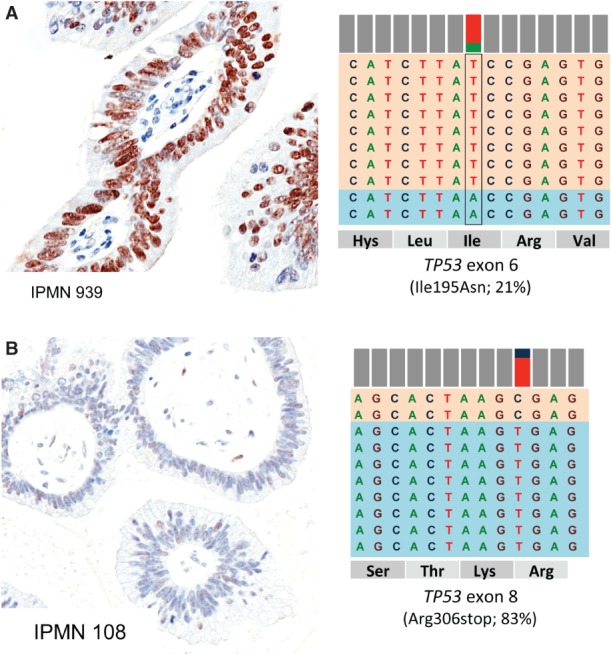
Intraductal neoplasms are important precursors to invasive pancreatic cancer and provide an opportunity to detect and treat pancreatic neoplasia before an invasive carcinoma develops. The diagnostic evaluation of these lesions is challenging, as diagnostic imaging and cytological sampling do not provide accurate information on lesion classification, the grade of dysplasia or the presence of invasion. Moreover, the molecular driver gene mutations of these precursor lesions have yet to be fully characterized. Fifty-two intraductal papillary neoplasms, including 48 intraductal papillary mucinous neoplasms (IPMNs) and four intraductal tubulopapillary neoplasms (ITPNs), were subjected to the mutation assessment in 51 cancer-associated genes, using ion torrent semiconductor-based next-generation sequencing. P16 and Smad4 immunohistochemistry was performed on 34 IPMNs and 17 IPMN-associated carcinomas. At least one somatic mutation was observed in 46/48 (96%) IPMNs; 29 (60%) had multiple gene alterations. GNAS and/or KRAS mutations were found in 44/48 (92%) of IPMNs. GNAS was mutated in 38/48 (79%) IPMNs, KRAS in 24/48 (50%) and these mutations coexisted in 18/48 (37.5%) of IPMNs. RNF43 was the third most commonly mutated gene and was always associated with GNAS and/or KRAS mutations, as were virtually all the low-frequency mutations found in other genes. Mutations in TP53 and BRAF genes (10% and 6%) were only observed in high-grade IPMNs. P16 was lost in 7/34 IPMNs and 9/17 IPMN-associated carcinomas; Smad4 was lost in 1/34 IPMNs and 5/17 IPMN-associated carcinomas. In contrast to IPMNs, only one of four ITPNs had detectable driver gene (GNAS and NRAS) mutations. Deep sequencing DNA from seven cyst fluid aspirates identified 10 of the 13 mutations detected in their associated IPMN. Using next-generation sequencing to detect cyst fluid mutations has the potential to improve the diagnostic and prognostic stratification of pancreatic cystic neoplasms.
导管内肿瘤是浸润性胰腺癌的重要前体,为在浸润性癌发生之前检测和治疗胰腺肿瘤提供了机会。这些病变的诊断评估具有挑战性,因为诊断成像和细胞学采样无法提供关于病变分类、发育异常程度或浸润情况的准确信息。此外,这些前体病变的分子驱动基因突变尚未完全明确。使用基于离子激流半导体的下一代测序技术,对52例导管内乳头状肿瘤进行了51个癌症相关基因的突变评估,其中包括48例导管内乳头状黏液性肿瘤(IPMN)和4例导管内管状乳头状肿瘤(ITPN)。对34例IPMN和17例IPMN相关癌进行了P16和Smad4免疫组化检测。在46/48(96%)的IPMN中观察到至少一个体细胞突变;29例(60%)有多个基因改变。在44/48(92%)的IPMN中发现了GNAS和/或KRAS突变。38/48(79%)的IPMN中GNAS发生突变,24/48(50%)的IPMN中KRAS发生突变,18/48(37.5%)的IPMN中这两种突变共存。RNF43是第三常见的突变基因,并且总是与GNAS和/或KRAS突变相关,其他基因中几乎所有低频突变也是如此。TP53和BRAF基因的突变(分别为10%和6%)仅在高级别IPMN中观察到。7/34的IPMN和9/17的IPMN相关癌中P16缺失;1/34的IPMN和5/17的IPMN相关癌中Smad4缺失。与IPMN不同,4例ITPN中只有1例有可检测到的驱动基因(GNAS和NRAS)突变。对7例囊液抽吸物的DNA进行深度测序,在其相关的IPMN中检测到的13个突变中发现了10个。使用下一代测序检测囊液突变有可能改善胰腺囊性肿瘤的诊断和预后分层。