Department of Obstetrics & Gynecology, University of Southern California, Keck School of Medicine, Los Angeles, CA 90033, USA; Norris Comprehensive Cancer Center, University of Southern California, Los Angeles, CA 90033, USA.
Department of Molecular Microbiology & Immunology, University of Southern California, Keck School of Medicine, Los Angeles, CA 90033, USA.
Virology. 2014 Mar;452-453:279-86. doi: 10.1016/j.virol.2014.01.031. Epub 2014 Feb 17.
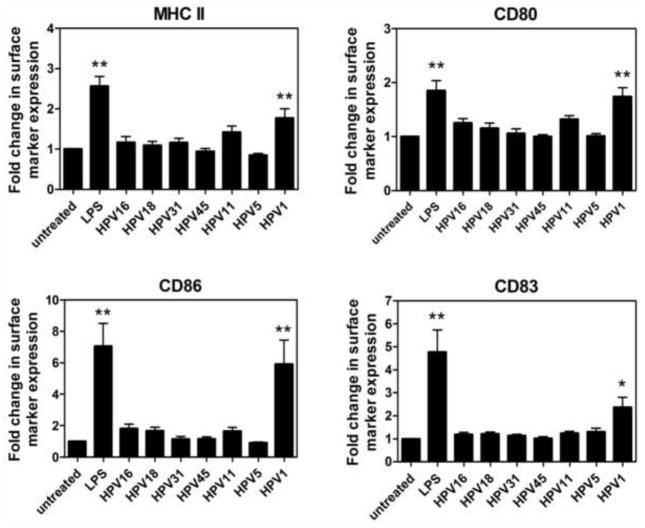
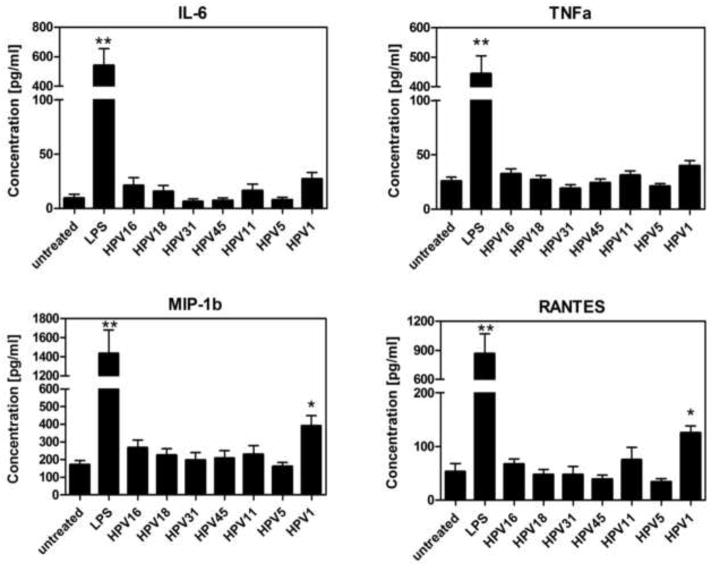
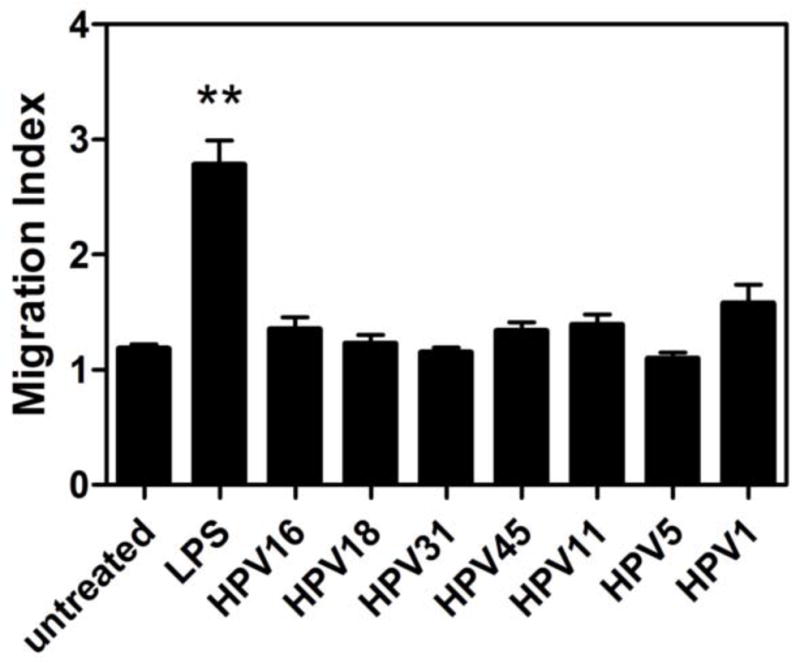
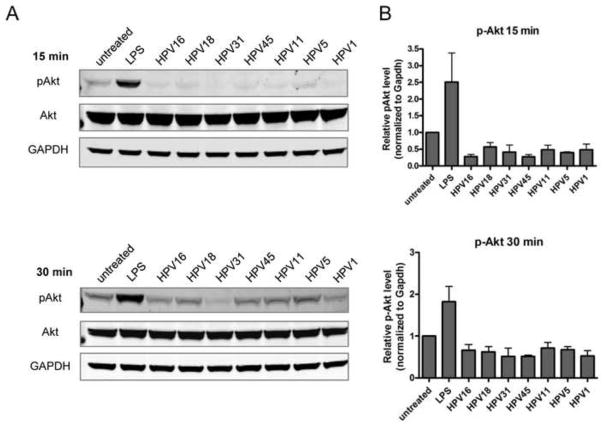
Human papillomavirus (HPV) has evolved mechanisms that allow it to evade the human immune system. Studies have shown HPV-mediated suppression of activation of Langerhans cells (LC) is a key mechanism through which HPV16 evades initial immune surveillance. However, it has not been established whether high- and low-risk mucosal and cutaneous HPV genotypes share a common mechanism of immune suppression. Here, we demonstrate that LC exposed to capsids of HPV types 18, 31, 45, 11, (alpha-papillomaviruses) and HPV5 (beta-papillomavirus) similarly suppress LC activation, including lack of costimulatory molecule expression, lack of cytokine and chemokine secretion, lack of migration, and deregulated cellular signaling. In contrast, HPV1 (mu-papillomavirus) induced costimulatory molecule and cytokine upregulation, but LC migration and cellular signaling was suppressed. These results suggest that alpha and beta HPV genotypes, and partially a mu genotype, share a conserved mechanism of immune escape that enables these viruses to remain undetected in the absence of other inflammatory events.
人乳头瘤病毒(HPV)已经进化出了多种机制,使其能够逃避人体的免疫系统。研究表明,HPV 介导的朗格汉斯细胞(LC)激活抑制是 HPV16 逃避初始免疫监视的关键机制。然而,目前尚不清楚高危型和低危型黏膜和皮肤 HPV 基因型是否具有共同的免疫抑制机制。在这里,我们证明了暴露于 HPV 类型 18、31、45、11、(α-乳头瘤病毒)和 HPV5(β-乳头瘤病毒)衣壳的 LC 同样抑制 LC 的激活,包括共刺激分子表达缺失、细胞因子和趋化因子分泌缺失、迁移缺失和细胞信号转导失调。相比之下,HPV1(μ-乳头瘤病毒)诱导共刺激分子和细胞因子上调,但 LC 迁移和细胞信号转导受到抑制。这些结果表明,α 和 β HPV 基因型,以及部分 μ 基因型,具有保守的免疫逃逸机制,使这些病毒在没有其他炎症事件的情况下未被检测到。