Department of Molecular Microbiology and Immunology, University of Southern California, Los Angeles, CA 90033;
J Immunol. 2014 May 15;192(10):4748-57. doi: 10.4049/jimmunol.1303190. Epub 2014 Apr 9.
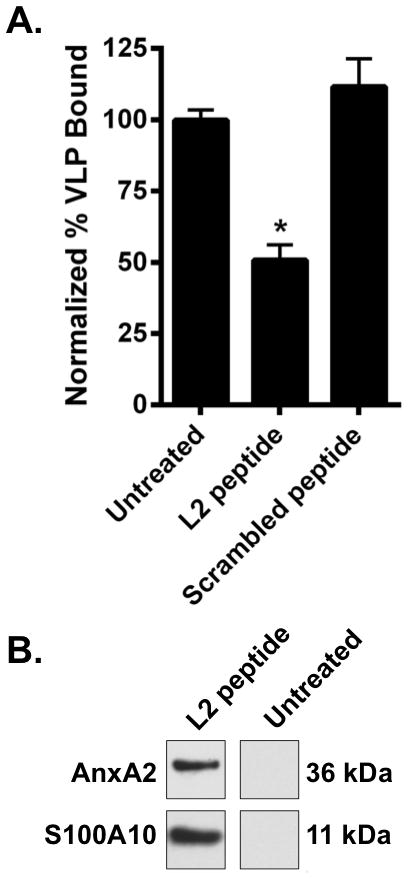
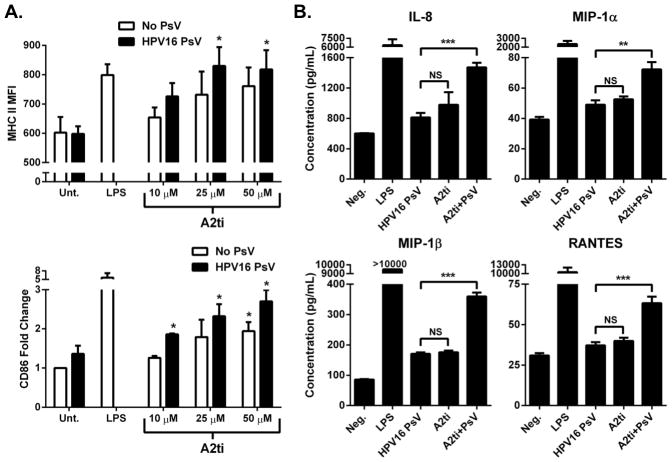
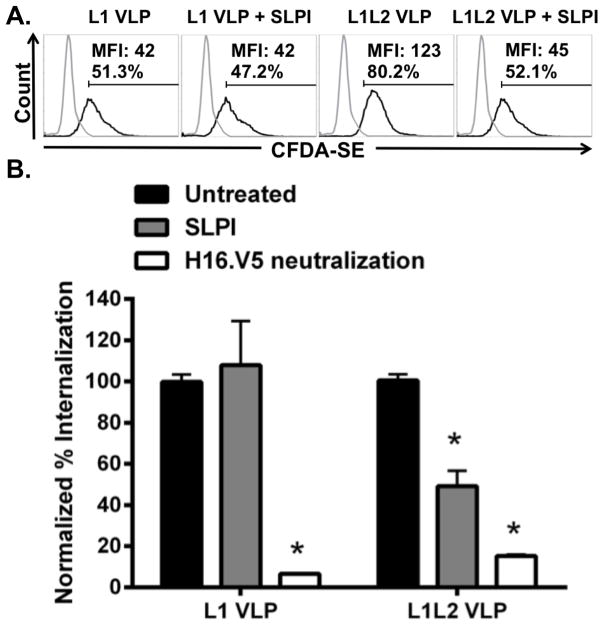
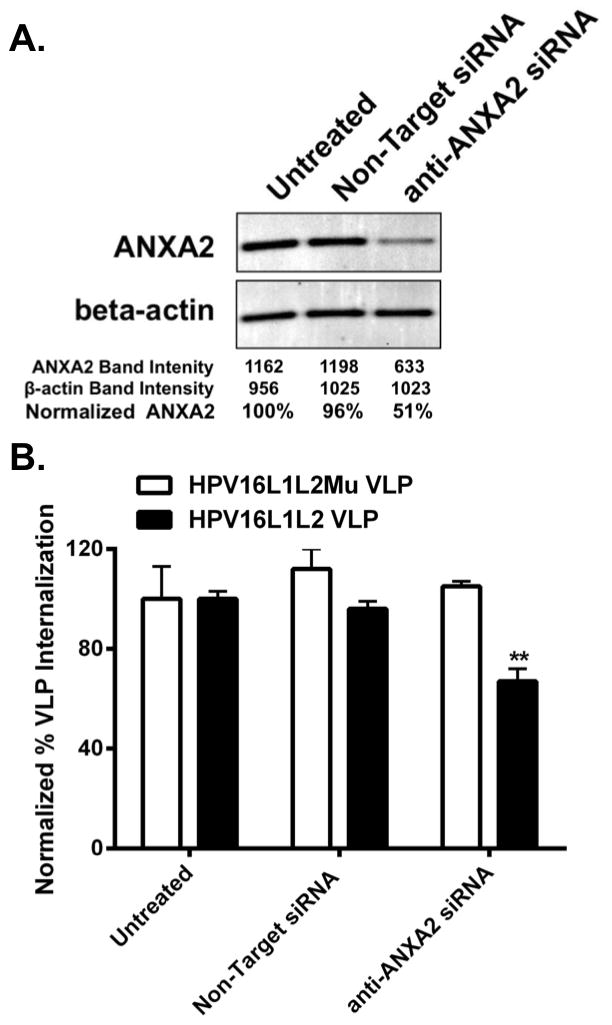
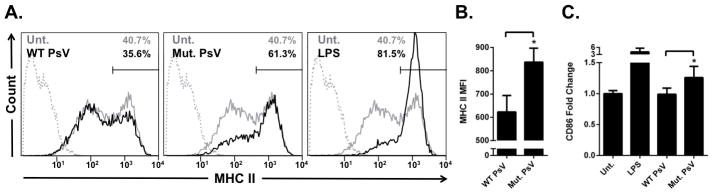
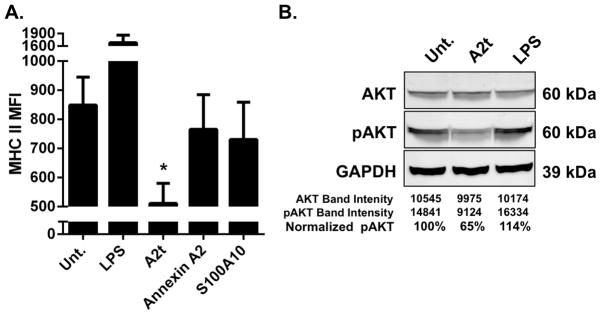
High-risk human papillomaviruses (HPVs) are sexually transmitted viruses causally associated with several cancers. During its natural life cycle, HPV16, the most common high-risk genotype, infects the epithelial basal cells in a process facilitated through a recently identified receptor, the annexin A2 heterotetramer (A2t). During infection, HPV16 also interacts with Langerhans cells (LC), the APC of the epithelium, inducing immune suppression, which is mediated by the HPV16 L2 minor capsid protein. Despite the importance of these virus-immune cell interactions, the specific mechanisms of HPV16 entry into LC and HPV16-induced immune suppression remain undefined. An N-terminal peptide of HPV16 L2 (aa 108-126) has been shown to specifically interact with A2t. In this study, we show that incubation of human LC with this peptide blocks binding of HPV16. Inhibiting this interaction with an A2t ligand or by small interfering RNA downregulation of A2t significantly decreases HPV16 internalization into LC in an L2-dependent manner. A2t is associated with suppression of LC maturation as demonstrated through attenuated secretion of Th1-associated cytokines and decreased surface expression of MHC class II on LC exposed to A2t. Conversely, small molecule inhibition of A2t prevents HPV16-induced suppression of LC immune function as indicated by significantly increased secretion of inflammatory cytokines and surface expression of CD86 in HPV16 treated LC pre-exposed to A2t inhibitors. These results demonstrate that HPV16 suppresses LC maturation through an interaction with A2t, revealing a novel role for this protein.
高危型人乳头瘤病毒(HPV)是一种性传播病毒,与几种癌症有因果关系。在其自然生命周期中,HPV16 是最常见的高危基因型,通过最近确定的受体——膜联蛋白 A2 异四聚体(A2t)的作用感染上皮基底层细胞。在感染过程中,HPV16 还与郎格汉斯细胞(LC)相互作用,LC 是上皮的 APC,诱导免疫抑制,这是由 HPV16 L2 次要衣壳蛋白介导的。尽管这些病毒-免疫细胞相互作用很重要,但 HPV16 进入 LC 和 HPV16 诱导免疫抑制的确切机制仍未定义。HPV16 L2 的 N 端肽(aa 108-126)已被证明与 A2t 特异性相互作用。在这项研究中,我们表明,将该肽孵育在人 LC 上会阻止 HPV16 的结合。用 A2t 配体抑制这种相互作用或通过 A2t 的小干扰 RNA 下调显著降低了 LC 内化 HPV16 的能力,这依赖于 L2。A2t 与 LC 成熟的抑制有关,这是通过降低 LC 暴露于 A2t 时 Th1 相关细胞因子的分泌和 MHC Ⅱ类表面表达来证明的。相反,A2t 的小分子抑制可防止 HPV16 诱导的 LC 免疫功能抑制,这表明在预先暴露于 A2t 抑制剂的 HPV16 处理的 LC 中,炎症细胞因子的分泌和 CD86 的表面表达显著增加。这些结果表明,HPV16 通过与 A2t 的相互作用抑制 LC 的成熟,揭示了该蛋白的新作用。