Bergman Lina, Akhter Tansim, Wikström Anna-Karin, Wikström Johan, Naessen Tord, Åkerud Helena
Department of Women's and Children's Health, Uppsala University, Uppsala, Sweden; Centre for Clinical Research, Dalarna, Sweden;
Department of Women's and Children's Health, Uppsala University, Uppsala, Sweden;
Am J Hypertens. 2014 Aug;27(8):1105-11. doi: 10.1093/ajh/hpu020. Epub 2014 Mar 7.
S100B is supposed to be a peripheral biomarker of central nervous system (CNS) injury. The purpose of this study was to compare levels of S100B in women with preeclampsia with levels in healthy pregnant control subjects and furthermore to analyze levels of S100B in relation to possible CNS effects.
A cross-sectional case-control study in antenatal care centers in Uppsala, Sweden, was performed. Fifty-three women with preeclampsia and 58 healthy pregnant women were recruited at similar gestational length; women with preeclampsia were recruited at time of diagnosis, and control subjects were recruited during their routine visit to an antenatal clinic. Plasma samples were collected, and levels of S100B were analyzed with an enzyme-linked immunosorbent assay. Information about demographic and clinical characteristics, including symptoms related to CNS affection, was collected from the medical records. The main outcome measures were plasma levels of S100B and possible CNS effects.
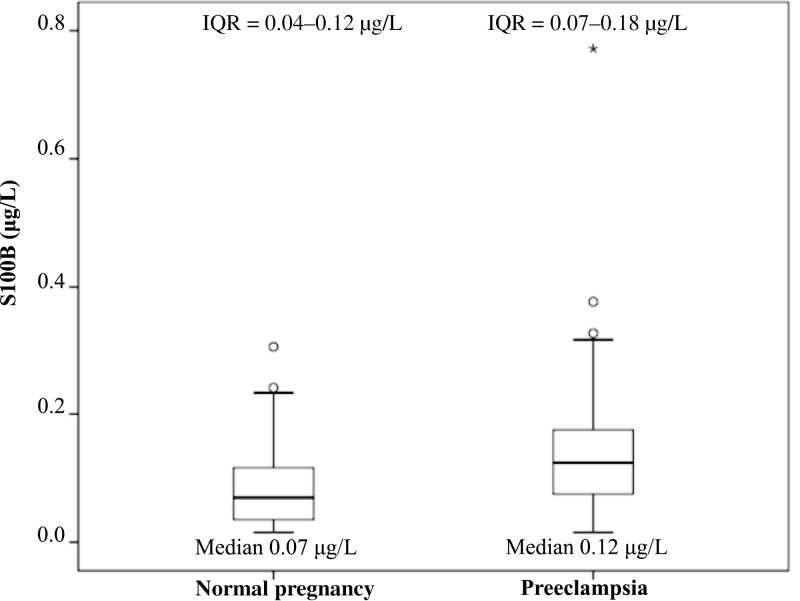
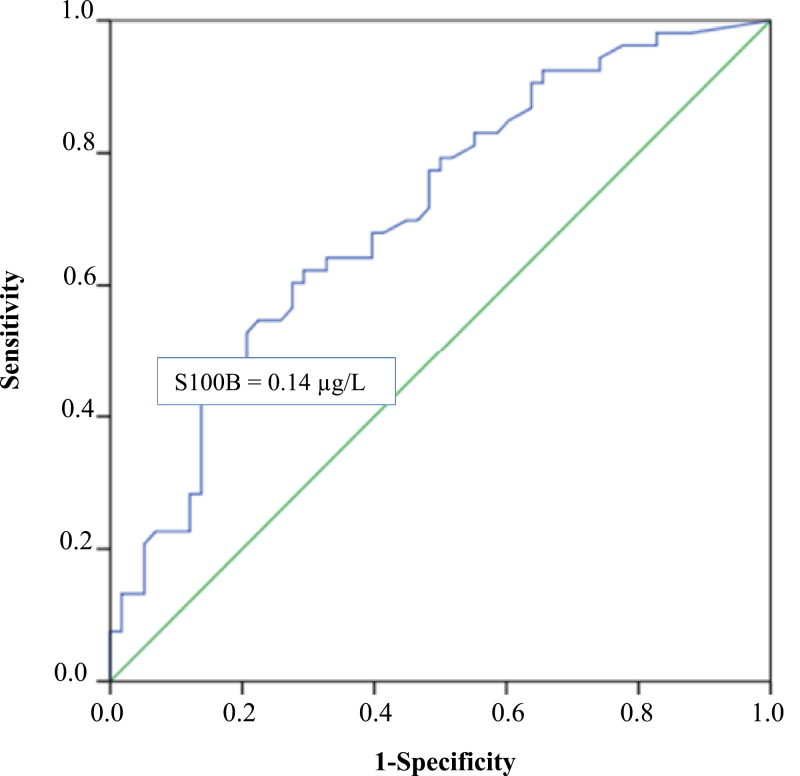
Levels of S100B were significantly higher among women with preeclampsia than among control subjects (0.12 µg/L vs. 0.07 µg/L; P < 0.001). In preeclampsia, there was a significant association between high levels of S100B and visual disturbances (P < 0.05).
S100B is increased among women with preeclampsia, and high levels of S100B associate with visual disturbances, which might reflect CNS affection in women with preeclampsia.
S100B被认为是中枢神经系统(CNS)损伤的外周生物标志物。本研究的目的是比较子痫前期妇女与健康孕妇对照组中S100B的水平,并进一步分析S100B水平与可能的中枢神经系统影响之间的关系。
在瑞典乌普萨拉的产前护理中心进行了一项横断面病例对照研究。招募了53例子痫前期妇女和58例健康孕妇,她们的孕周相似;子痫前期妇女在诊断时招募,对照组在产前诊所常规就诊时招募。采集血浆样本,采用酶联免疫吸附测定法分析S100B水平。从病历中收集有关人口统计学和临床特征的信息,包括与中枢神经系统影响相关的症状。主要观察指标为血浆S100B水平和可能的中枢神经系统影响。
子痫前期妇女的S100B水平显著高于对照组(0.12μg/L对0.07μg/L;P<0.001)。在子痫前期,S100B高水平与视觉障碍之间存在显著关联(P<0.05)。
子痫前期妇女的S100B水平升高,且S100B高水平与视觉障碍相关,这可能反映了子痫前期妇女的中枢神经系统受影响情况。