Department of Otorhinolaryngology, Juntendo University Faculty of Medicine, Tokyo, Japan.
Laryngoscope. 2014 Sep;124(9):E347-53. doi: 10.1002/lary.24655. Epub 2014 Apr 4.
OBJECTIVES/HYPOTHESIS: The role of fungi in chronic rhinosinusitis (CRS) is still controversial. The present study was conducted to detect and identify fungal species from the nasal polyp tissues of eosinophilic and noneosinophilic CRS, and to determine the role of fungal antigens in cytokine production.
Prospective study.
Thirty-five specimens of nasal polyps were collected from patients with CRS and examined for fungus using culture, histology, and polymerase chain reaction analysis. The secretion of 14 cytokines stimulated by fungal extracts using dispersed nasal polyp cells (DNPCs) was determined by multiplex immunoassay.
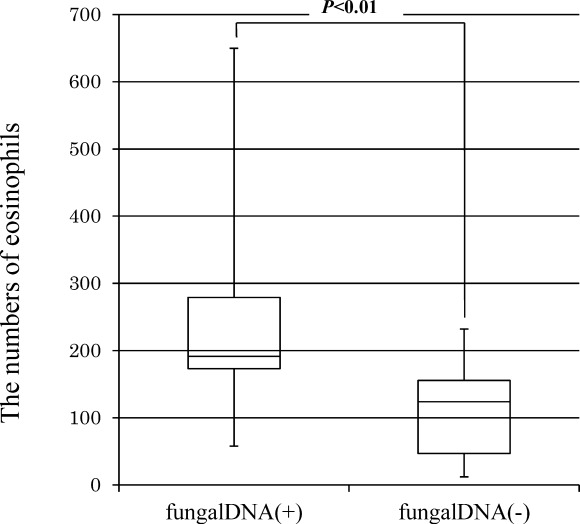
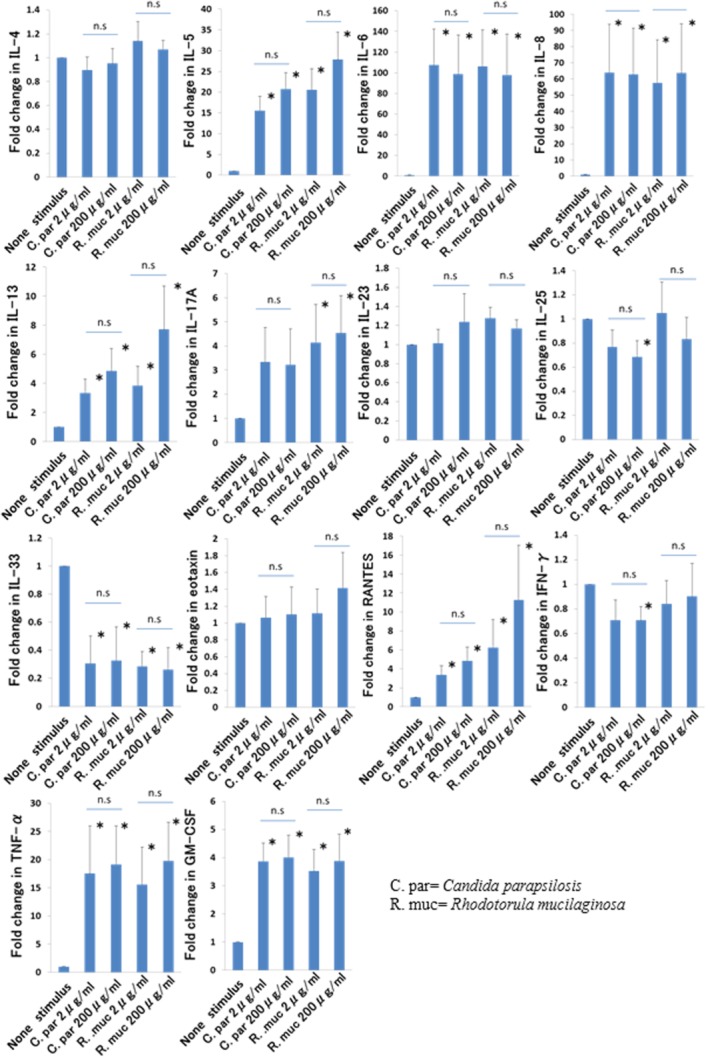
There was no microbiological growth (including fungus) in the cultures of homogenized nasal polyps. Furthermore, Grocott methanamine silver staining for all nasal polyps showed no fungal bodies. Sixteen of 35 samples of the nasal polyps showed amplification of fungal DNA. In none of the mucosa of the sphenoid sinus was fungal DNA detected. The number of eosinophils in the nasal polyps in which fungal DNA was detected was significantly higher than in the nasal polyps in which fungal DNA was not detected (P < .01). The extract of fungus enhanced the secretion of eosinophil-associated cytokines such as interleukine (IL)-5, IL-13, IL-17A, and RANTES (regulated on activation normal T-cell expressed and secreted), and proinflammatory cytokines such as IL-6, IL-8, tumor necrosis factor-α, and granulocyte-macrophage colony-stimulating factor from DNPCs.
The present study offers direct evidence supporting that fungal elements modify the inflammatory response in the nasal polyps of eosinophilic CRS.
目的/假设:真菌在慢性鼻-鼻窦炎(CRS)中的作用仍存在争议。本研究旨在从嗜酸性和非嗜酸性 CRS 的鼻息肉组织中检测和鉴定真菌种类,并确定真菌抗原在细胞因子产生中的作用。
前瞻性研究。
从 CRS 患者的 35 个鼻息肉标本中采集样本,使用培养、组织学和聚合酶链反应分析检测真菌。通过分散鼻息肉细胞(DNPC)测定真菌提取物刺激的 14 种细胞因子的分泌。
匀浆鼻息肉的培养物中未发现微生物生长(包括真菌)。此外,所有鼻息肉的Grocott 甲瓒银染色均未显示真菌体。35 个鼻息肉样本中有 16 个显示真菌 DNA 扩增。在蝶窦黏膜中均未检测到真菌 DNA。在检测到真菌 DNA 的鼻息肉中,嗜酸性粒细胞的数量明显高于未检测到真菌 DNA 的鼻息肉(P <.01)。真菌提取物增强了 DNPC 中嗜酸性粒细胞相关细胞因子(如白细胞介素-5、白细胞介素-13、白细胞介素-17A 和 RANTES)以及促炎细胞因子(如白细胞介素-6、白细胞介素-8、肿瘤坏死因子-α和粒细胞-巨噬细胞集落刺激因子)的分泌。
本研究提供了直接证据支持真菌成分改变了嗜酸性 CRS 鼻息肉中的炎症反应。