Zhang Liang, Kaneko Shinjiro, Kikuchi Kaoru, Sano Akihiko, Maeda Miho, Kishino Akiyoshi, Shibata Shinsuke, Mukaino Masahiko, Toyama Yoshiaki, Liu Meigen, Kimura Toru, Okano Hideyuki, Nakamura Masaya
Department of Orthopedic Surgery, Keio University School of Medicine, 35 Shinanomachi, Shinjuku, Tokyo 160-8582, Japan.
Mol Brain. 2014 Mar 10;7:14. doi: 10.1186/1756-6606-7-14.
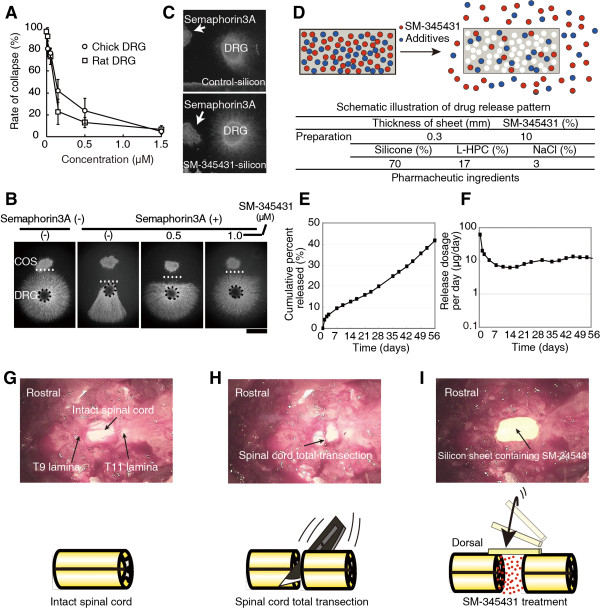
Rats exhibit extremely limited motor function recovery after total transection of the spinal cord (SCT). We previously reported that SM-216289, a semaphorin3A inhibitor, enhanced axon regeneration and motor function recovery in SCT adult rats. However, these effects were limited because most regenerated axons likely do not connect to the right targets. Thus, rebuilding the appropriate connections for regenerated axons may enhance recovery. In this study, we combined semaphorin3A inhibitor treatment with extensive treadmill training to determine whether combined treatment would further enhance the "rewiring" of regenerated axons. In this study, which aimed for clinical applicability, we administered a newly developed, potent semaphorin3A inhibitor, SM-345431 (Vinaxanthone), using a novel drug delivery system that enables continuous drug delivery over the period of the experiment.
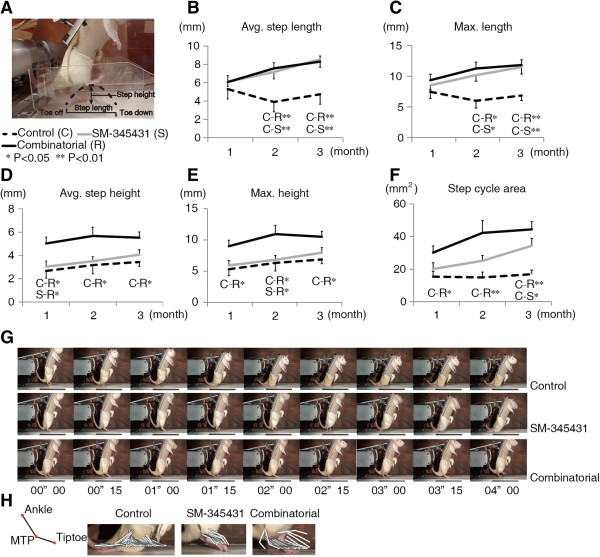
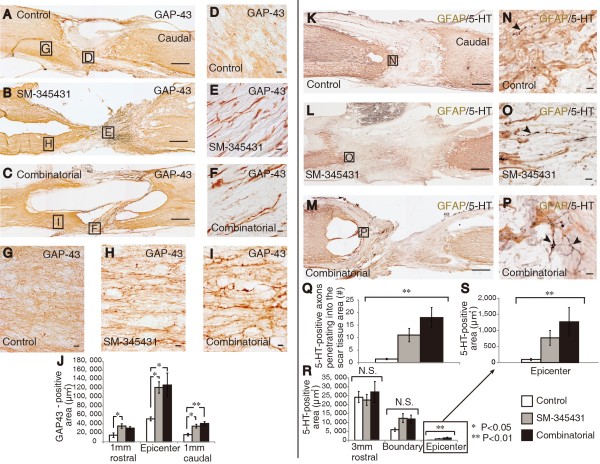
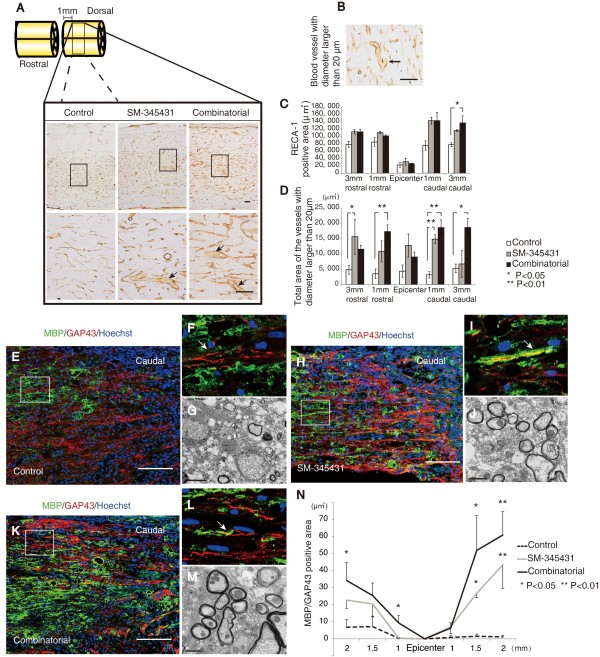
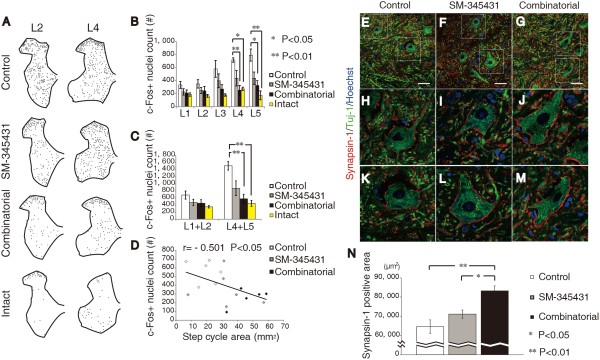
Treatment with SM-345431 using this delivery system enhanced axon regeneration and produced significant, but limited, hindlimb motor function recovery. Although extensive treadmill training combined with SM-345431 administration did not further improve axon regeneration, hindlimb motor performance was restored, as evidenced by the significant improvement in the execution of plantar steps on a treadmill. In contrast, control SCT rats could not execute plantar steps at any point during the experimental period. Further analyses suggested that this strategy reinforced the wiring of central pattern generators in lumbar spinal circuits, which, in turn, led to enhanced motor function recovery (especially in extensor muscles).
This study highlights the importance of combining treatments that promote axon regeneration with specific and appropriate rehabilitations that promote rewiring for the treatment of spinal cord injury.
大鼠脊髓完全横断(SCT)后运动功能恢复极其有限。我们之前报道过,信号素3A抑制剂SM - 216289可促进SCT成年大鼠的轴突再生和运动功能恢复。然而,这些效果有限,因为大多数再生轴突可能未连接到正确靶点。因此,为再生轴突重建合适连接可能会促进恢复。在本研究中,我们将信号素3A抑制剂治疗与广泛的跑步机训练相结合,以确定联合治疗是否会进一步增强再生轴突的“重新布线”。在这项旨在实现临床应用的研究中,我们使用一种新型药物递送系统,给予一种新开发的强效信号素3A抑制剂SM - 345431(紫黄质),该系统能够在实验期间持续给药。
使用这种递送系统给予SM - 345431治疗可促进轴突再生,并产生显著但有限的后肢运动功能恢复。虽然与给予SM - 345431相结合的广泛跑步机训练并未进一步改善轴突再生,但后肢运动表现得到恢复,跑步机上足底踏步动作的显著改善证明了这一点。相比之下,对照SCT大鼠在实验期间任何时候都无法完成足底踏步动作。进一步分析表明,该策略加强了腰脊髓回路中中枢模式发生器的布线,进而导致运动功能恢复增强(尤其是伸肌)。
本研究强调了将促进轴突再生的治疗与促进重新布线的特定且合适的康复治疗相结合用于脊髓损伤治疗的重要性。