Park Jae-Sung, Höke Ahmet
Departments of Neurology and Neuroscience, The Johns Hopkins University School of Medicine, Baltimore, Maryland, United States of America.
PLoS One. 2014 Mar 11;9(3):e90245. doi: 10.1371/journal.pone.0090245. eCollection 2014.
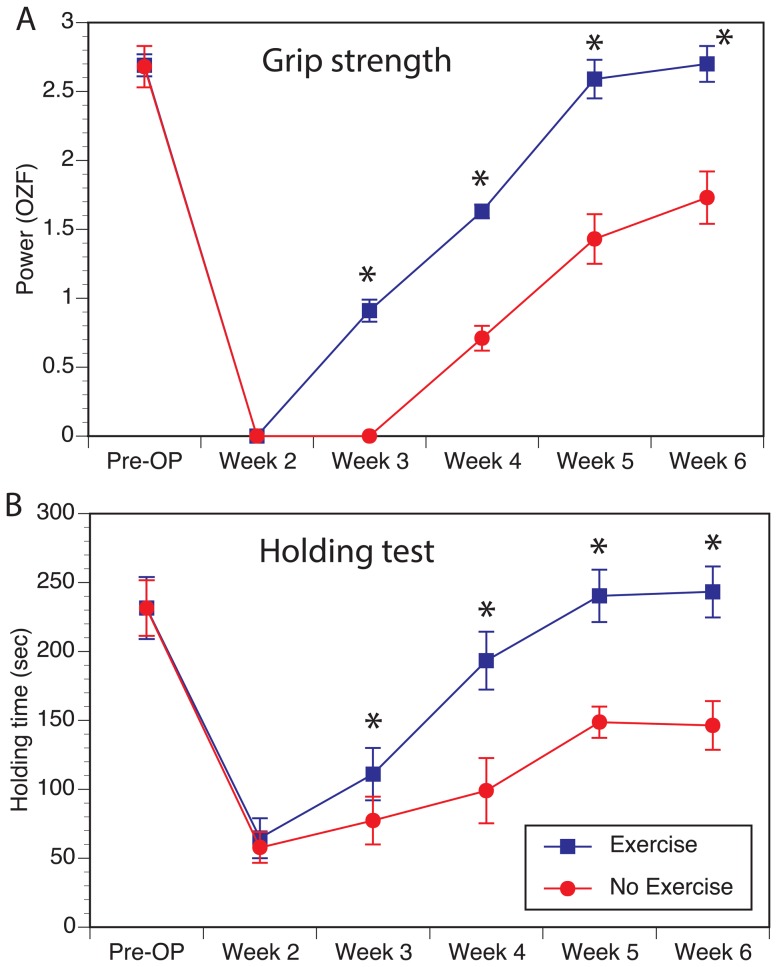
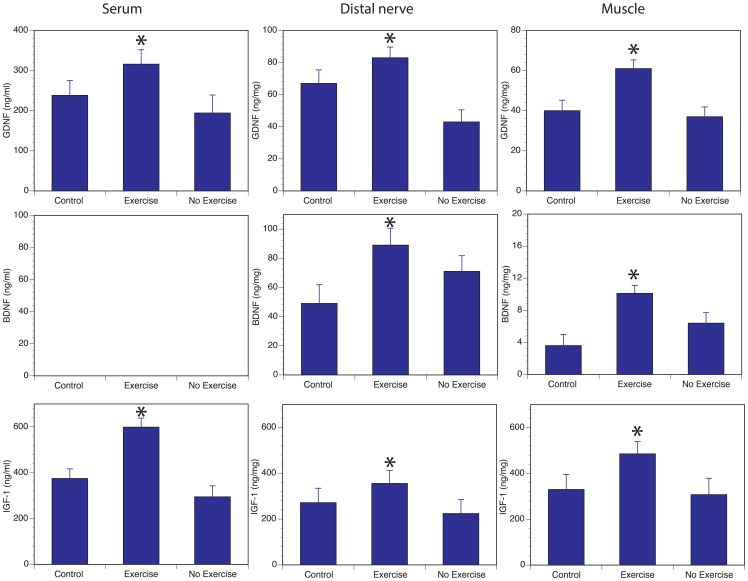
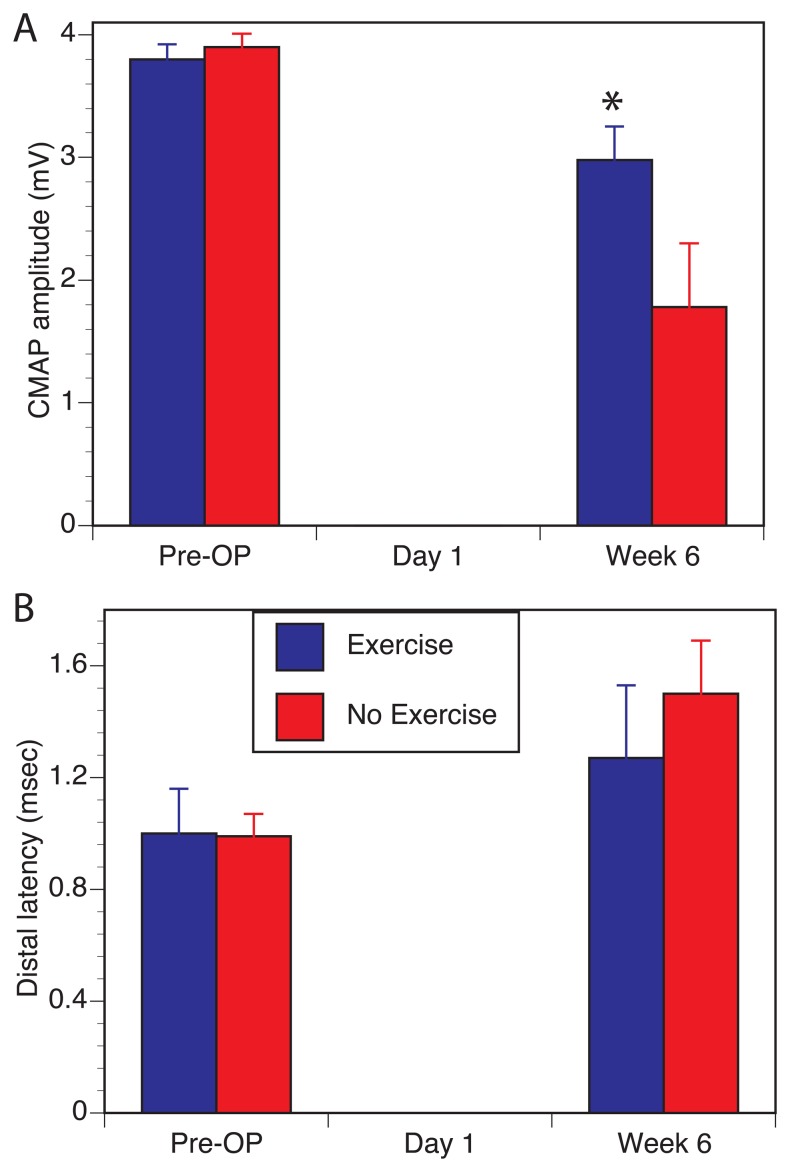
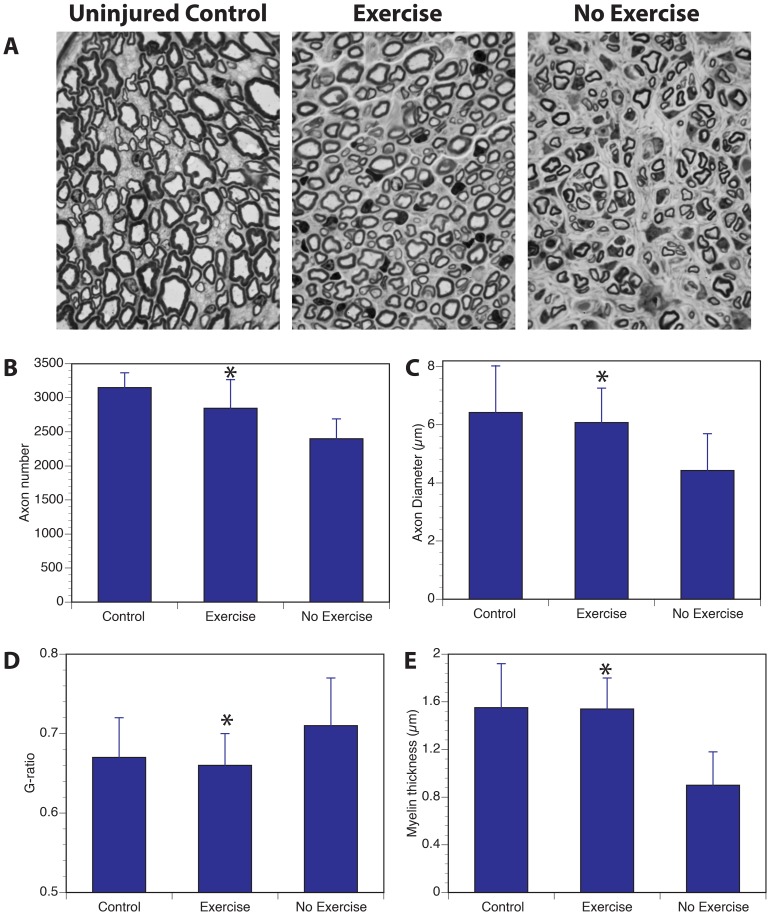
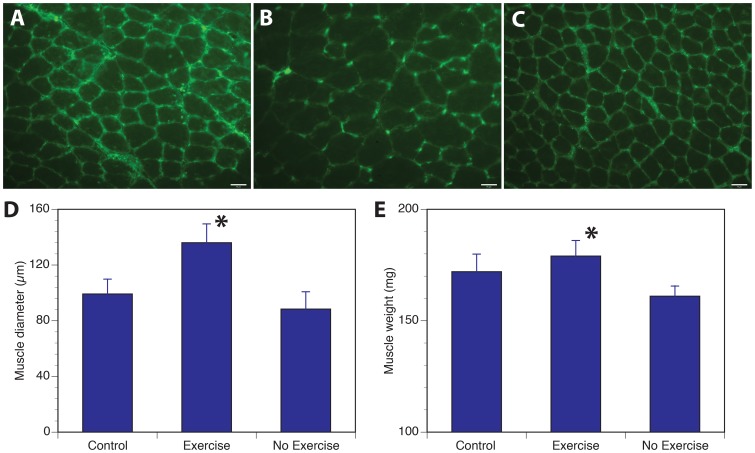
Benefits of exercise on nerve regeneration and functional recovery have been reported in both central and peripheral nervous system disease models. However, underlying molecular mechanisms of enhanced regeneration and improved functional outcomes are less understood. We used a peripheral nerve regeneration model that has a good correlation between functional outcomes and number of motor axons that regenerate to evaluate the impact of treadmill exercise. In this model, the median nerve was transected and repaired while the ulnar nerve was transected and prevented from regeneration. Daily treadmill exercise resulted in faster recovery of the forelimb grip function as evaluated by grip power and inverted holding test. Daily exercise also resulted in better regeneration as evaluated by recovery of compound motor action potentials, higher number of axons in the median nerve and larger myofiber size in target muscles. Furthermore, these observations correlated with higher levels of neurotrophic factors, glial derived neurotrophic factor (GDNF), brain derived neurotrophic factor (BDNF) and insulin-like growth factor-1 (IGF-1), in serum, nerve and muscle suggesting that increase in muscle derived neurotrophic factors may be responsible for improved regeneration.
在中枢神经系统和周围神经系统疾病模型中,均已报道运动对神经再生和功能恢复有益。然而,对于增强再生和改善功能结果的潜在分子机制,人们了解较少。我们使用了一种周围神经再生模型,该模型在功能结果与再生的运动轴突数量之间具有良好的相关性,以评估跑步机运动的影响。在这个模型中,正中神经被切断并修复,而尺神经被切断并阻止其再生。通过握力和倒置握持试验评估,每日跑步机运动导致前肢抓握功能恢复更快。通过复合运动动作电位的恢复、正中神经中轴突数量增加以及目标肌肉中肌纤维尺寸增大来评估,每日运动还导致更好的再生。此外,这些观察结果与血清、神经和肌肉中神经营养因子、胶质细胞源性神经营养因子(GDNF)、脑源性神经营养因子(BDNF)和胰岛素样生长因子-1(IGF-1)的较高水平相关,这表明肌肉源性神经营养因子的增加可能是再生改善的原因。