Fröhlich Leopold F, Mrakovcic Maria, Smole Claudia, Lahiri Pooja, Zatloukal Kurt
Molecular Pathology Laboratory, Medical University of Graz, Graz, Austria.
Center for Medical Research, Medical University of Graz, Graz, Austria.
PLoS One. 2014 Mar 11;9(3):e91558. doi: 10.1371/journal.pone.0091558. eCollection 2014.
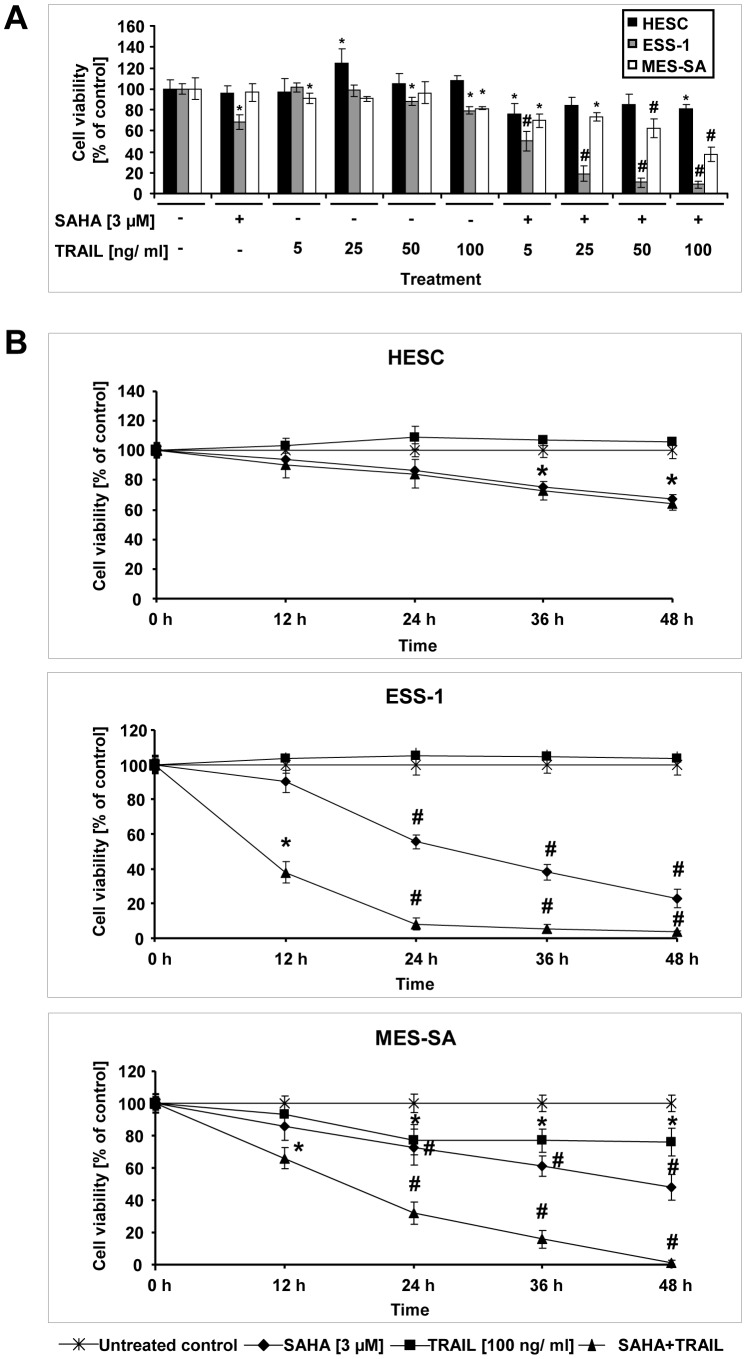
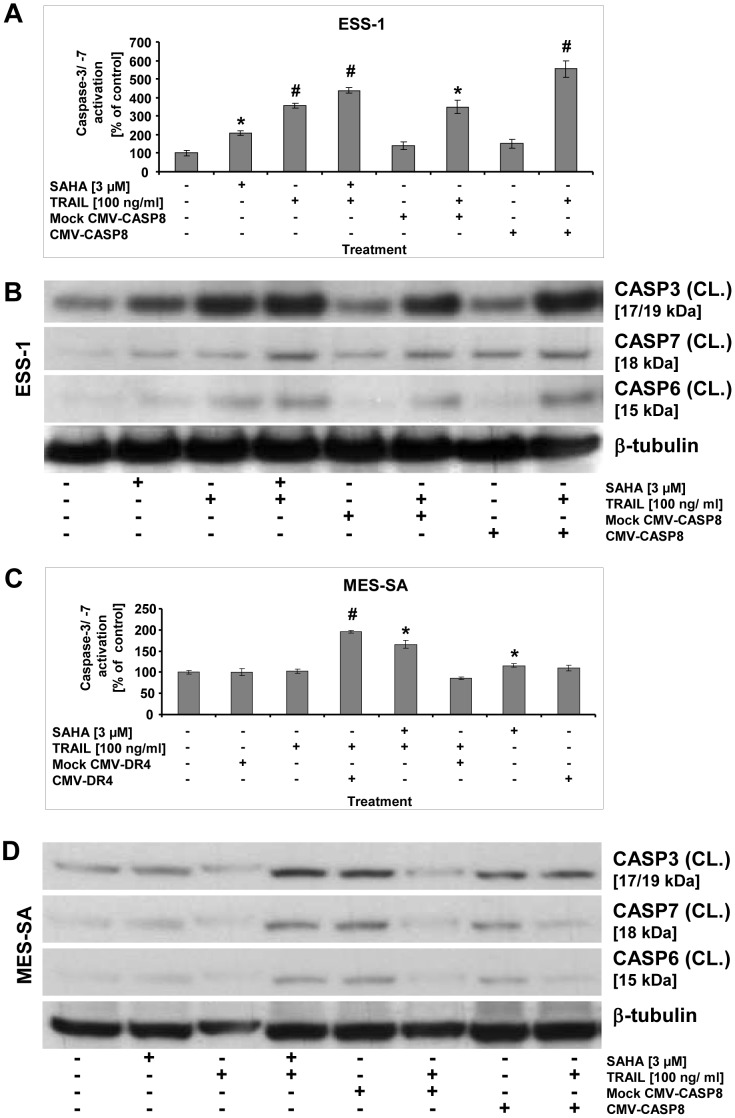
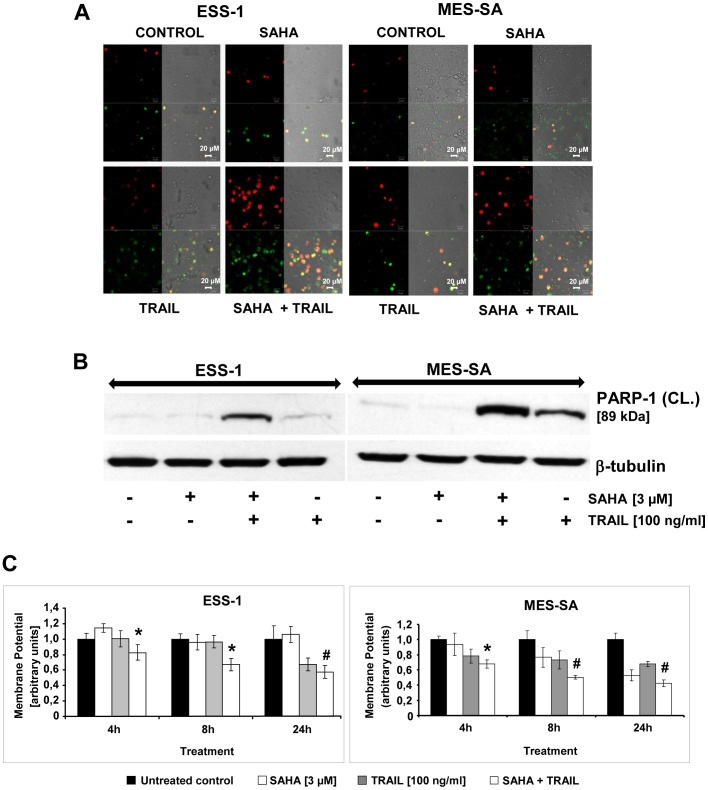
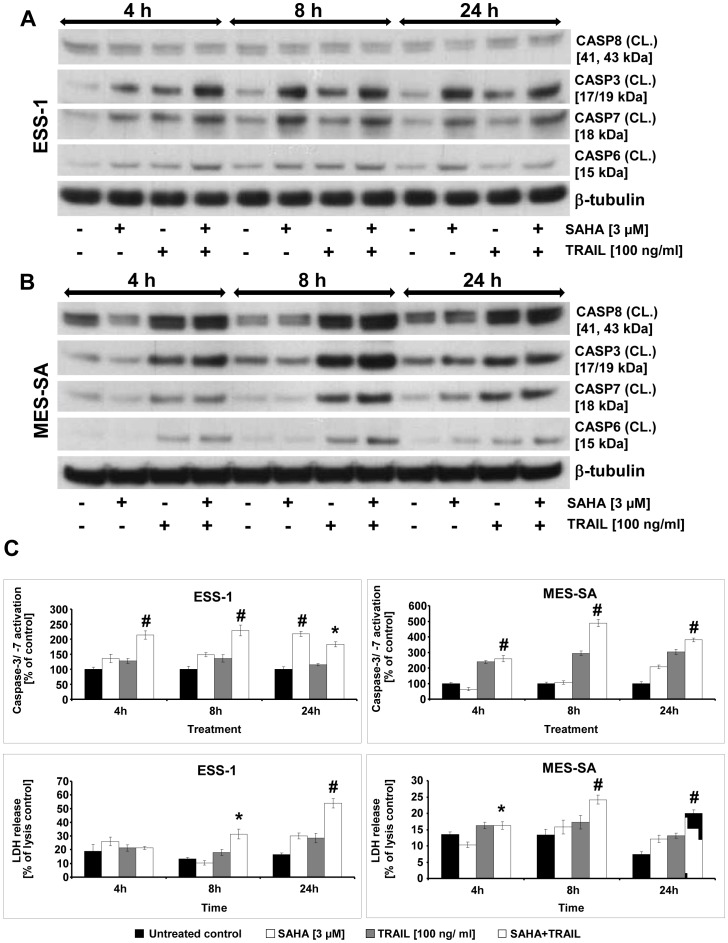
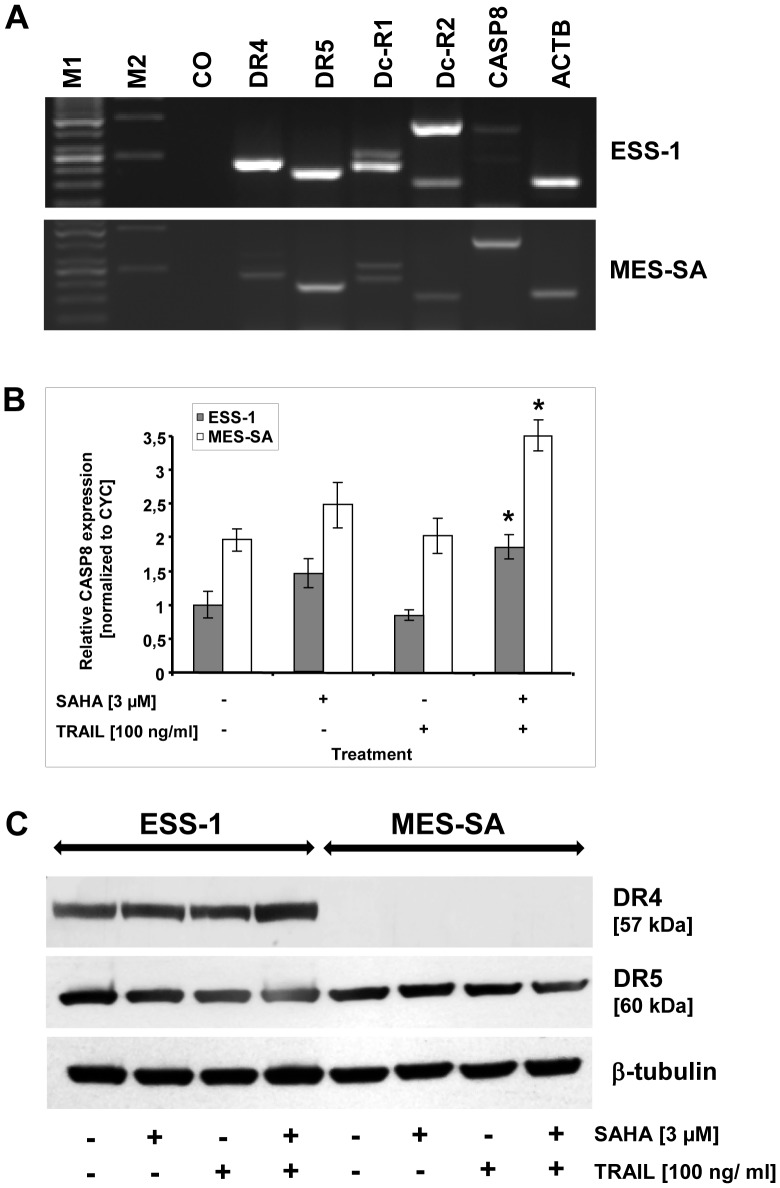
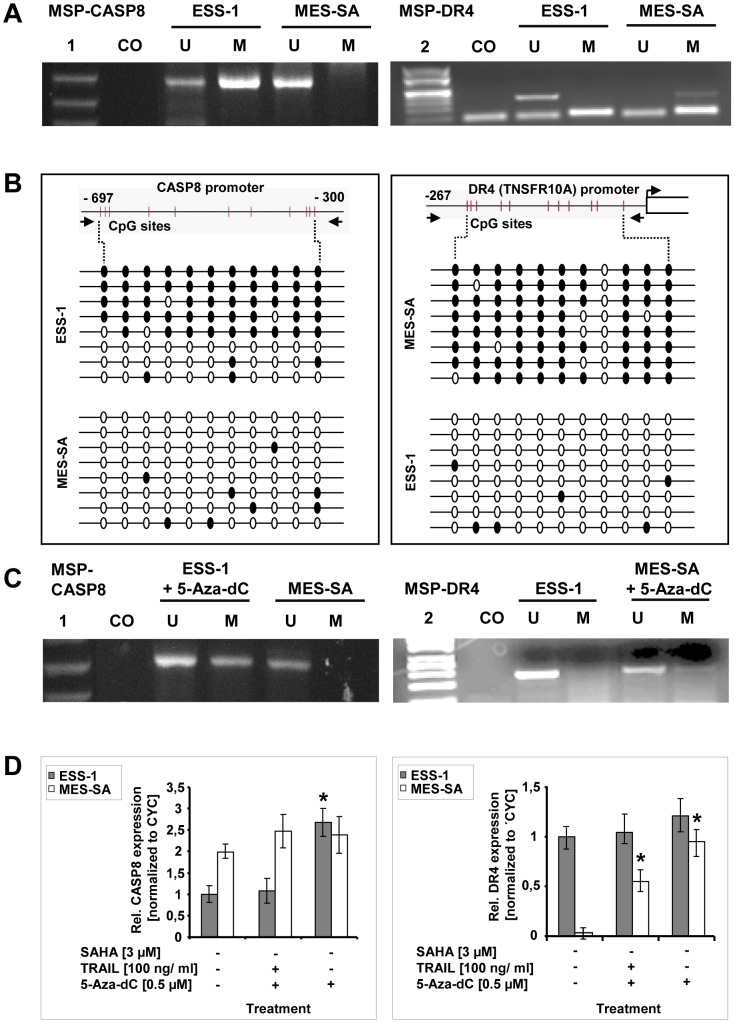
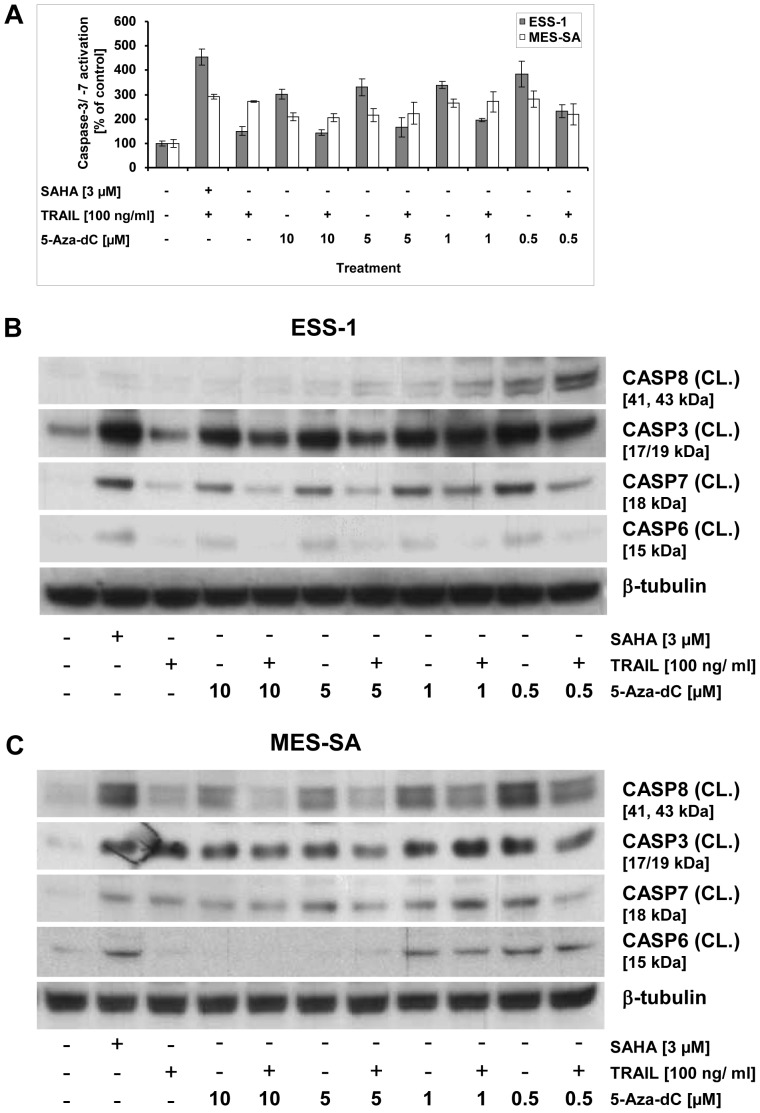
The lack of knowledge about molecular pathology of uterine sarcomas with a representation of 3-7% of all malignant uterine tumors prevents the establishment of effective therapy protocols. Here, we explored advanced therapeutic options to the previously discovered antitumorigenic effects of the histone deacetylase (HDAC) inhibitor suberoylanilide hydroxamic acid (SAHA) by combined treatment with the tumor necrosis factor-related apoptosis-inducing ligand (TRAIL/Apo-2L). In addition, we investigated the uterine sarcoma cell lines, MES-SA and ESS-1, regarding the underlying molecular mechanisms of SAHA and TRAIL-induced apoptosis and their resistance towards TRAIL. Compared to single SAHA or TRAIL treatment, the combination of SAHA with TRAIL led to complete cell death of both tumor cell lines after 24 to 48 hours. In contrast to single SAHA treatment, apoptosis occured faster and was more pronounced in ESS-1 cells than in MES-SA cells. Induction of SAHA- and TRAIL-induced apoptosis was accompanied by upregulation of the intrinsic apoptotic pathway via reduction of mitochondrial membrane potential, caspase-3, -6, and -7 activation, and PARP cleavage, but was also found to be partially caspase-independent. Apoptosis resistance was caused by reduced expression of caspase-8 and DR 4/TRAIL-R1 in ESS-1 and MES-SA cells, respectively, due to epigenetic silencing by DNA hypermethylation of gene promoter sequences. Treatment with the demethylating agent 5-Aza-2'-deoxycytidine or gene transfer therefore restored gene expression and increased the sensitivity of both cell lines against TRAIL-induced apoptosis. Our data provide evidence that deregulation of epigenetic silencing by histone acetylation and DNA hypermethylation might play a fundamental role in the origin of uterine sarcomas. Therefore, tumor growth might be efficiently overcome by a cytotoxic combinatorial treatment of HDAC inhibitors with TRAIL.
子宫肉瘤占所有恶性子宫肿瘤的3 - 7%,由于缺乏对其分子病理学的了解,难以制定有效的治疗方案。在此,我们通过与肿瘤坏死因子相关凋亡诱导配体(TRAIL/Apo - 2L)联合治疗,探索了针对先前发现的组蛋白去乙酰化酶(HDAC)抑制剂辛二酰苯胺异羟肟酸(SAHA)抗肿瘤作用的先进治疗选择。此外,我们研究了子宫肉瘤细胞系MES - SA和ESS - 1中SAHA和TRAIL诱导凋亡的潜在分子机制及其对TRAIL的抗性。与单独使用SAHA或TRAIL治疗相比,SAHA与TRAIL联合使用在24至48小时后导致两种肿瘤细胞系完全死亡。与单独使用SAHA治疗不同,ESS - 1细胞中的凋亡发生得更快且比MES - SA细胞更明显。SAHA和TRAIL诱导的凋亡伴随着通过线粒体膜电位降低、半胱天冬酶 - 3、 - 6和 - 7激活以及PARP裂解上调内在凋亡途径,但也发现部分不依赖于半胱天冬酶。凋亡抗性分别是由于ESS - 1和MES - SA细胞中半胱天冬酶 - 8和DR 4/TRAIL - R1表达降低所致,这是由于基因启动子序列的DNA高甲基化导致的表观遗传沉默。因此,用去甲基化剂5 - 氮杂 - 2'-脱氧胞苷治疗或基因转移可恢复基因表达并增加两种细胞系对TRAIL诱导凋亡的敏感性。我们的数据表明,组蛋白乙酰化和DNA高甲基化导致的表观遗传沉默失调可能在子宫肉瘤的发生中起重要作用。因此,HDAC抑制剂与TRAIL的细胞毒性联合治疗可能有效地克服肿瘤生长。