Georgi Benjamin, Craig David, Kember Rachel L, Liu Wencheng, Lindquist Ingrid, Nasser Sara, Brown Christopher, Egeland Janice A, Paul Steven M, Bućan Maja
Department of Genetics, Perelman School of Medicine, University of Pennsylvania, Philadelphia, Pennsylvania, United States of America.
The Translational Genomics Research Institute, Phoenix, Arizona, United States of America.
PLoS Genet. 2014 Mar 13;10(3):e1004229. doi: 10.1371/journal.pgen.1004229. eCollection 2014 Mar.
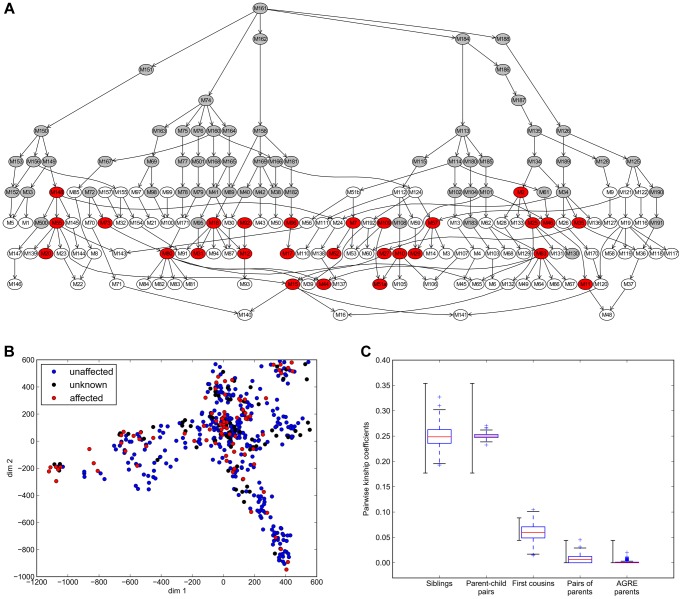
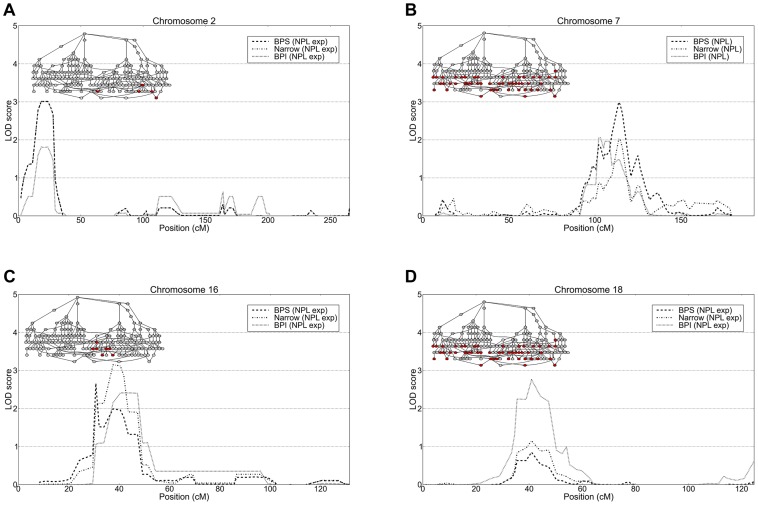
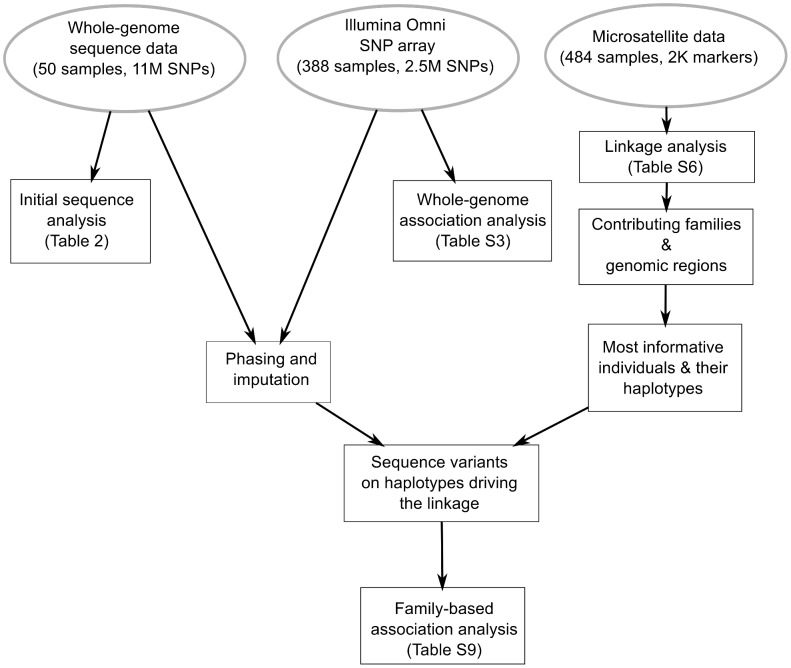
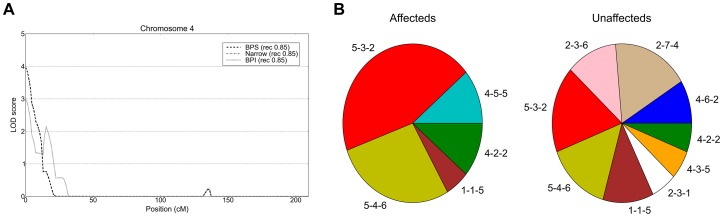
Bipolar disorder is a common, heritable mental illness characterized by recurrent episodes of mania and depression. Despite considerable effort to elucidate the genetic underpinnings of bipolar disorder, causative genetic risk factors remain elusive. We conducted a comprehensive genomic analysis of bipolar disorder in a large Old Order Amish pedigree. Microsatellite genotypes and high-density SNP-array genotypes of 388 family members were combined with whole genome sequence data for 50 of these subjects, comprising 18 parent-child trios. This study design permitted evaluation of candidate variants within the context of haplotype structure by resolving the phase in sequenced parent-child trios and by imputation of variants into multiple unsequenced siblings. Non-parametric and parametric linkage analysis of the entire pedigree as well as on smaller clusters of families identified several nominally significant linkage peaks, each of which included dozens of predicted deleterious variants. Close inspection of exonic and regulatory variants in genes under the linkage peaks using family-based association tests revealed additional credible candidate genes for functional studies and further replication in population-based cohorts. However, despite the in-depth genomic characterization of this unique, large and multigenerational pedigree from a genetic isolate, there was no convergence of evidence implicating a particular set of risk loci or common pathways. The striking haplotype and locus heterogeneity we observed has profound implications for the design of studies of bipolar and other related disorders.
双相情感障碍是一种常见的遗传性精神疾病,其特征为躁狂和抑郁反复发作。尽管人们为阐明双相情感障碍的遗传基础付出了巨大努力,但致病的遗传风险因素仍然难以捉摸。我们对一个大型老派阿米什人谱系中的双相情感障碍进行了全面的基因组分析。388名家庭成员的微卫星基因型和高密度SNP阵列基因型与其中50名受试者的全基因组序列数据相结合,这50名受试者包括18个亲子三联体。这种研究设计通过解析测序的亲子三联体中的相位以及将变异体推断到多个未测序的兄弟姐妹中,允许在单倍型结构的背景下评估候选变异体。对整个谱系以及较小的家族群体进行非参数和参数连锁分析,确定了几个名义上显著的连锁峰,每个连锁峰都包含数十个预测的有害变异体。使用基于家族的关联测试对连锁峰下基因的外显子和调控变异体进行仔细检查,发现了用于功能研究和在基于人群的队列中进一步验证的其他可信候选基因。然而,尽管对这个来自遗传隔离群体的独特、大型和多代谱系进行了深入的基因组特征分析,但没有证据表明有特定的一组风险位点或共同途径。我们观察到的显著的单倍型和位点异质性对双相情感障碍及其他相关疾病的研究设计具有深远影响。