Qiao Yan, Zhao Yunli, Wu Qiuli, Sun Lingmei, Ruan Qinli, Chen Yanyan, Wang Meng, Duan Jinao, Wang Dayong
Jiangsu Key Laboratory for High Technology Research of TCM Formulae, Nanjing University of Chinese Medicine, Nanjing, China; Key Laboratory of Developmental Genes and Human Disease in Ministry of Education, Medical School of Southeast University, Nanjing, China.
Key Laboratory of Developmental Genes and Human Disease in Ministry of Education, Medical School of Southeast University, Nanjing, China.
PLoS One. 2014 Mar 13;9(3):e91825. doi: 10.1371/journal.pone.0091825. eCollection 2014.
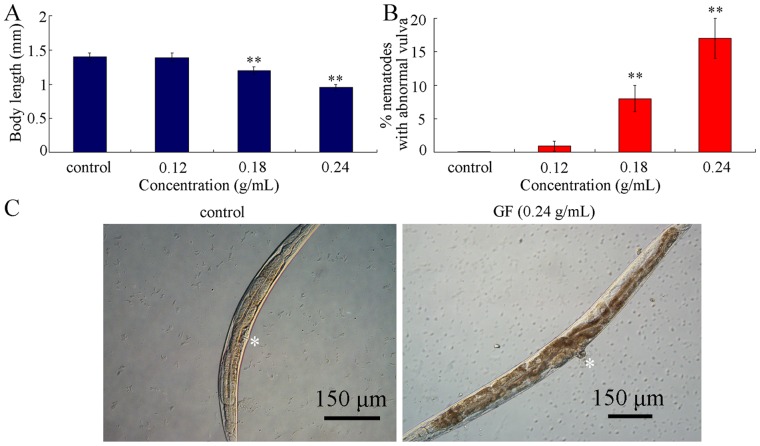
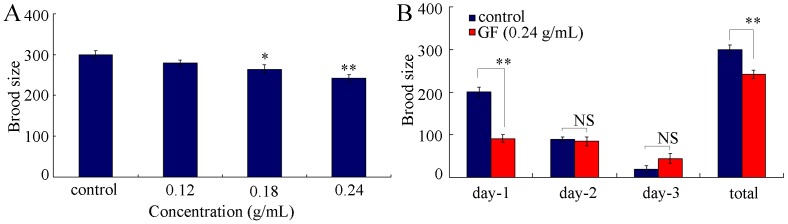
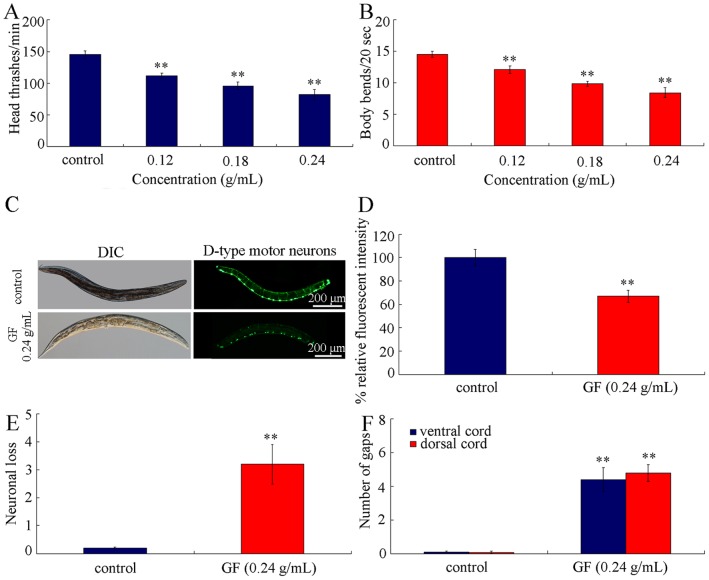
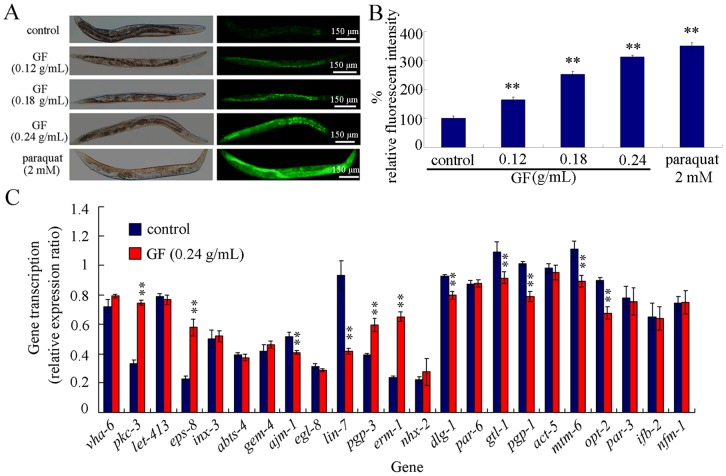
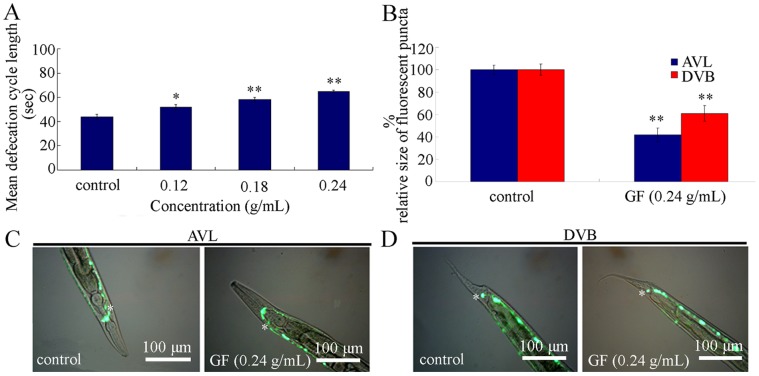
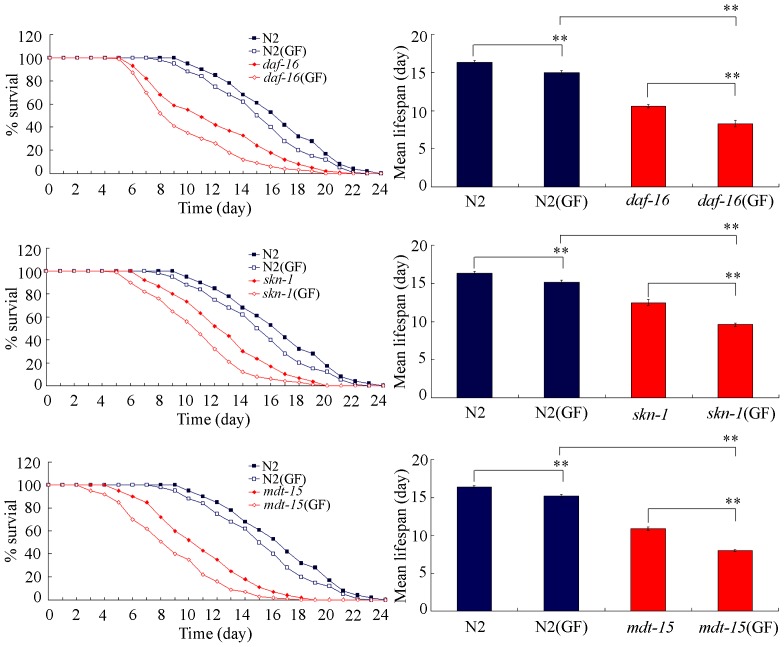
Genkwa Flos (GF), the dried flower bud from Daphne genkwa Sieb. et Zucc. (Thymelaeaceae), is a well-known and widely used traditional Chinese medicine. However, we know little about the in vivo mechanism of GF toxicity. Nematode Caenorhabditis elegans has been considered as a useful toxicity assay system by offering a system best suited for asking the in vivo questions. In the present study, we employed the prolonged exposure assay system of C. elegans to perform the full in vivo toxicity assessment of raw-processed GF. Our data show that GF exposure could induce the toxicity on lifespan, development, reproduction, and locomotion behavior. GF exposure not only decreased body length but also induced the formation of abnormal vulva. The decrease in brood size in GF exposed nematodes appeared mainly at day-1 during the development of adult nematodes. The decrease of locomotion behavior in GF exposed nematodes might be due to the damage on development of D-type GABAergic motor neurons. Moreover, we observed the induction of intestinal reactive oxygen species (ROS) production and alteration of expression patterns of genes required for development of apical domain, microvilli, and apical junction of intestine in GF exposed nematodes, implying the possible dysfunction of the primary targeted organ. In addition, GF exposure induced increase in defecation cycle length and deficits in development of AVL and DVB neurons controlling the defecation behavior. Therefore, our study implies the usefulness of C. elegans assay system for toxicity assessment from a certain Chinese medicine or plant extract. The observed toxicity of GF might be the combinational effects of oxidative stress, dysfunction of intestine, and altered defecation behavior in nematodes.
芫花(GF),为瑞香科植物芫花Daphne genkwa Sieb. et Zucc. 的干燥花蕾,是一种著名且广泛应用的传统中药。然而,我们对芫花毒性的体内作用机制知之甚少。秀丽隐杆线虫已被认为是一种有用的毒性检测系统,它提供了一个最适合研究体内问题的系统。在本研究中,我们采用秀丽隐杆线虫长期暴露检测系统对生芫花进行全面的体内毒性评估。我们的数据表明,芫花暴露可诱导对线虫寿命、发育、繁殖和运动行为的毒性作用。芫花暴露不仅会使线虫体长缩短,还会诱导异常阴门的形成。暴露于芫花的线虫产卵量减少主要出现在成虫发育的第1天。暴露于芫花的线虫运动行为的减少可能是由于D型γ-氨基丁酸能运动神经元发育受损所致。此外,我们观察到暴露于芫花的线虫肠道活性氧(ROS)生成增加,以及肠道顶端结构域、微绒毛和顶端连接发育所需基因的表达模式改变,这意味着主要靶器官可能存在功能障碍。此外,芫花暴露导致排便周期延长,以及控制排便行为的AVL和DVB神经元发育缺陷。因此,我们的研究表明秀丽隐杆线虫检测系统对于评估某种中药或植物提取物的毒性具有实用性。观察到的芫花毒性可能是线虫氧化应激、肠道功能障碍和排便行为改变的综合作用。