Hervy Martial, Weber Jennifer L, Pecheul Marylene, Dolley-Sonneville Paula, Henry David, Zhou Yue, Melkoumian Zara
Corning European Technology Center, Corning Incorporated, Avon, France.
Corning Life Sciences Development, Corning Incorporated, Corning, New York, United States of America.
PLoS One. 2014 Mar 17;9(3):e92120. doi: 10.1371/journal.pone.0092120. eCollection 2014.
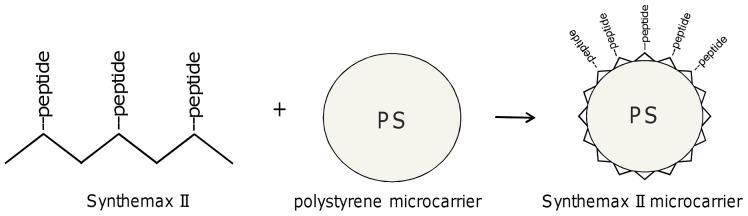
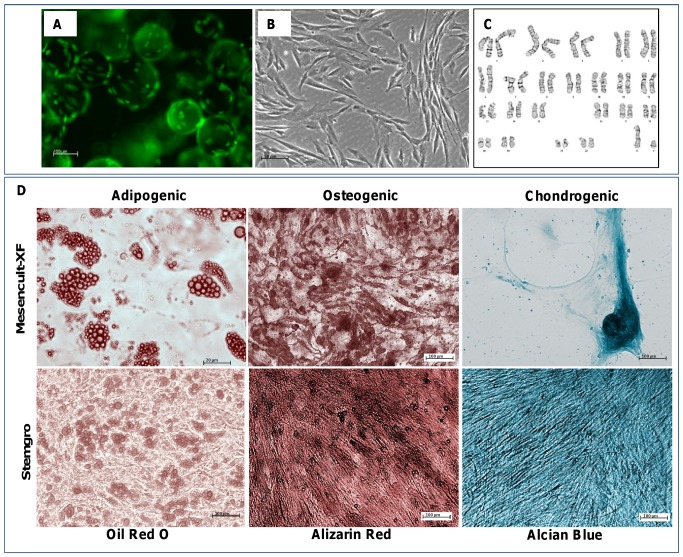
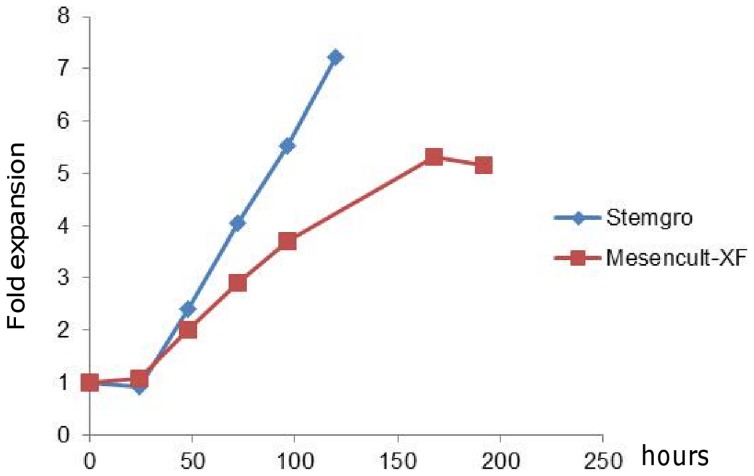
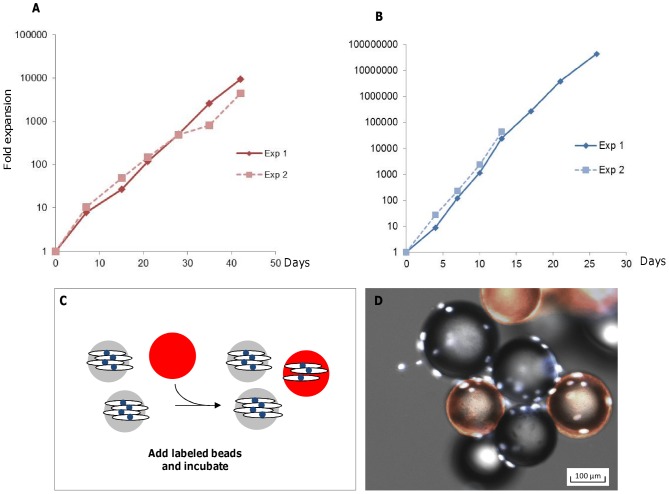
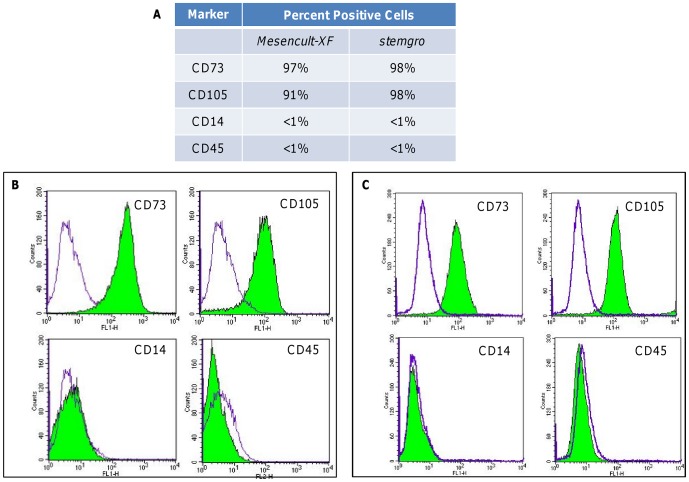
Human mesenchymal stem cells (hMSCs) present an attractive target for cell therapy given their wide availability, immunomodulatory properties, and multipotent nature for differentiation into chondrocytes, osteocytes, and adipocytes. With the progression of hMSC clinical studies, there is an increasing demand for development of technologies that enable efficient cell scale-up into clinically relevant quantities. Commercial scale manufacturing of hMSCs will require a large surface area which is not cost effective with available two-dimensional culture vessels. Recent studies showed that microcarriers provide a three-dimensional culture environment suitable for hMSC expansion. Traditionally, biological coatings and/or serum-containing medium are required to facilitate hMSC attachment and expansion in dynamic conditions. These limitations may hinder the use of microcarriers as a scale-up technology for hMSC therapeutics, where cell products, and therefore patient safety, are more controlled with the use of xeno-free, defined culture conditions. Here we report the long term culture of hMSCs on novel synthetic Synthemax II microcarriers in two different xeno-free media. Cells were maintained over 40 days on sterile, ready-to-use microcarriers in spinner flasks with programmed agitation. hMSC expansion was obtained by addition of fresh beads without the need for enzymatic dissociation. We achieved a cumulative cell expansion of >10,000 fold, and cells retained normal hMSC phenotype, karyotype, and tri-lineage differentiation potential. To our knowledge, this report is the first example of long term culture of hMSCs on synthetic microcarriers in xeno-free, defined conditions.
鉴于人间充质干细胞(hMSCs)易于获取、具有免疫调节特性且具有向软骨细胞、骨细胞和脂肪细胞分化的多能性,它们成为细胞治疗的一个有吸引力的靶点。随着hMSC临床研究的进展,对能够将细胞高效扩大培养至临床相关数量的技术的需求日益增加。hMSCs的商业化规模生产需要较大的表面积,而现有的二维培养容器在成本效益方面并不理想。最近的研究表明,微载体提供了适合hMSC扩增的三维培养环境。传统上,需要生物涂层和/或含血清培养基来促进hMSC在动态条件下的附着和扩增。这些限制可能会阻碍微载体作为hMSC治疗扩大培养技术的应用,因为在无血清、明确的培养条件下使用细胞产品时,对细胞产品以及患者安全的控制更为严格。在此,我们报告了hMSCs在两种不同的无血清培养基中,在新型合成Synthemax II微载体上的长期培养情况。细胞在带有程控搅拌的转瓶中的无菌即用型微载体上维持培养超过40天。通过添加新鲜微珠实现了hMSC的扩增,无需酶解。我们实现了>10,000倍的累积细胞扩增,并且细胞保留了正常的hMSC表型、核型和三系分化潜能。据我们所知,本报告是在无血清、明确条件下,hMSCs在合成微载体上长期培养的首个实例。