Department of Orthopaedic Surgery, Hokkaido University Graduate School of Medicine, Sapporo, Japan.
Department of Advanced Medicine for Spine and Spinal Cord Disorders, Hokkaido University Graduate School of Medicine, Sapporo, Japan.
PLoS One. 2014 Mar 18;9(3):e92442. doi: 10.1371/journal.pone.0092442. eCollection 2014.
Discography and discoblock are imaging procedures used to diagnose discogenic low back pain. Although needle puncture of the intervertebral disc (IVD) itself induces disc degeneration, the agents used in these procedures may also have harmful effects on IVD cells. The purpose of this study was to analyze whether radiocontrast agents and local anesthetic agents have detrimental effects on human nucleus pulposus (NP) cells.
Healthy human NP cells were cultured for 7 days in three-dimensional (3D) cell-alginate bead composites, and were then exposed to clinically relevant doses of a radiocontrast agent (iotrolan) or local anesthetic (lidocaine or bupivacaine). Cell viability and apoptosis were measured by confocal microscopy and flow cytometry. On the basis of caspase expression profiles, the apoptotic pathways activated by the agents were identified by Western blot analysis.
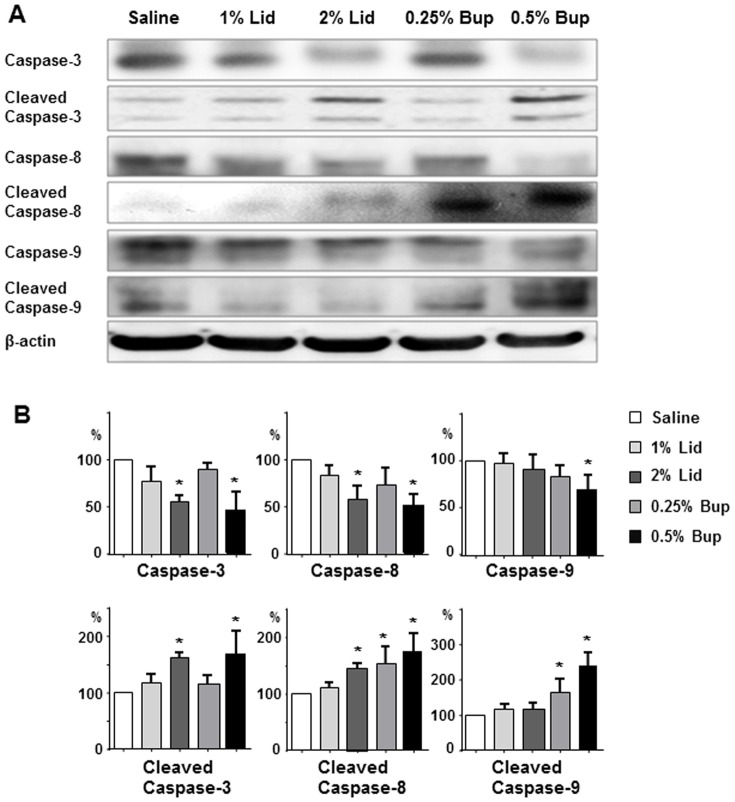
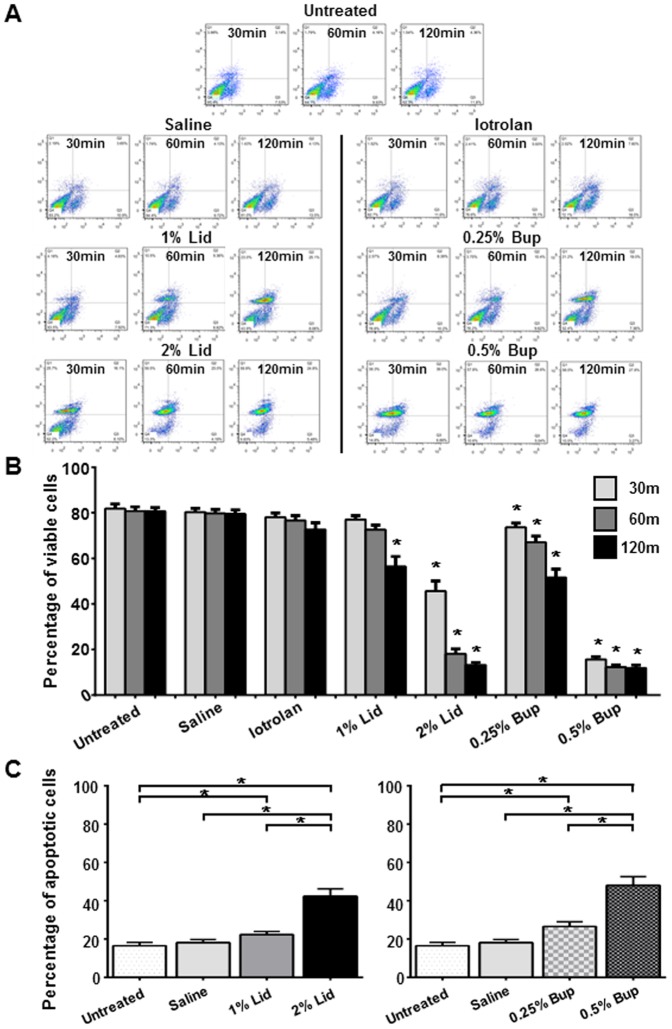
The radiocontrast agent iotrolan did not affect NP cell viability or induce apoptosis. In contrast, both the anesthetic agents significantly decreased cell viability and increased the apoptotic cell number in a time- and dose-dependent manner. After 120 min, 2% lidocaine and 0.5% bupivacaine decreased percent live cells to 13% and 10%, respectively (p<0.05). The number of apoptotic cells was doubled by increasing lidocaine dosage from 1% to 2% (23% and 42%) and bupivacaine from 0.25% to 0.50% (25% and 48%) (p<0.05). Western blot analysis revealed that both anesthetic agents upregulated cleaved caspase-3 and caspase-8, whereas only bupivacaine upregulated cleaved caspase-9.
CONCLUSIONS/SIGNIFICANCE: The present study demonstrates that iotrolan does not affect the viability of healthy human NP cells. In contrast, the two anesthetic agents commonly used in discography or discoblock may cause extensive damage to IVDs by inducing apoptotic cell death.
椎间盘造影和椎间盘内阻滞术是用于诊断椎间盘源性腰痛的影像学检查方法。虽然椎间盘内的针穿刺本身会导致椎间盘退变,但这些操作中使用的药物也可能对椎间盘细胞产生有害影响。本研究旨在分析造影剂和局部麻醉剂是否对人髓核细胞有不良影响。
健康的人髓核细胞在三维(3D)细胞-藻酸盐珠复合材料中培养 7 天,然后用临床相关剂量的造影剂(碘海醇)或局部麻醉剂(利多卡因或布比卡因)处理。通过共聚焦显微镜和流式细胞术测量细胞活力和细胞凋亡。根据半胱天冬酶表达谱,通过 Western blot 分析鉴定药物激活的凋亡途径。
造影剂碘海醇不影响 NP 细胞活力或诱导细胞凋亡。相比之下,两种麻醉剂均显著降低细胞活力,并随时间和剂量依赖性增加凋亡细胞数量。120 分钟后,2%利多卡因和 0.5%布比卡因分别将活细胞百分比降低至 13%和 10%(p<0.05)。将利多卡因剂量从 1%增加到 2%(23%和 42%)和布比卡因从 0.25%增加到 0.50%(25%和 48%)时,凋亡细胞数量增加了一倍(p<0.05)。Western blot 分析显示,两种麻醉剂均上调了 cleaved caspase-3 和 caspase-8,而只有布比卡因上调了 cleaved caspase-9。
本研究表明碘海醇不影响健康人髓核细胞的活力。相比之下,椎间盘造影和椎间盘内阻滞术常用的两种麻醉剂可能通过诱导细胞凋亡导致椎间盘广泛损伤。