Amini Lari Mahmood, Faramarzi Hosain, Shams Mesbah, Marzban Maryam, Joulaei Hasan
Shiraz HIV/AIDS Research Center, Shiraz University of Medical Sciences, Shiraz, Iran.
Namazi Hospital , endocrine & Metabolism research center, Shiraz University of Medical Sciences, Shiraz-Iran.
Iran J Psychiatry Behav Sci. 2013 Spring;7(1):61-8.
In Iran, psychological aspect of HIV infection is poorly understood. The purposes of this study were to evaluate sexual dysfunction, depression rate and health-related quality of life and evaluate the association between sexual dysfunction, depression and quality of life in a group of HIV(+) subjects in Shiraz, Iran.
In this cross-sectional study, 278 male HIV-positive patients who had referred to voluntary counseling and testing and methadone maintenance therapy centers were recruited based on convenience sampling from May to October 2010. The purpose of the study was explained and interested individuals provided informed consent and completed validated questionnaires [Medical Outcomes Study Short Form-36 (SF-36(, Brief Male Sexual Function Inventory (BMSFI), Beck Depression Inventory-short form(BDI)] to assess overall health related quality of life (HRQOL), sexual function, and depression.
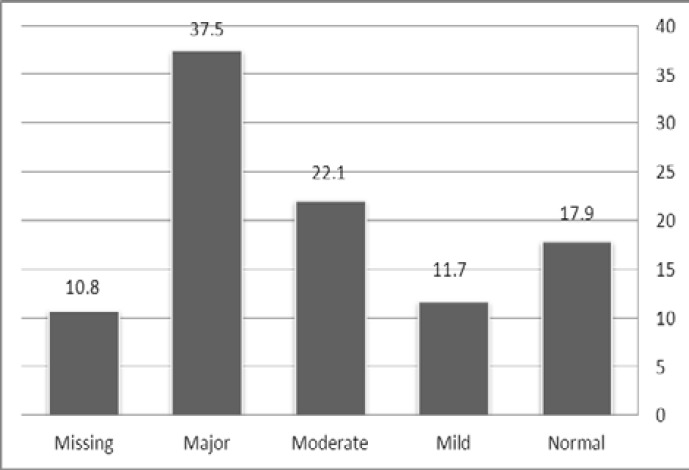
Average age of the participants was 34.9 ± 10.7 years and 37.5% were severely depressed. Ordinal logistic regression indicated that sexual drive (-0.15; CI: -0.28 to -0.027), ejaculation (-1.91, CI: -2.71 to -1.12), and problem assessment (-0.098, CI: -0.17 to -0.02) had significant effect on depression type. Depression was significantly correlated with poorer quality of life in all domains. Pearson's correlation coefficients between the BMSFI and the domains of SF-36 indicated that sexual drive (r= 0.215), ejaculation (r= 0.297) and problem assessment (r= 0.213) were significantly correlated with emotional wellbeing.
Sexual function and depression showed association with quality of life. Effective treatment of depression and sexual function may improve the quality of life of HIV-infected person.
None.
在伊朗,人们对艾滋病毒感染的心理层面了解甚少。本研究的目的是评估性功能障碍、抑郁率和与健康相关的生活质量,并评估伊朗设拉子一组艾滋病毒阳性受试者性功能障碍、抑郁与生活质量之间的关联。
在这项横断面研究中,基于便利抽样,从2010年5月至10月招募了278名到自愿咨询检测和美沙酮维持治疗中心就诊的男性艾滋病毒阳性患者。向他们解释了研究目的,感兴趣的个体提供了知情同意书,并完成了经过验证的问卷[医学结果研究简表-36(SF-36)、男性性功能简易量表(BMSFI)、贝克抑郁量表简版(BDI)],以评估总体与健康相关的生活质量(HRQOL)、性功能和抑郁情况。
参与者的平均年龄为34.9±10.7岁,37.5%的人患有严重抑郁症。有序逻辑回归表明,性欲(-0.15;置信区间:-0.28至-0.027)、射精(-1.91,置信区间:-2.71至-1.12)和问题评估(-0.098,置信区间:-0.17至-0.02)对抑郁类型有显著影响。抑郁与所有领域较差的生活质量显著相关。BMSFI与SF-36各领域之间的皮尔逊相关系数表明,性欲(r = 0.215)、射精(r = 0.297)和问题评估(r = 0.213)与情绪健康显著相关。
性功能和抑郁与生活质量相关。有效治疗抑郁和性功能障碍可能会改善艾滋病毒感染者的生活质量。
无。