Huang Meng, Zhang Li, Mesaros Clementina, Zhang Suhong, Blaha Michael A, Blair Ian A, Penning Trevor M
Center of Excellence in Environmental Toxicology and ‡Center for Cancer Pharmacology, Department of Pharmacology, Perelman School of Medicine, University of Pennsylvania , Philadelphia, Pennsylvania 19104-6160, United States.
Chem Res Toxicol. 2014 May 19;27(5):852-63. doi: 10.1021/tx500031p. Epub 2014 Mar 31.
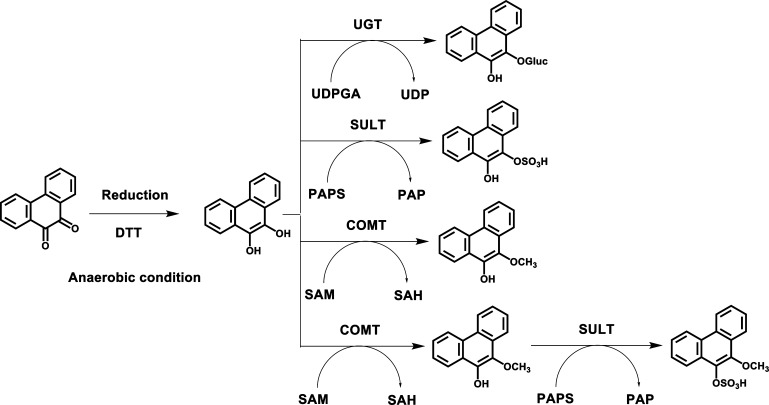
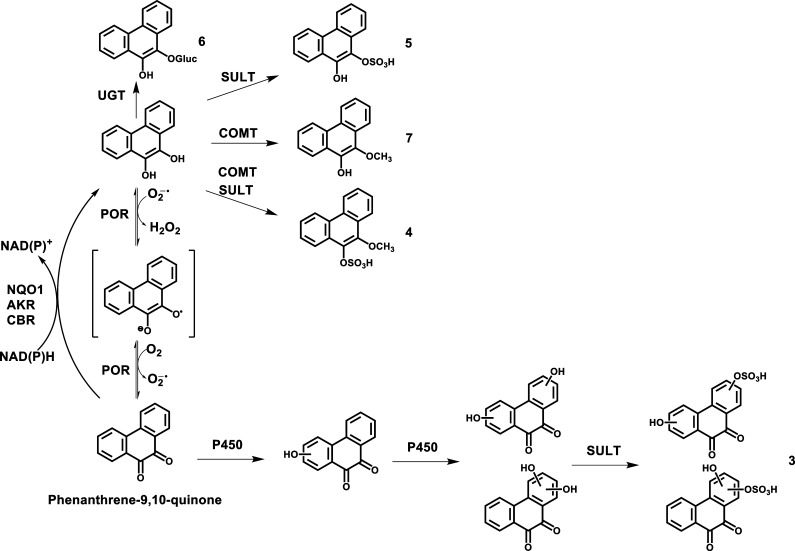
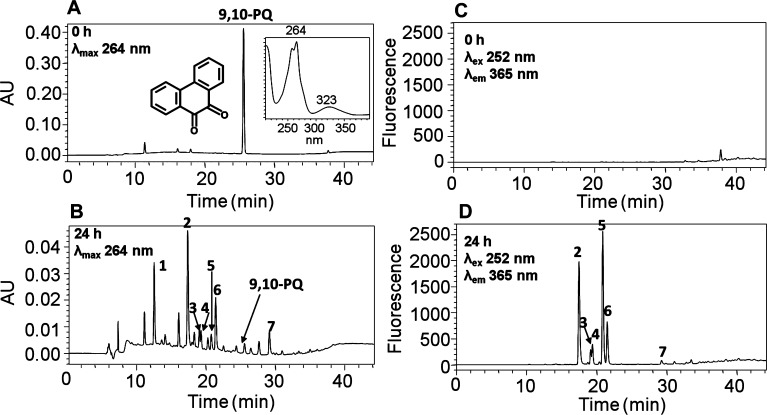
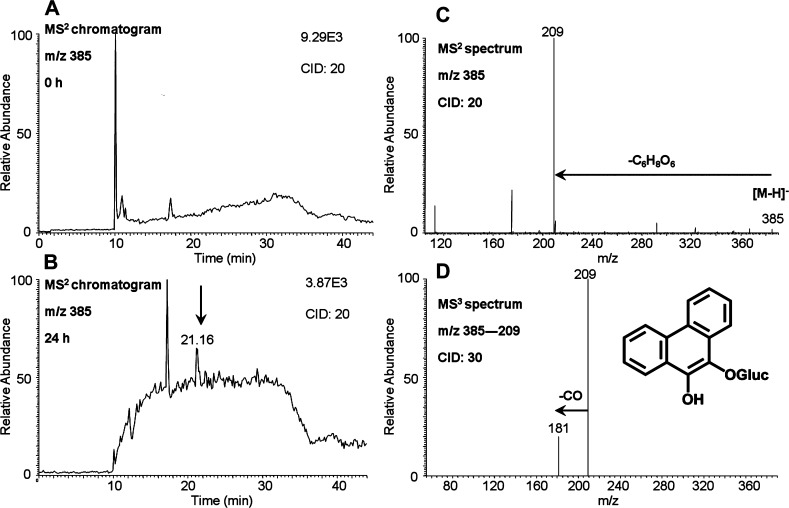
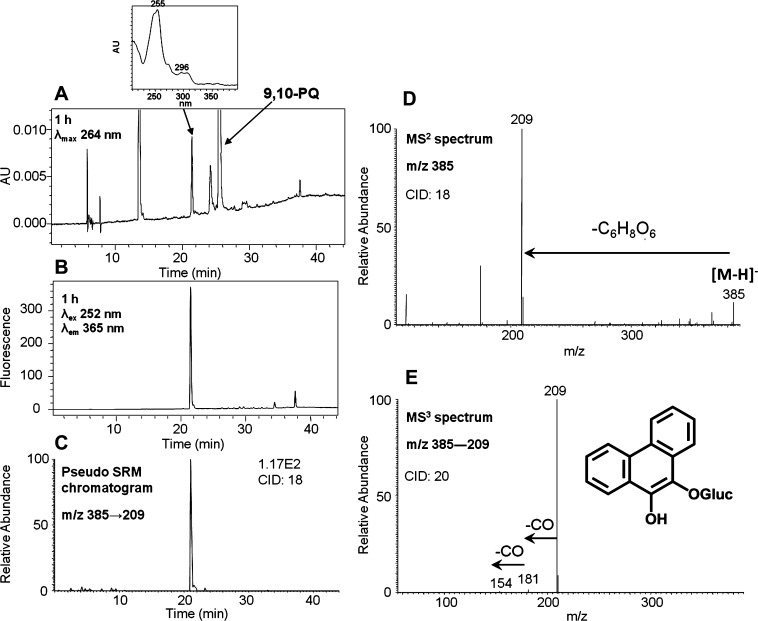
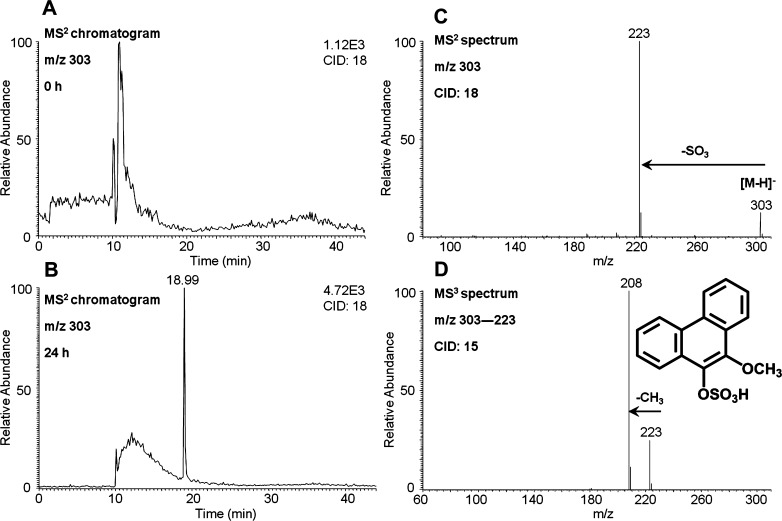
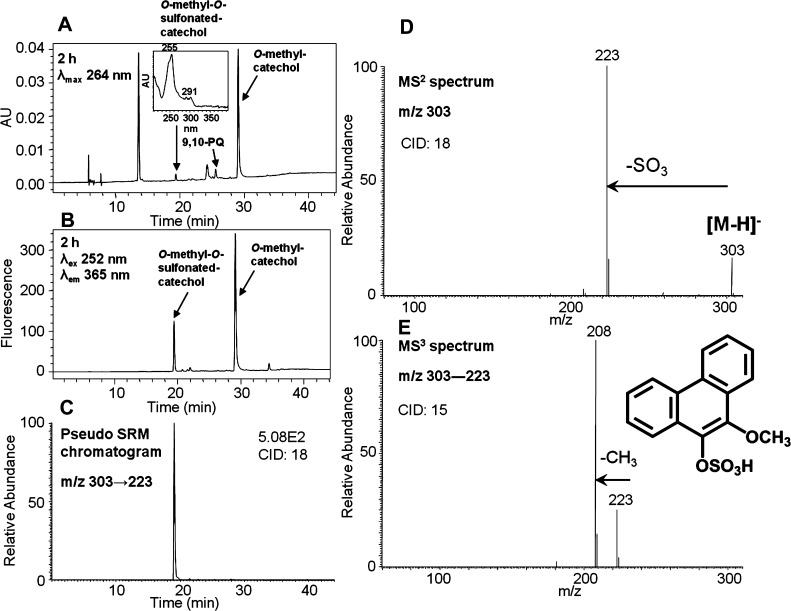
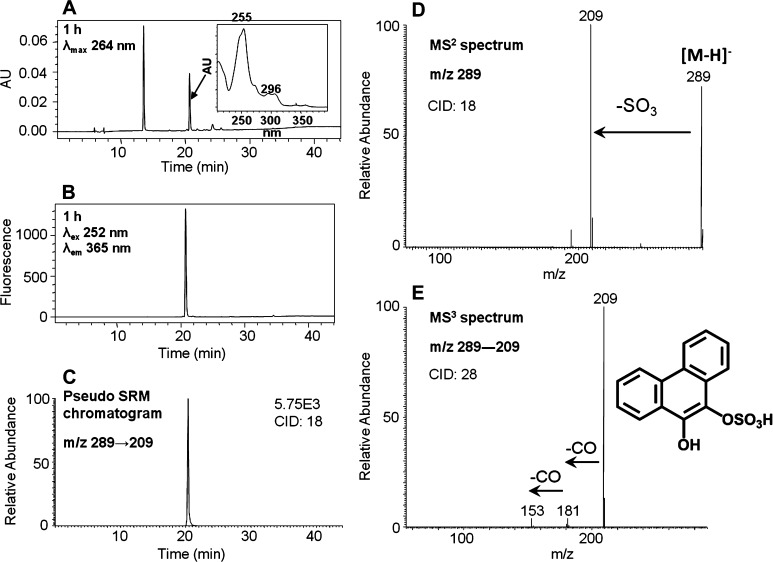
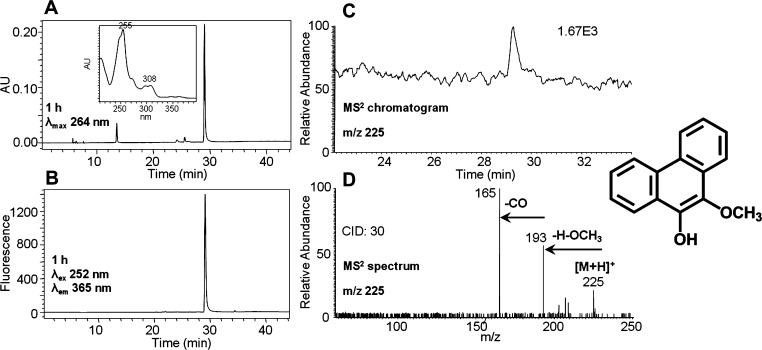
Exposure to polycyclic aromatic hydrocarbons (PAHs) in the food chain is the major human health hazard associated with the Deepwater Horizon oil spill. Phenanthrene is a representative PAH present in crude oil, and it undergoes biological transformation, photooxidation, and chemical oxidation to produce its signature oxygenated derivative, phenanthrene-9,10-quinone. We report the downstream metabolic fate of phenanthrene-9,10-quinone in HepG2 cells. The structures of the metabolites were identified by HPLC-UV-fluorescence detection and LC-MS/MS. O-mono-Glucuronosyl-phenanthrene-9,10-catechol was identified, as reported previously. A novel bis-conjugate, O-mono-methyl-O-mono-sulfonated-phenanthrene-9,10-catechol, was discovered for the first time, and evidence for both of its precursor mono conjugates was obtained. The identities of these four metabolites were unequivocally validated by comparison to authentic enzymatically synthesized standards. Evidence was also obtained for a minor metabolic pathway of phenanthrene-9,10-quinone involving bis-hydroxylation followed by O-mono-sulfonation. The identification of 9,10-catechol conjugates supports metabolic detoxification of phenanthrene-9,10-quinone through interception of redox cycling by UGT, COMT, and SULT isozymes and indicates the possible use of phenanthrene-9,10-catechol conjugates as biomarkers of human exposure to oxygenated PAH.
食物链中多环芳烃(PAHs)的暴露是与“深水地平线”漏油事件相关的主要人类健康危害。菲是原油中存在的一种代表性多环芳烃,它会经历生物转化、光氧化和化学氧化,生成其标志性的氧化衍生物菲-9,10-醌。我们报告了菲-9,10-醌在HepG2细胞中的下游代谢命运。代谢产物的结构通过高效液相色谱-紫外-荧光检测和液相色谱-串联质谱法进行鉴定。如先前报道,鉴定出了O-单葡糖醛酸基-菲-9,10-邻苯二酚。首次发现了一种新型双共轭物,即O-单甲基-O-单磺化-菲-9,10-邻苯二酚,并获得了其两种前体单共轭物的证据。通过与真实的酶促合成标准品进行比较,明确验证了这四种代谢产物的身份。还获得了菲-9,10-醌的一条次要代谢途径的证据,该途径涉及双羟基化,随后是O-单磺化。9,10-邻苯二酚共轭物的鉴定支持了菲-9,10-醌通过尿苷二磷酸葡萄糖醛酸基转移酶(UGT)、儿茶酚-O-甲基转移酶(COMT)和磺基转移酶(SULT)同工酶拦截氧化还原循环实现代谢解毒,并表明菲-9,10-邻苯二酚共轭物可能用作人类接触氧化多环芳烃的生物标志物。