State Key Laboratory of Crop Stress Biology for Arid Areas and College of Life Sciences, Northwest A & F University, Yangling, Shaanxi 712100, China.
BMC Genomics. 2014 Mar 19;15:211. doi: 10.1186/1471-2164-15-211.
Canola (Brassica napus L.) is one of the most important oil-producing crops in China and worldwide. The yield and quality of canola is frequently threatened by environmental stresses including drought, cold and high salinity. Calcium is a well-known ubiquitous intracellular secondary messenger in plants. Calcium-dependent protein kinases (CPKs) are Ser/Thr protein kinases found only in plants and some protozoans. CPKs are Ca2+ sensors that have both Ca2+ sensing function and kinase activity within a single protein and play crucial roles in plant development and responses to various environmental stresses.
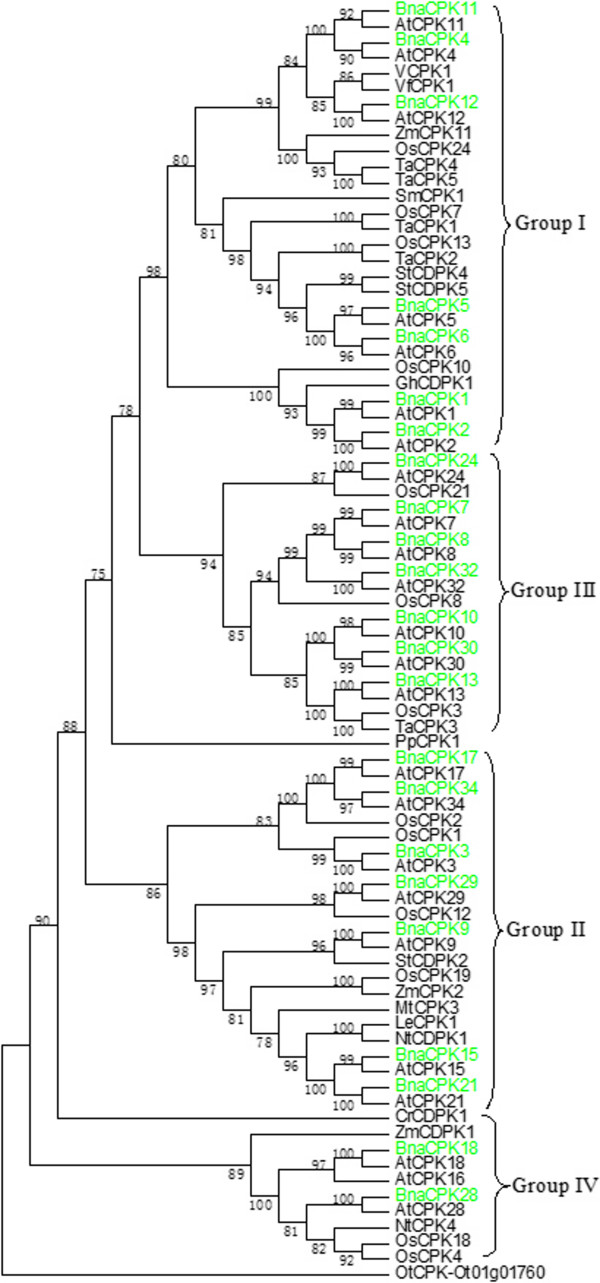
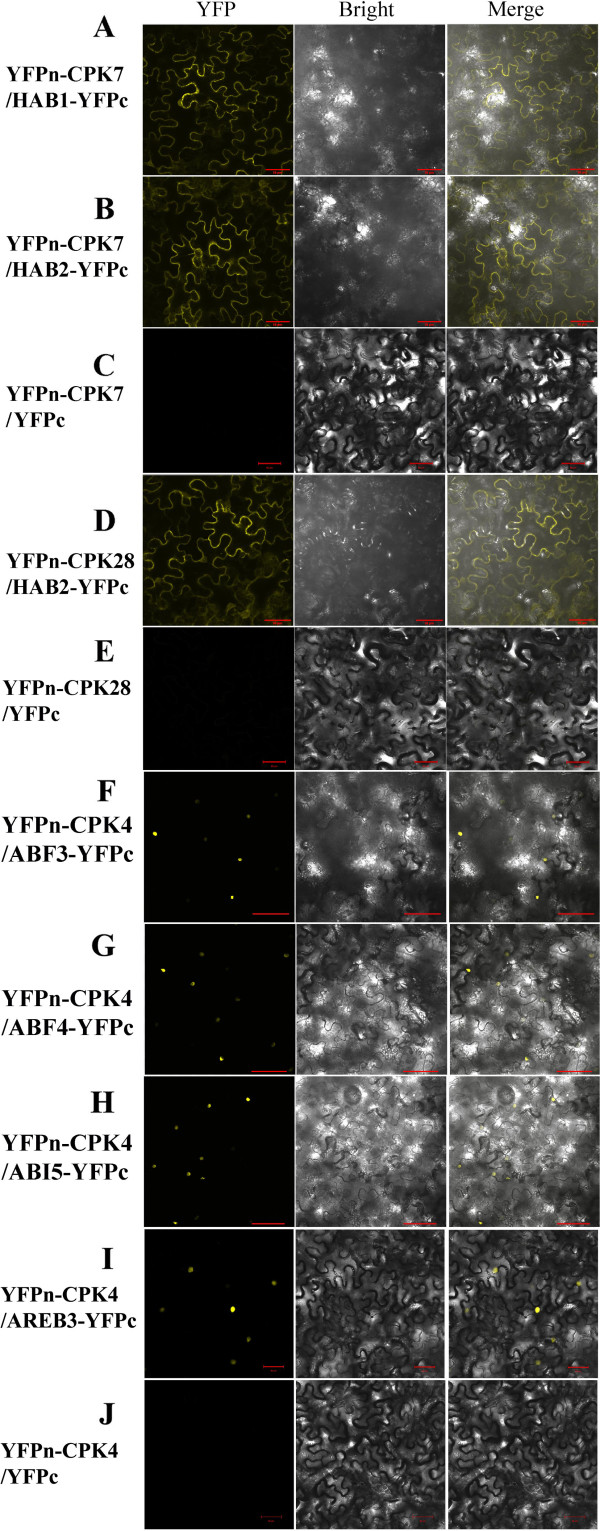
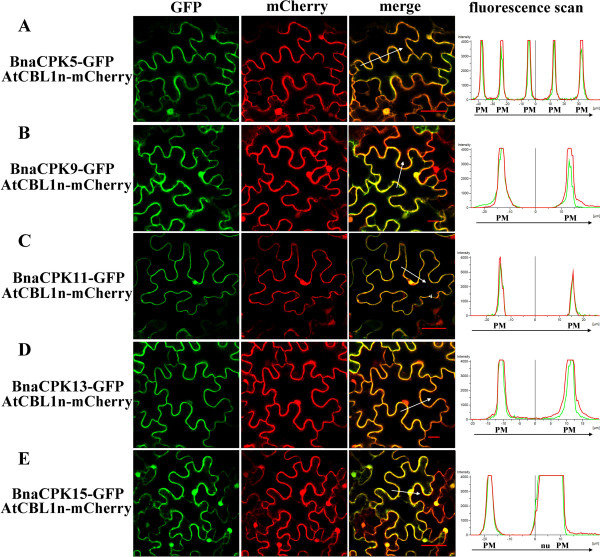
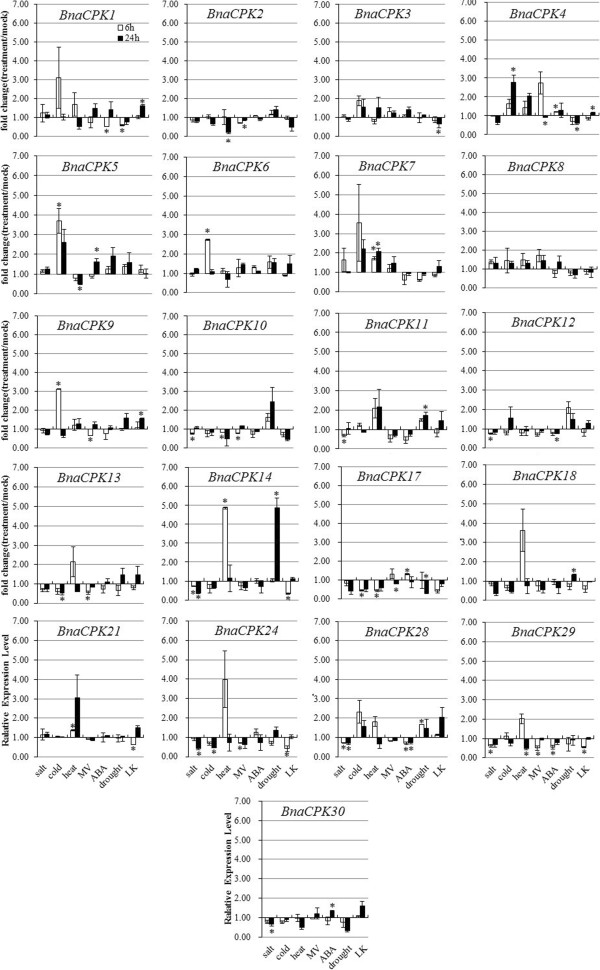
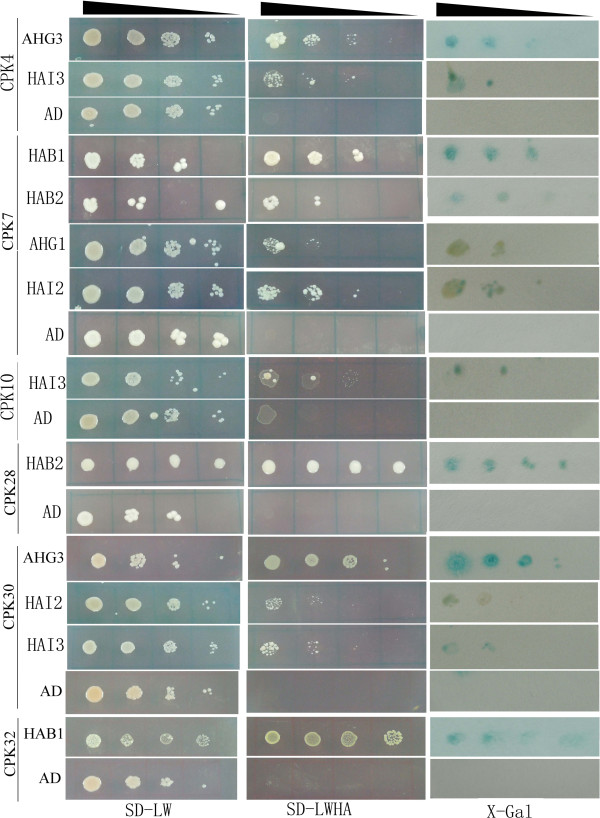
In this study, we mined the available expressed sequence tags (ESTs) of B. napus and identified a total of 25 CPK genes, among which cDNA sequences of 23 genes were successfully cloned from a double haploid cultivar of canola. Phylogenetic analysis demonstrated that they could be clustered into four subgroups. The subcellular localization of five selected BnaCPKs was determined using green fluorescence protein (GFP) as the reporter. Furthermore, the expression levels of 21 BnaCPK genes in response to salt, drought, cold, heat, abscisic acid (ABA), low potassium (LK) and oxidative stress were studied by quantitative RT-PCR and were found to respond to multiple stimuli, suggesting that canola CPKs may be convergence points of different signaling pathways. We also identified and cloned five and eight Clade A basic leucine zipper (bZIP) and protein phosphatase type 2C (PP2C) genes from canola and, using yeast two-hybrid and bimolecular fluorescence complementation (BiFC), determined the interaction between individual BnaCPKs and BnabZIPs or BnaPP2Cs (Clade A). We identified novel, interesting interaction partners for some of the BnaCPK proteins.
We present the sequences and characterization of CPK gene family members in canola for the first time. This work provides a foundation for further crop improvement and improved understanding of signal transduction in plants.
油菜(甘蓝型油菜)是中国乃至全球最重要的油料作物之一。油菜的产量和品质经常受到环境胁迫的威胁,包括干旱、寒冷和高盐。钙是植物中一种众所周知的普遍存在的细胞内第二信使。钙依赖蛋白激酶(CPKs)是仅存在于植物和一些原生动物中的丝氨酸/苏氨酸蛋白激酶。CPKs 是 Ca2+ 传感器,在单个蛋白内具有 Ca2+ 感应功能和激酶活性,在植物发育和对各种环境胁迫的反应中发挥关键作用。
本研究从油菜双单倍体品种中成功克隆了 23 个基因的 cDNA 序列,从已有的油菜表达序列标签(EST)中鉴定出了 25 个 CPK 基因。系统进化分析表明,它们可以分为四个亚组。利用绿色荧光蛋白(GFP)作为报告蛋白,对 5 个选定的 BnaCPKs 的亚细胞定位进行了测定。此外,通过定量 RT-PCR 研究了 21 个 BnaCPK 基因对盐、干旱、寒冷、热、脱落酸(ABA)、低钾(LK)和氧化胁迫的表达水平,发现它们对多种刺激有反应,表明油菜 CPK 可能是不同信号通路的汇聚点。我们还从油菜中鉴定并克隆了 5 个和 8 个 Clade A 碱性亮氨酸拉链(bZIP)和蛋白磷酸酶 2C(PP2C)基因,并利用酵母双杂交和双分子荧光互补(BiFC)技术,确定了单个 BnaCPKs 与 BnabZIPs 或 BnaPP2Cs(Clade A)的相互作用。我们确定了一些 BnaCPK 蛋白的新的、有趣的相互作用伙伴。
我们首次介绍了油菜 CPK 基因家族成员的序列和特征。这项工作为进一步的作物改良和对植物信号转导的深入理解提供了基础。