Key Lab of Biology and Genetic Improvement of Oil Crops, Oil Crops Research Institute, Chinese Academy of Agricultural Sciences (CAAS) , Wuhan, China.
Centre of Agricultural Biochemistry and Biotechnology (CABB), University of Agriculture , Faisalabad, Pakistan.
GM Crops Food. 2021 Jan 2;12(1):251-281. doi: 10.1080/21645698.2020.1859898.
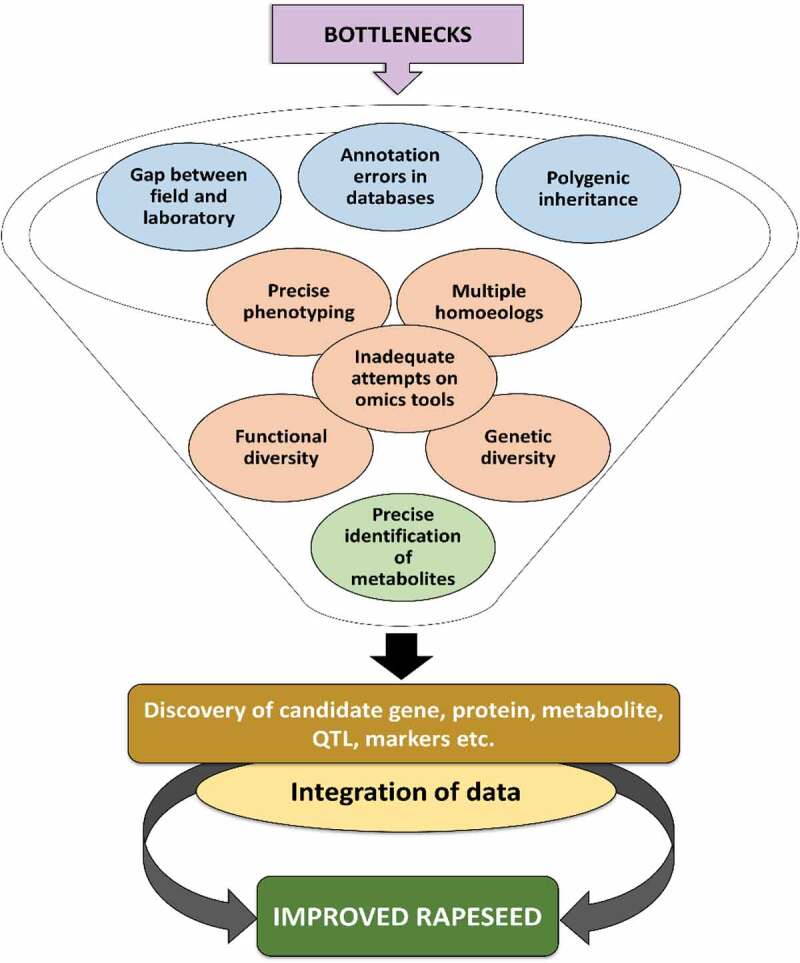
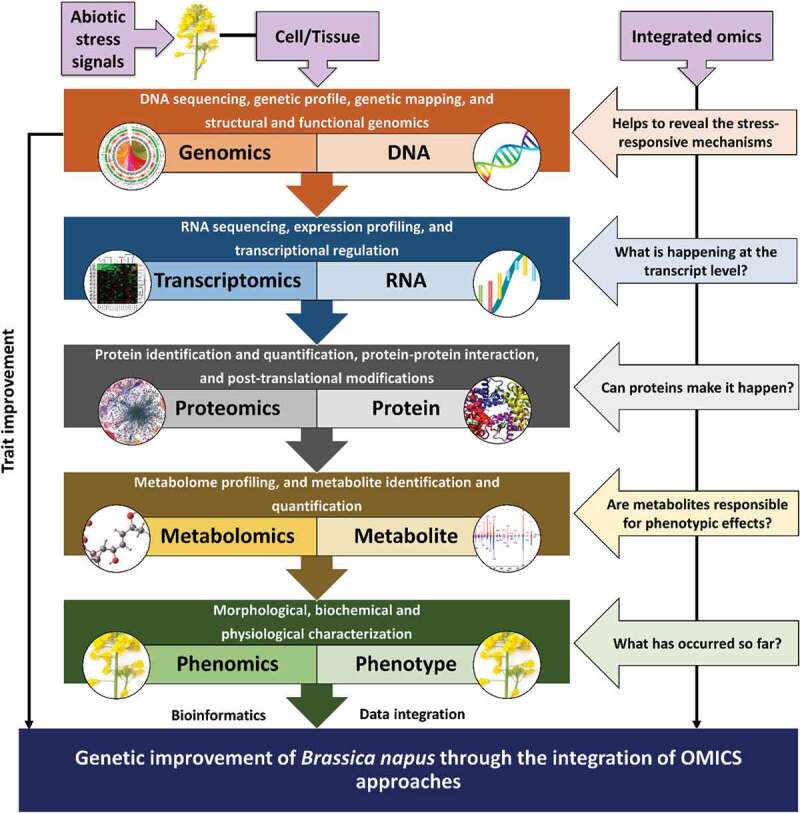
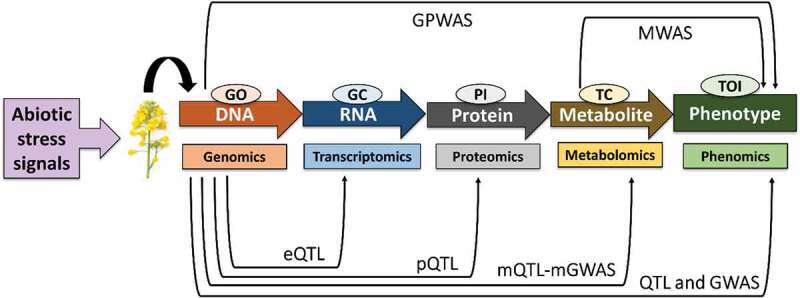
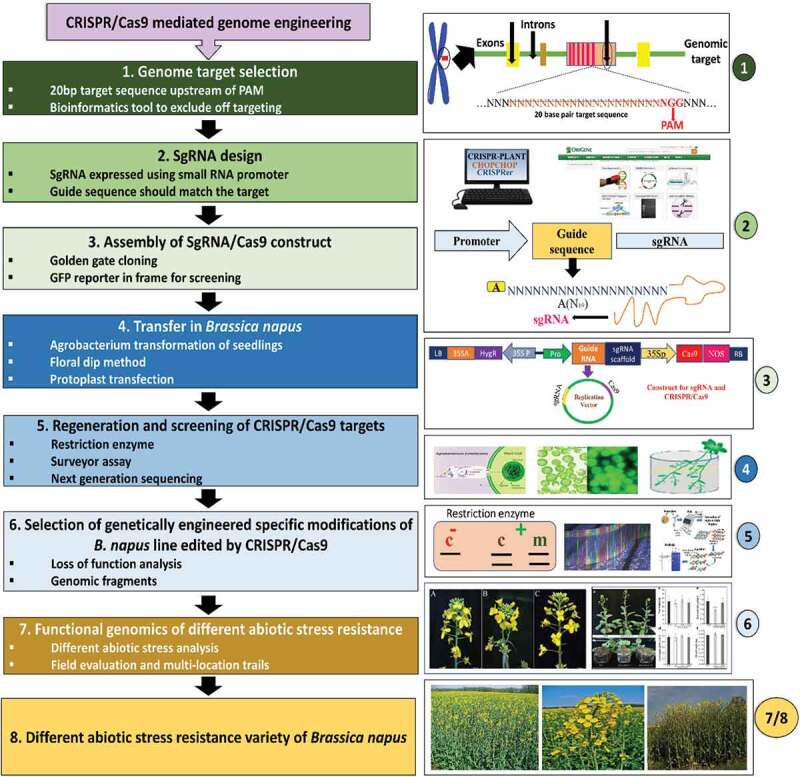
Plant abiotic stresses negative affects growth and development, causing a massive reduction in global agricultural production. Rapeseed ( L.) is a major oilseed crop because of its economic value and oilseed production. However, its productivity has been reduced by many environmental adversities. Therefore, it is a prime need to grow rapeseed cultivars, which can withstand numerous abiotic stresses. To understand the various molecular and cellular mechanisms underlying the abiotic stress tolerance and improvement in rapeseed, omics approaches have been extensively employed in recent years. This review summarized the recent advancement in genomics, transcriptomics, proteomics, metabolomics, and their imploration in abiotic stress regulation in rapeseed. Some persisting bottlenecks have been highlighted, demanding proper attention to fully explore the omics tools. Further, the potential prospects of the CRISPR/Cas9 system for genome editing to assist molecular breeding in developing abiotic stress-tolerant rapeseed genotypes have also been explained. In short, the combination of integrated omics, genome editing, and speed breeding can alter rapeseed production worldwide.
植物非生物胁迫会对其生长和发育产生负面影响,导致全球农业产量大幅减少。油菜(L.)是一种主要的油料作物,因为它具有经济价值和油籽产量。然而,其生产力受到许多环境逆境的影响。因此,迫切需要培育能够耐受多种非生物胁迫的油菜品种。为了了解油菜耐非生物胁迫的各种分子和细胞机制以及提高其耐逆性,近年来广泛采用了组学方法。本综述总结了近年来在油菜中进行的基因组学、转录组学、蛋白质组学、代谢组学及其在非生物胁迫调控中的应用的最新进展。还强调了一些持续存在的瓶颈问题,需要引起适当的关注,以充分挖掘组学工具的潜力。此外,还解释了 CRISPR/Cas9 系统用于基因组编辑,以协助开发耐非生物胁迫的油菜基因型的分子育种的潜在前景。简而言之,综合组学、基因组编辑和加速育种的结合可以改变全球油菜生产。