School of Population and Public Health, University of British Columbia, Vancouver, British Columbia, Canada; Animal Health Centre, British Columbia Ministry of Agriculture, Abbotsford, British Columbia, Canada.
Department of Pathobiology, University of Guelph, Guelph, Ontario, Canada.
PLoS One. 2014 Mar 19;9(3):e91654. doi: 10.1371/journal.pone.0091654. eCollection 2014.
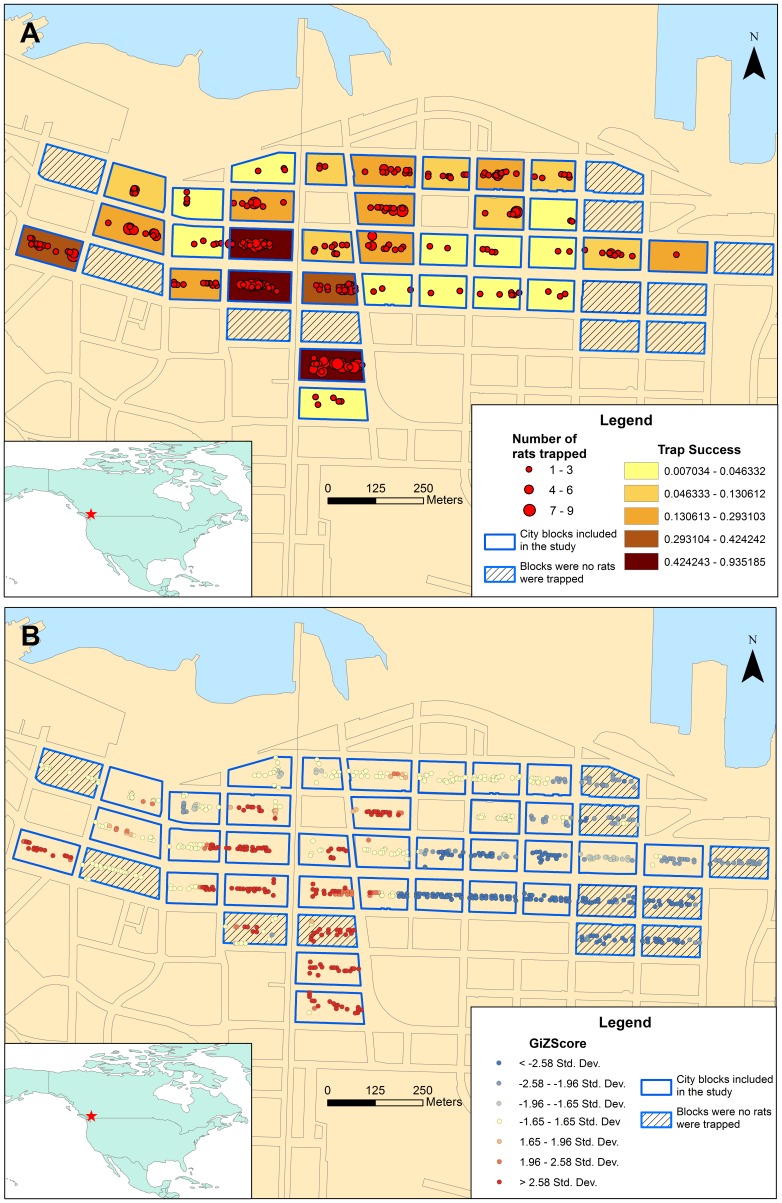
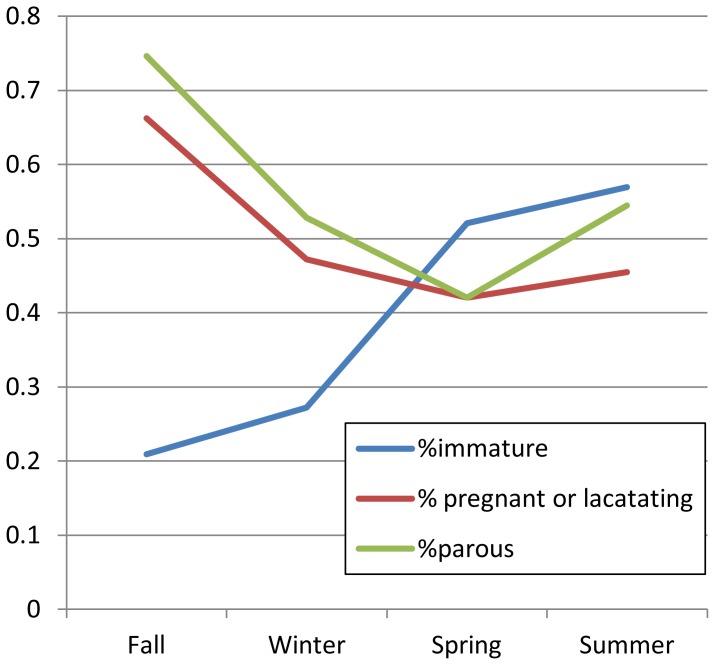
Norway and black rats (Rattus norvegicus and Rattus rattus) are among the most ubiquitous urban wildlife species and are the source of a number of zoonotic diseases responsible for significant human morbidity and mortality in cities around the world. Rodent ecology is a primary determinant of the dynamics of zoonotic pathogens in rodent populations and the risk of pathogen transmission to people, yet many studies of rat-associated zoonoses do not account for the ecological characteristics of urban rat populations. This hinders the development of an in-depth understanding of the ecology of rat-associated zoonoses, limits comparability among studies, and can lead to erroneous conclusions. We conducted a year-long trapping-removal study to describe the ecological characteristics of urban rat populations in an inner-city neighborhood of Vancouver, Canada. The study focused on factors that might influence the ecology of zoonotic pathogens in these populations and/or our understanding of that ecology. We found that rat population density varied remarkably over short geographical distances, which could explain observed spatial distributions of rat-associated zoonoses and have implications for sampling and data analysis during research and surveillance. Season appeared to influence rat population composition even within the urban environment, which could cause temporal variation in pathogen prevalence. Body mass and bite wounds, which are often used in epidemiologic analyses as simple proxies for age and aggression, were shown to be more complex than previously thought. Finally, we found that factors associated with trapping can determine the size and composition of sampled rat population, and thus influence inferences made about the source population. These findings may help guide future studies of rats and rat-associated zoonoses.
挪威鼠(Rattus norvegicus)和褐家鼠(Rattus rattus)是分布最广泛的城市野生动物之一,也是许多人畜共患病的病原体来源,这些疾病在全球城市中导致了大量的发病率和死亡率。啮齿动物生态学是决定啮齿动物种群中人畜共患病病原体动态和病原体向人类传播风险的主要因素,但许多与鼠类相关的人畜共患病研究并未考虑城市鼠类种群的生态特征。这阻碍了对鼠类相关人畜共患病生态学的深入了解,限制了研究之间的可比性,并可能导致错误的结论。我们进行了一项为期一年的诱捕-清除研究,以描述加拿大温哥华市中心社区的城市鼠类种群的生态特征。该研究侧重于可能影响这些种群中人畜共患病病原体生态学的因素,以及我们对这种生态学的理解。我们发现,鼠类种群密度在短距离内变化显著,这可以解释观察到的鼠类相关人畜共患病的空间分布,并对研究和监测期间的采样和数据分析具有重要意义。即使在城市环境中,季节似乎也会影响鼠类种群组成,这可能导致病原体流行率的时间变化。体重和咬伤,这些通常在流行病学分析中被用作年龄和攻击性的简单替代指标,其复杂性超出了以往的认识。最后,我们发现与诱捕相关的因素可以决定抽样鼠类种群的大小和组成,从而影响对来源种群的推断。这些发现可能有助于指导未来对鼠类和鼠类相关人畜共患病的研究。