Department of Biochemistry, Ponce School of Medicine and Health Sciences, P,O Box 7004, 00731 Ponce, PR, USA.
J Neuroinflammation. 2014 Mar 22;11:53. doi: 10.1186/1742-2094-11-53.
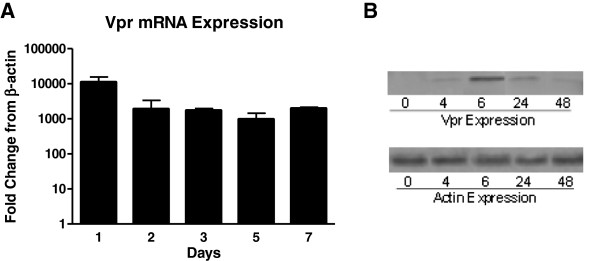
HIV-infected individuals are at an increased risk of developing neurological abnormalities. HIV induces neurotoxicity by host cellular factors and individual viral proteins. Some of these proteins including viral protein R (Vpr) promote immune activation and neuronal damage. Vpr is known to contribute to cell death of cultured rat hippocampal neurons and suppresses axonal growth. Behavioral studies are limited and suggest hyperactivity in the presence of Vpr. Thus Vpr may play a role in hippocampal loss of function. The purpose of this study is to determine the ability of HIV-1 Vpr production by astrocytes in the hippocampus to cause neurological deficits and memory impairments.
We tested the performance of rats in novel object and novel location tasks after hippocampal infusion with astrocytes expressing HIV-1 Vpr. Synaptic injury and morphological changes were measured by synaptophysin immunoreactivity and Nissl staining.
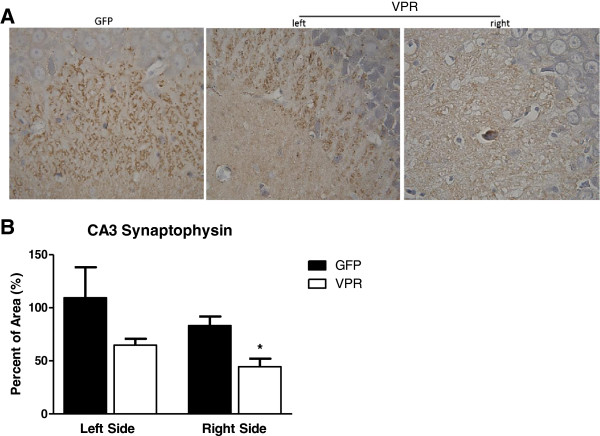
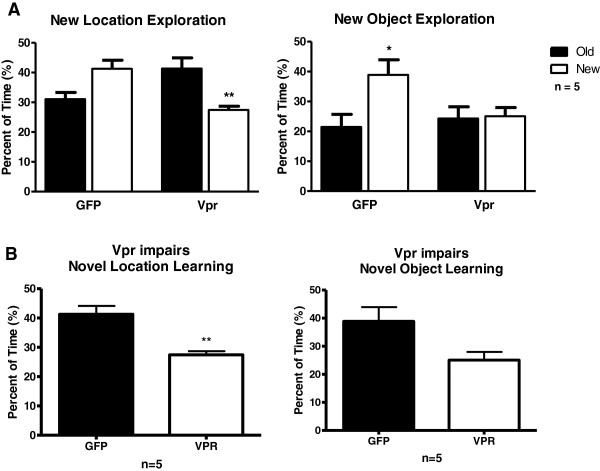
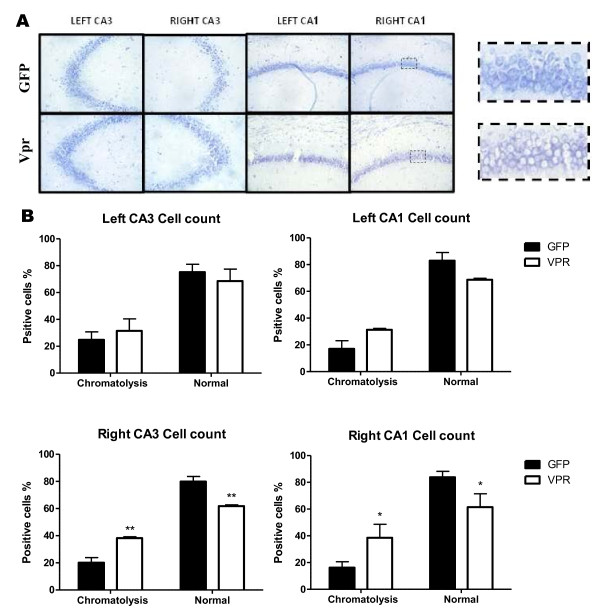
Vpr-infused rats showed impaired novel location and novel object recognition compared with control rats expressing green fluorescent protein (GFP). This impairment was correlated with a significant decrease in synaptophysin immunoreactivity in the hippocampal CA3 region, suggesting synaptic injury in HIV-1 Vpr-treated animals. In addition, Nissl staining showed morphological changes indicative of neuronal chromatolysis in the Vpr group. The Vpr-induced neuronal damage and synaptic loss suggest that neuronal dysfunction caused the spatial and recognition memory deficits found in the Vpr-infused animals.
In this study, we demonstrate that HIV-1 Vpr produced by astrocytes in the hippocampus impairs hippocampal-dependent learning. The data suggest Vpr is a neurotoxin with the potential to cause learning impairment in HIV-1 infected individuals even under conditions of limited viral replication.
感染 HIV 的个体发生神经异常的风险增加。HIV 通过宿主细胞因子和个体病毒蛋白诱导神经毒性。其中一些蛋白,包括病毒蛋白 R(Vpr),可促进免疫激活和神经元损伤。Vpr 已知可导致培养的大鼠海马神经元死亡,并抑制轴突生长。行为研究有限,并表明 Vpr 存在时表现为过度活跃。因此,Vpr 可能在海马功能丧失中起作用。本研究旨在确定海马星形胶质细胞中 HIV-1 Vpr 的产生是否会导致神经功能缺损和记忆障碍。
我们通过海马内注射表达 HIV-1 Vpr 的星形胶质细胞,测试了大鼠在新物体和新位置任务中的表现。通过突触小泡蛋白免疫反应性和尼氏染色测量突触损伤和形态变化。
与表达绿色荧光蛋白(GFP)的对照大鼠相比,Vpr 注射大鼠在新位置和新物体识别方面表现出受损。这种损伤与海马 CA3 区突触小泡蛋白免疫反应性显著下降相关,提示 HIV-1 Vpr 处理动物存在突触损伤。此外,尼氏染色显示 Vpr 组存在神经元色质溶解的形态变化,提示神经元功能障碍导致 Vpr 注射动物出现空间和识别记忆缺陷。
在这项研究中,我们证明了海马星形胶质细胞中产生的 HIV-1 Vpr 损害了海马依赖的学习。数据表明,Vpr 是一种神经毒素,即使在病毒复制有限的情况下,也有可能导致 HIV-1 感染者学习障碍。