Nair Smita K, De Leon Gabriel, Boczkowski David, Schmittling Robert, Xie Weihua, Staats Janet, Liu Rebecca, Johnson Laura A, Weinhold Kent, Archer Gary E, Sampson John H, Mitchell Duane A
Authors' Affiliation: Department of Surgery, Duke University Medical Center, Durham, North Carolina
Authors' Affiliation: Department of Surgery, Duke University Medical Center, Durham, North Carolina.
Clin Cancer Res. 2014 May 15;20(10):2684-94. doi: 10.1158/1078-0432.CCR-13-3268. Epub 2014 Mar 21.
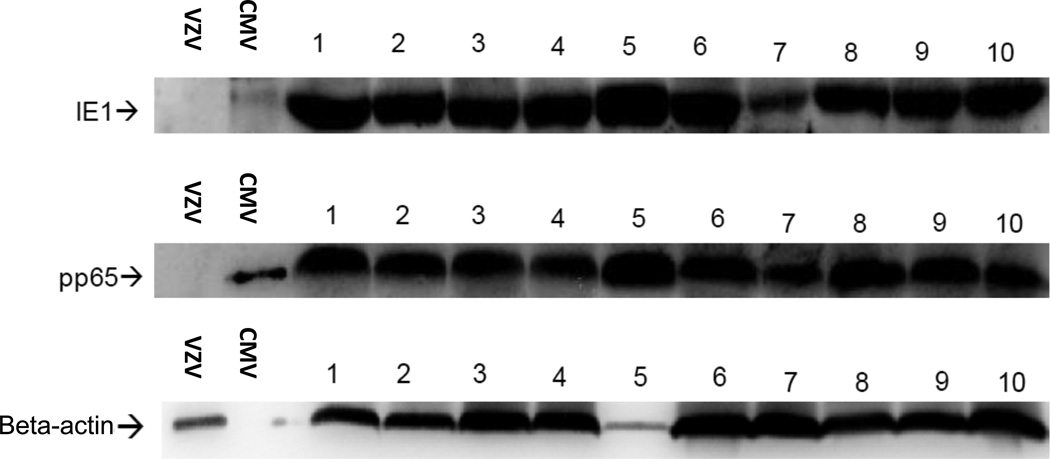
Despite aggressive conventional therapy, glioblastoma (GBM) remains uniformly lethal. Immunotherapy, in which the immune system is harnessed to specifically attack malignant cells, offers a treatment option with less toxicity. The expression of cytomegalovirus (CMV) antigens in GBM presents a unique opportunity to target these viral proteins for tumor immunotherapy. Although the presence of CMV within malignant gliomas has been confirmed by several laboratories, its relevance as an immunologic target in GBM has yet to be established. The objective of this study was to explore whether T cells stimulated by CMV pp65 RNA-transfected dendritic cells (DC) target and eliminate autologous GBM tumor cells in an antigen-specific manner.
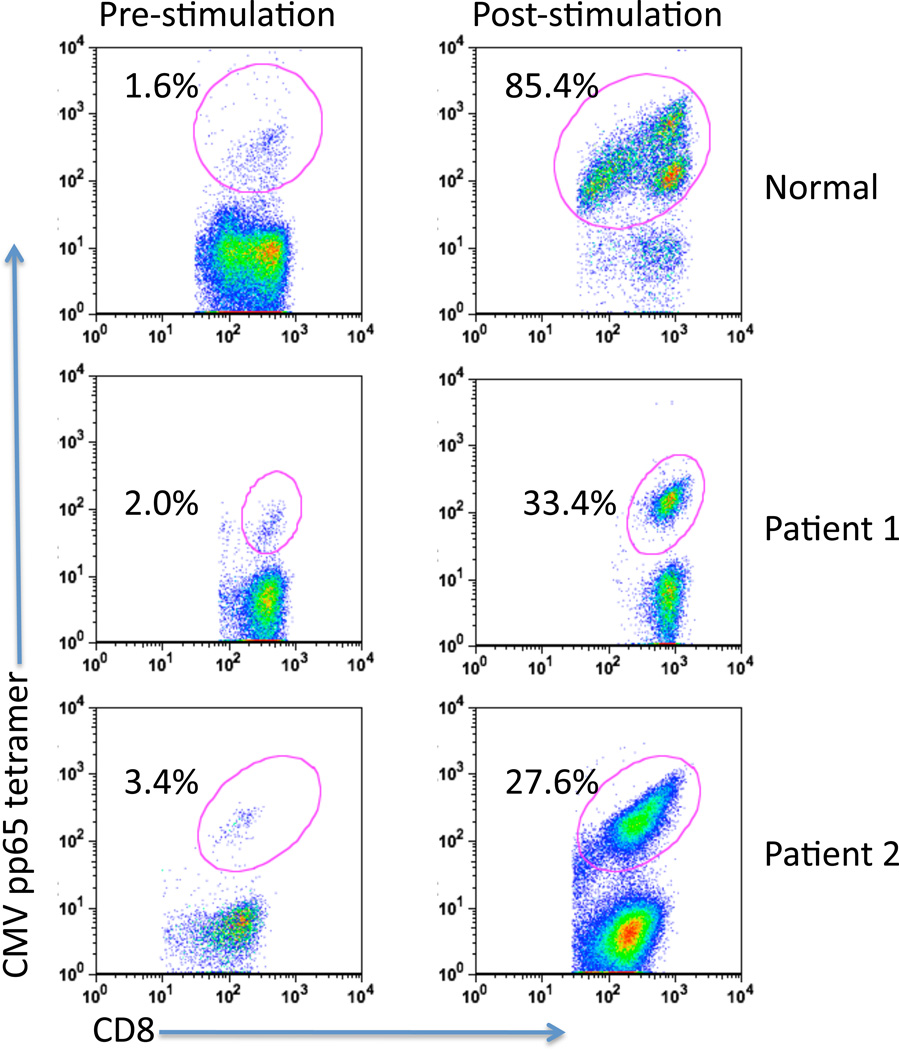
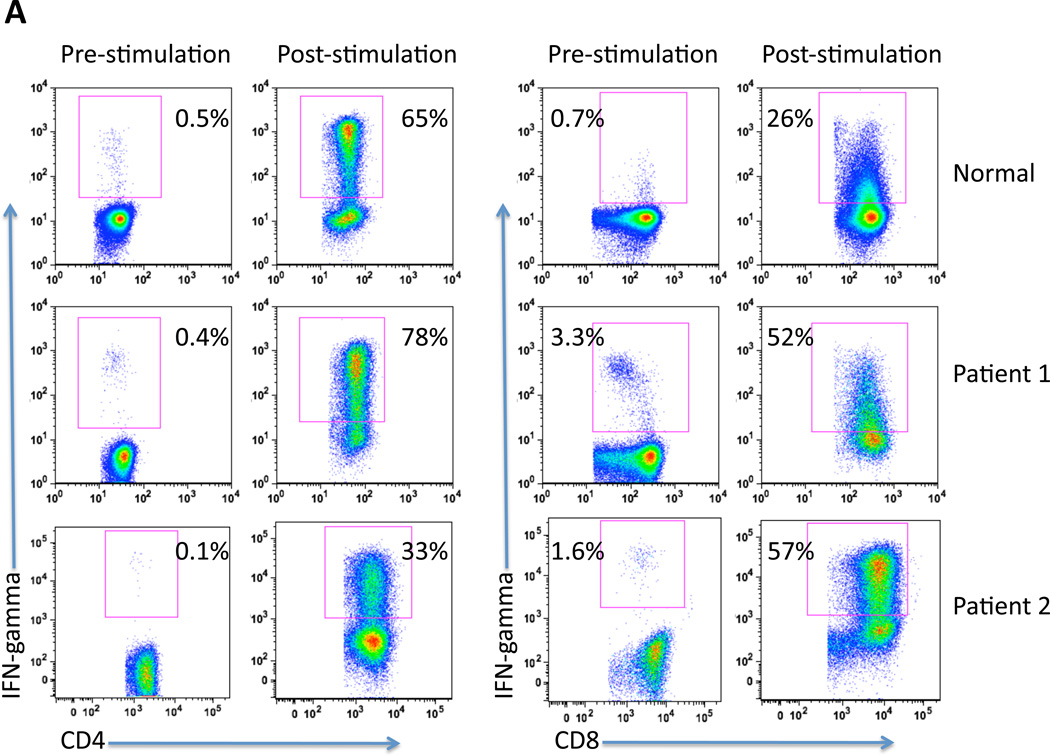
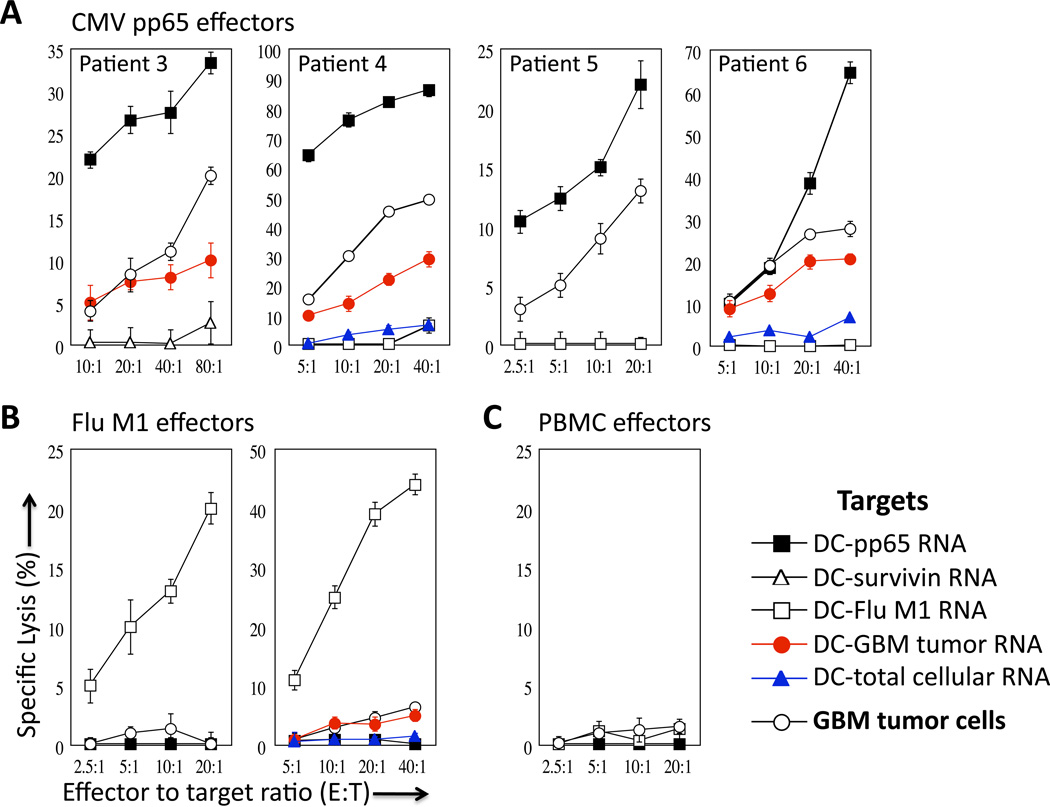
T cells from patients with GBM were stimulated with autologous DCs pulsed with CMV pp65 RNA, and the function of the effector CMV pp65-specific T cells was measured.
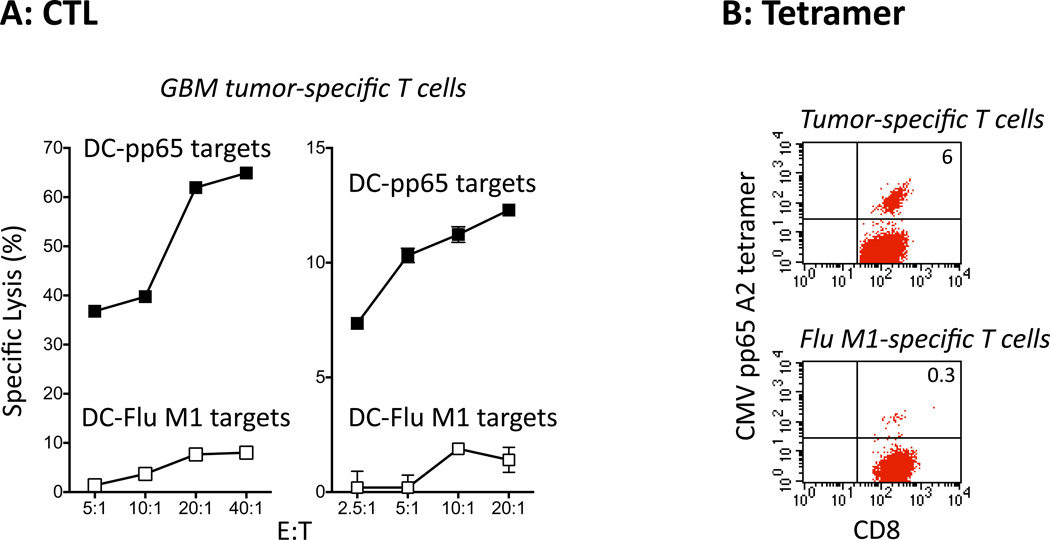
In this study, we demonstrate the ability to elicit CMV pp65-specific immune responses in vitro using RNA-pulsed autologous DCs generated from patients with newly diagnosed GBM. Importantly, CMV pp65-specific T cells lyse autologous, primary GBM tumor cells in an antigen-specific manner. Moreover, T cells expanded in vitro using DCs pulsed with total tumor RNA demonstrated a 10- to 20-fold expansion of CMV pp65-specific T cells as assessed by tetramer analysis and recognition and killing of CMV pp65-expressing target cells.
These data collectively demonstrate that CMV-specific T cells can effectively target glioblastoma tumor cells for immunologic killing and support the rationale for the development of CMV-directed immunotherapy in patients with GBM.
尽管采用了积极的传统疗法,胶质母细胞瘤(GBM)仍然无一例外都是致命的。免疫疗法利用免疫系统特异性攻击恶性细胞,提供了一种毒性较小的治疗选择。GBM中巨细胞病毒(CMV)抗原的表达为针对这些病毒蛋白进行肿瘤免疫治疗提供了独特的机会。尽管几个实验室已经证实恶性胶质瘤中存在CMV,但其作为GBM免疫靶点的相关性尚未确立。本研究的目的是探讨由CMV pp65 RNA转染的树突状细胞(DC)刺激的T细胞是否以抗原特异性方式靶向并消除自体GBM肿瘤细胞。
用CMV pp65 RNA脉冲处理的自体DC刺激GBM患者的T细胞,并检测效应性CMV pp65特异性T细胞的功能。
在本研究中,我们证明了使用新诊断GBM患者产生的RNA脉冲自体DC在体外引发CMV pp65特异性免疫反应的能力。重要的是,CMV pp65特异性T细胞以抗原特异性方式裂解自体原发性GBM肿瘤细胞。此外,通过四聚体分析以及对表达CMV pp65的靶细胞的识别和杀伤评估,使用总肿瘤RNA脉冲处理的DC在体外扩增的T细胞显示CMV pp65特异性T细胞扩增了10至20倍。
这些数据共同表明,CMV特异性T细胞可以有效地靶向胶质母细胞瘤肿瘤细胞进行免疫杀伤,并支持在GBM患者中开展CMV导向免疫治疗的理论依据。