Department of Pathology and Cell Biology, Columbia University, New York, New York, United States of America.
PLoS One. 2014 Mar 21;9(3):e91568. doi: 10.1371/journal.pone.0091568. eCollection 2014.
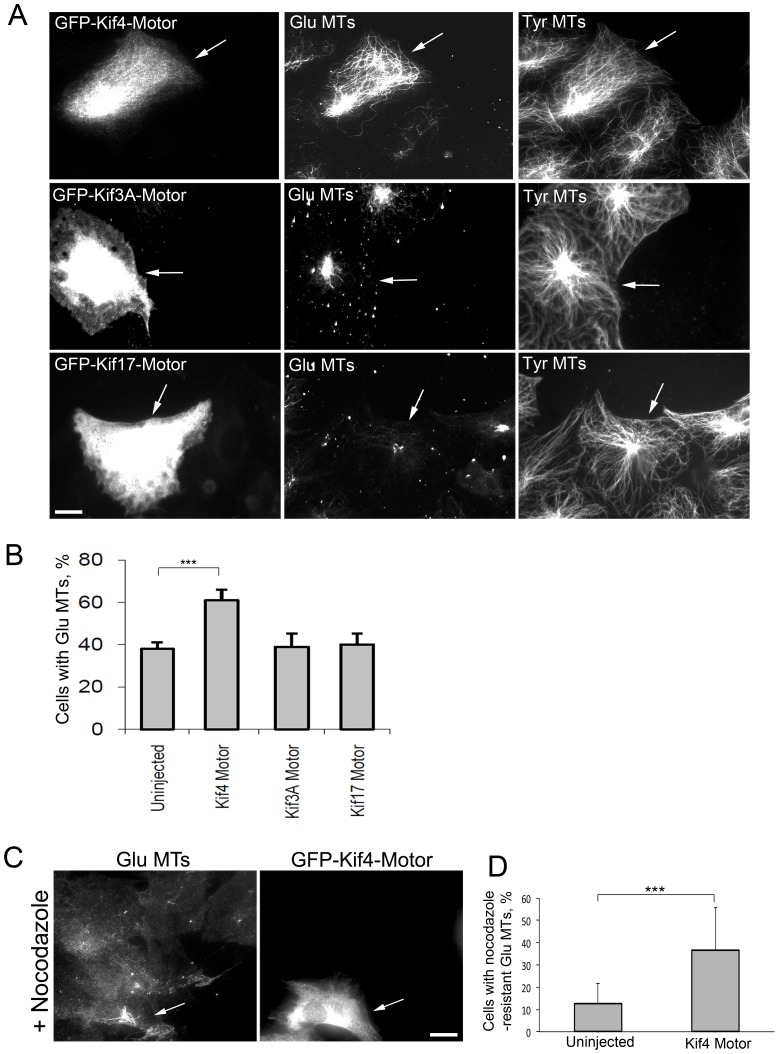
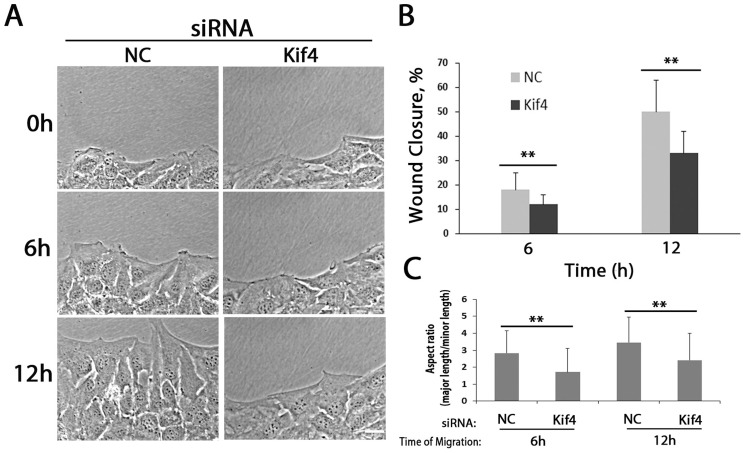
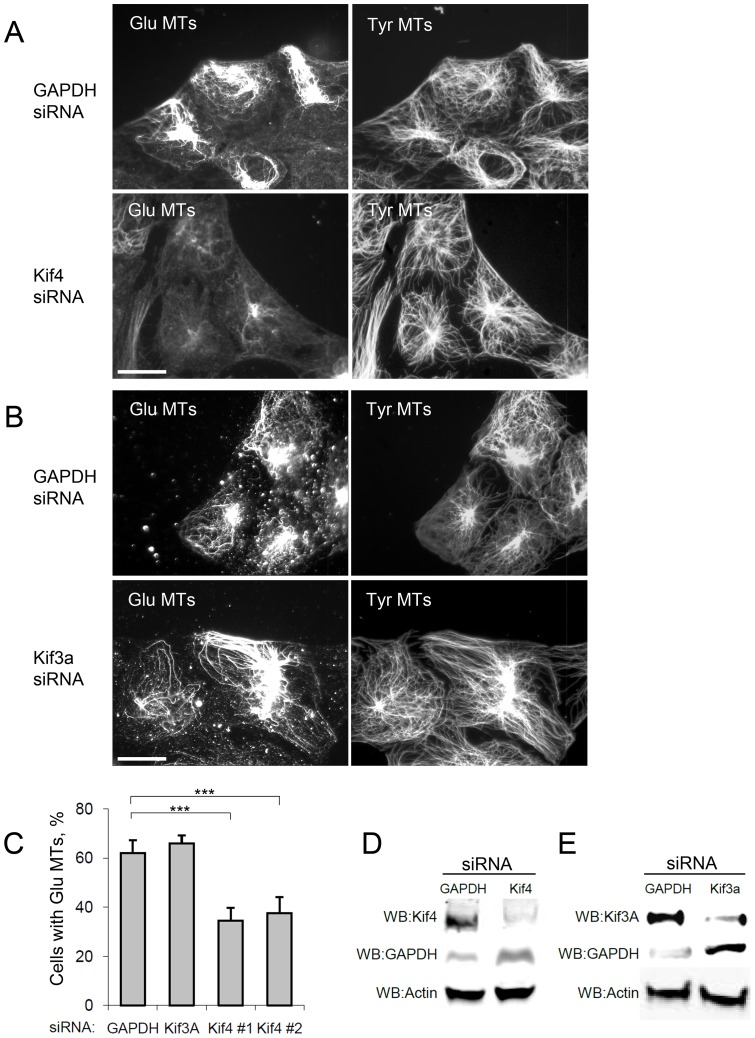
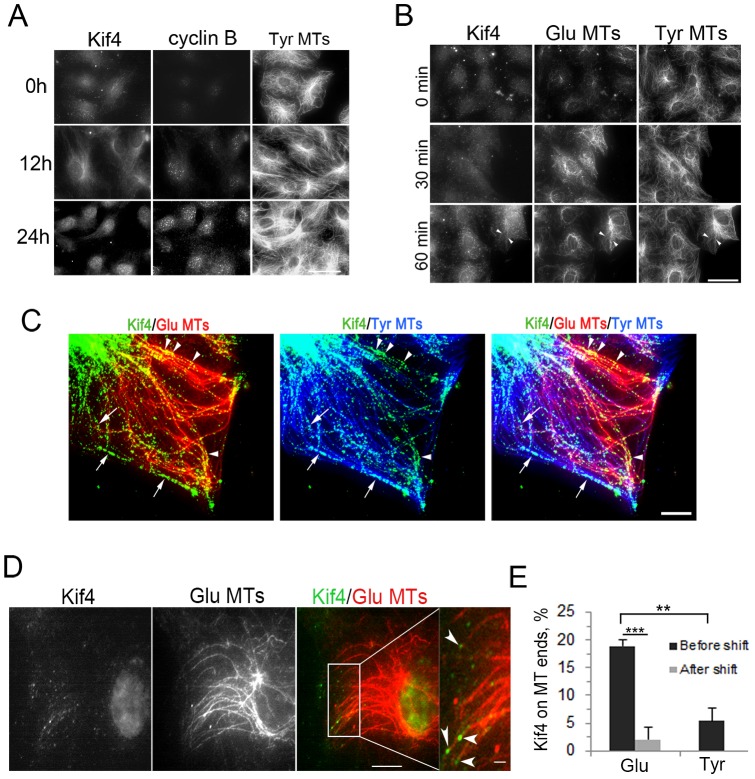
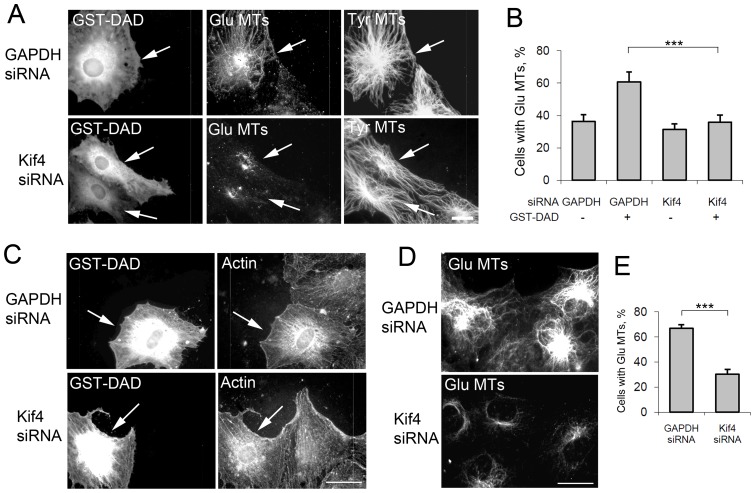
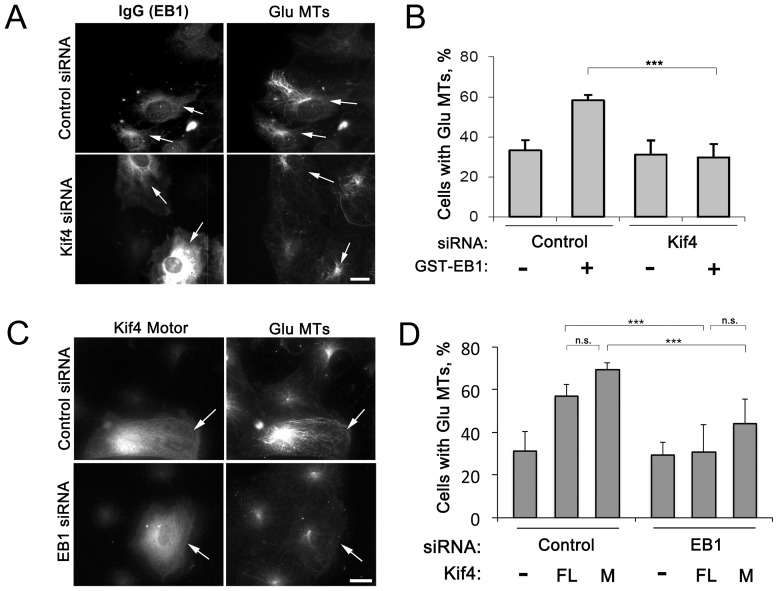
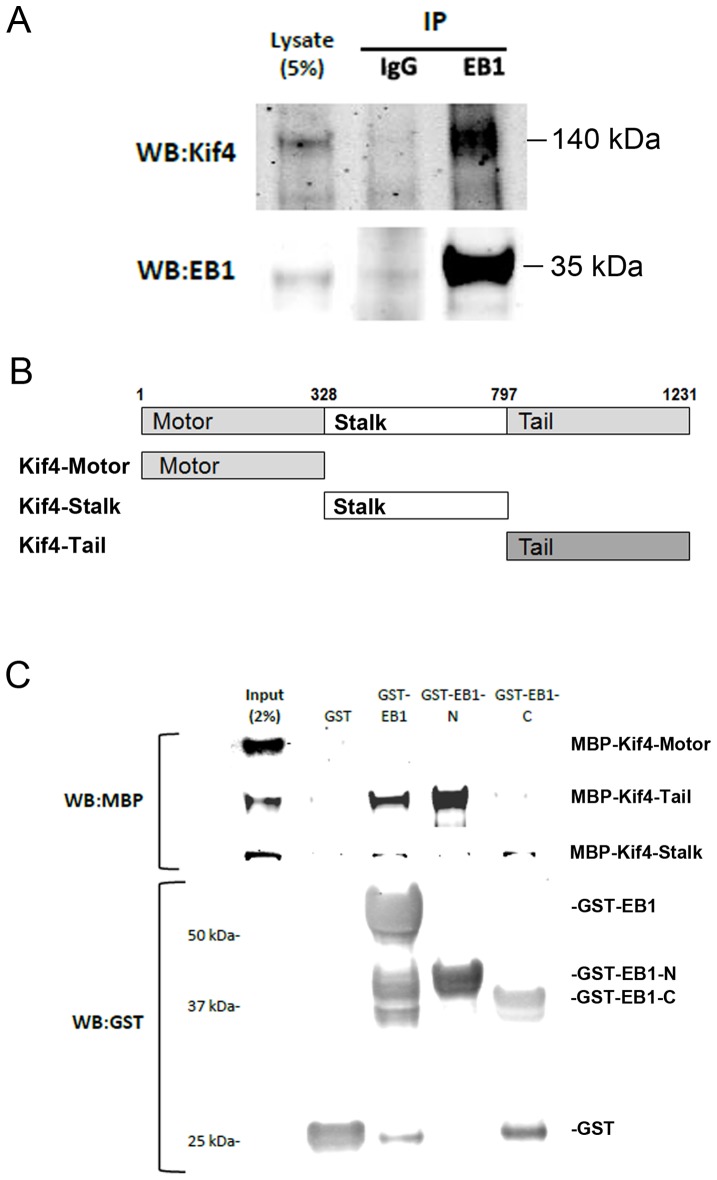
Selectively stabilized microtubules (MTs) form in the lamella of fibroblasts and contribute to cell migration. A Rho-mDia-EB1 pathway regulates the formation of stable MTs, yet how selective stabilization of MTs is achieved is unknown. Kinesin activity has been implicated in selective MT stabilization and a number of kinesins regulate MT dynamics both in vitro and in cells. Here, we show that the mammalian homolog of Xenopus XKLP1, Kif4, is both necessary and sufficient for the induction of selective MT stabilization in fibroblasts. Kif4 localized to the ends of stable MTs and participated in the Rho-mDia-EB1 MT stabilization pathway since Kif4 depletion blocked mDia- and EB1-induced selective MT stabilization and EB1 was necessary for Kif4 induction of stable MTs. Kif4 and EB1 interacted in cell extracts, and binding studies revealed that the tail domain of Kif4 interacted directly with the N-terminal domain of EB1. Consistent with its role in regulating formation of stable MTs in interphase cells, Kif4 knockdown inhibited migration of cells into wounded monolayers. These data identify Kif4 as a novel factor in the Rho-mDia-EB1 MT stabilization pathway and cell migration.
选择性稳定微管(MTs)在成纤维细胞的板层中形成,并有助于细胞迁移。Rho-mDia-EB1 途径调节稳定 MT 的形成,然而选择性稳定 MT 的方式尚不清楚。肌球蛋白活性已被牵连到选择性 MT 稳定中,并且许多肌球蛋白在体外和细胞中都调节 MT 动力学。在这里,我们表明,爪蟾 XKLP1 的哺乳动物同源物 Kif4,对于成纤维细胞中选择性 MT 稳定的诱导是必需的和充分的。Kif4 定位于稳定 MT 的末端,并参与 Rho-mDia-EB1 MT 稳定途径,因为 Kif4 耗竭阻止了 mDia 和 EB1 诱导的选择性 MT 稳定,并且 EB1 对于 Kif4 诱导稳定 MT 是必需的。Kif4 和 EB1 在细胞提取物中相互作用,并且结合研究表明 Kif4 的尾部结构域与 EB1 的 N 末端结构域直接相互作用。与它在调节有丝分裂细胞中稳定 MT 形成中的作用一致,Kif4 敲低抑制了细胞进入伤口单层的迁移。这些数据将 Kif4 鉴定为 Rho-mDia-EB1 MT 稳定途径和细胞迁移中的新型因子。