Department of Integrated Biosciences, Graduate School of Frontier Sciences, The University of Tokyo Chiba, Japan ; Department of Applied Biological Chemistry, Graduate School of Agricultural and Life Sciences, The University of Tokyo Tokyo, Japan.
Department of Integrated Biosciences, Graduate School of Frontier Sciences, The University of Tokyo Chiba, Japan.
Front Physiol. 2014 Mar 13;5:95. doi: 10.3389/fphys.2014.00095. eCollection 2014.
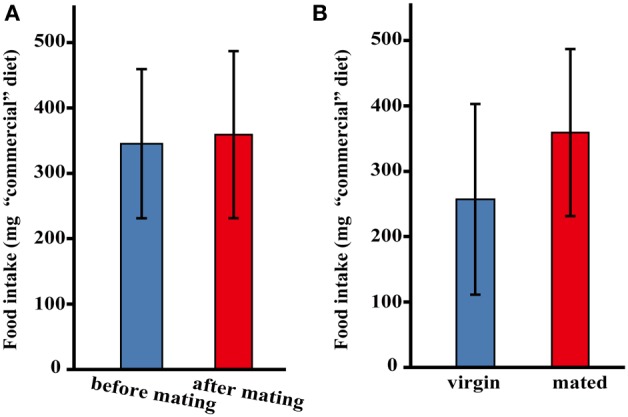
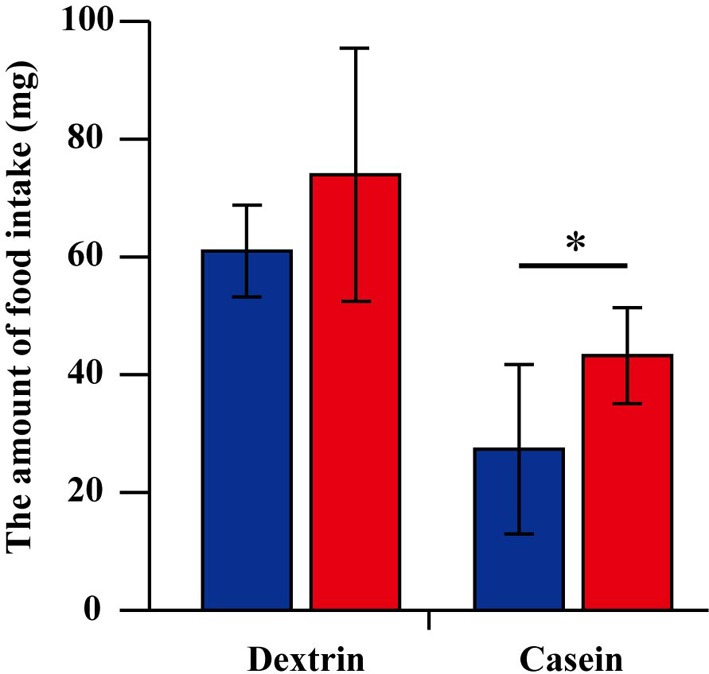
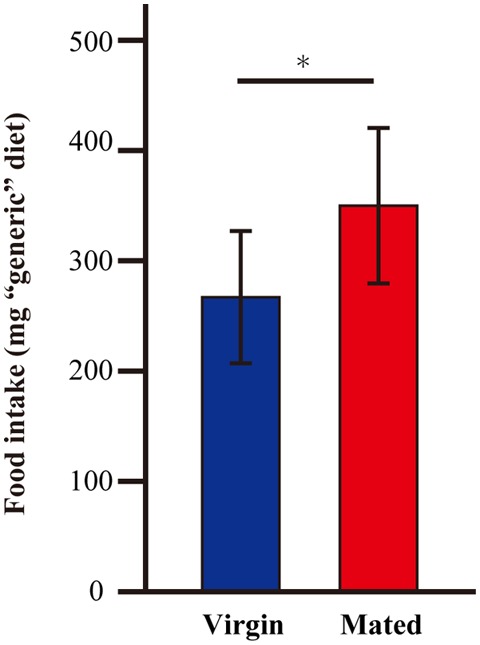
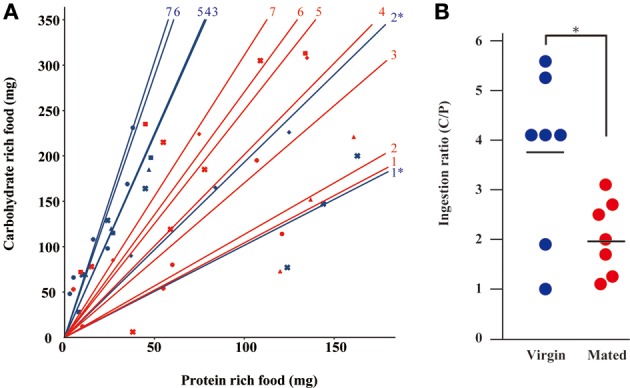
Most insect species exhibit characteristic behavioral changes after mating. Typical post-mating behaviors in female insects include noticeable increases in food intake, elevated oviposition rates, lowered receptivity to courting males, and enhanced immune response. Although it has been reported that mated females of several insect species including the fruit fly, Drosophila melanogaster increase the amount of food intake and change their dietary preferences, the limited number of comparative studies prevent the formulation of generalities regarding post-mating behaviors in other insects in particular amongst orthopteran species. Here, we investigated whether females of the two-spotted cricket, Gryllus bimaculatus, alter their feeding behavior after mating. Although significant differences in the amount of food intake after mating were not observed, all experimental data indicated a clear trend among crickets toward the ingestion of larger quantities of food. Geometric framework analyses revealed that the mated female crickets preferred food with higher protein content compared to virgin female crickets. This implies that this species required different nutritional demands after mating. These findings further expand our understanding of the behavioral and biological changes that are triggered in female insects post-mating, and highlight the potential for this species in investigating the molecular-based nutritional dependent activities that are linked to post-mating behaviors.
大多数昆虫物种在交配后表现出特征性行为变化。雌性昆虫典型的交配后行为包括食物摄入量明显增加、产卵率升高、对求偶雄性的接受性降低以及免疫反应增强。尽管已经报道了几种昆虫包括黑腹果蝇的交配雌虫增加了食物摄入量并改变了它们的饮食偏好,但有限数量的比较研究阻止了针对其他昆虫特别是直翅目物种交配后行为的一般性描述。在这里,我们研究了双斑蟋蟀 Gryllus bimaculatus 的雌性在交配后是否改变了它们的进食行为。尽管在交配后食物摄入量没有明显差异,但所有实验数据都表明蟋蟀明显倾向于摄入更多的食物。几何框架分析表明,与处女蟋蟀相比,交配后的雌性蟋蟀更喜欢蛋白质含量更高的食物。这意味着该物种在交配后需要不同的营养需求。这些发现进一步扩展了我们对交配后雌性昆虫触发的行为和生物学变化的理解,并强调了该物种在研究与交配后行为相关的基于分子的营养依赖活动方面的潜力。