Chung Myung-Chul, Dean Scott, Marakasova Ekaterina S, Nwabueze Albert O, van Hoek Monique L
School of Systems Biology and the National Center for Biodefense and Infectious Diseases, George Mason University, Manassas, Virginia, United States of America.
PLoS One. 2014 Mar 24;9(3):e93119. doi: 10.1371/journal.pone.0093119. eCollection 2014.
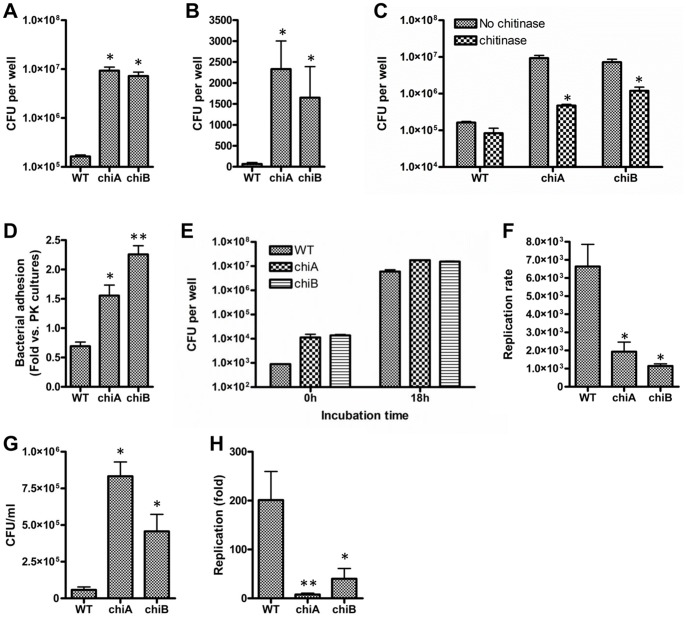
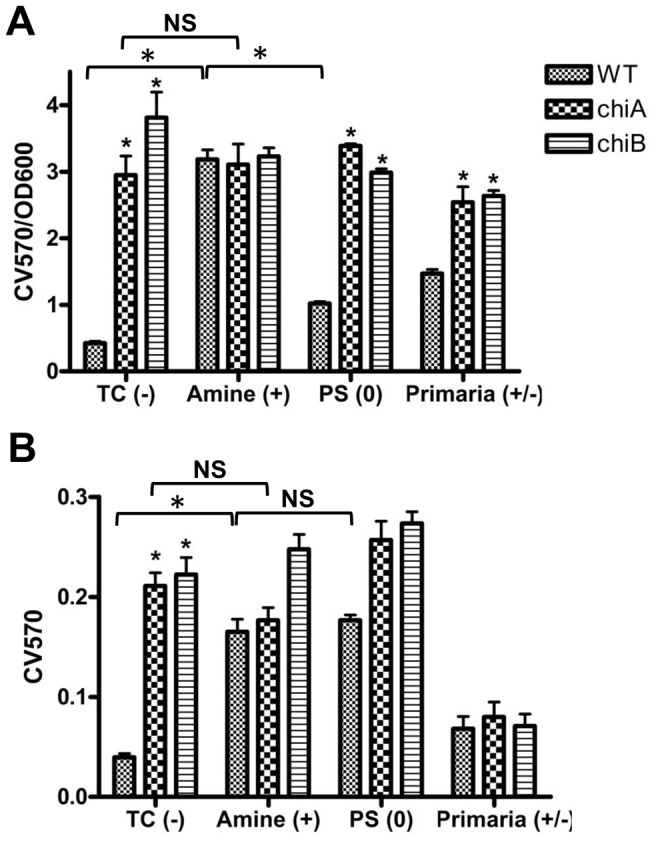
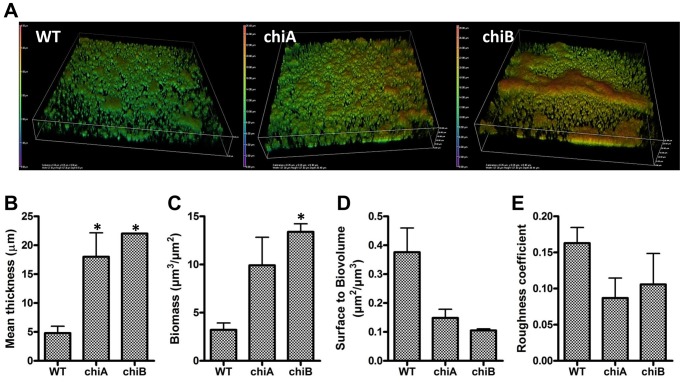
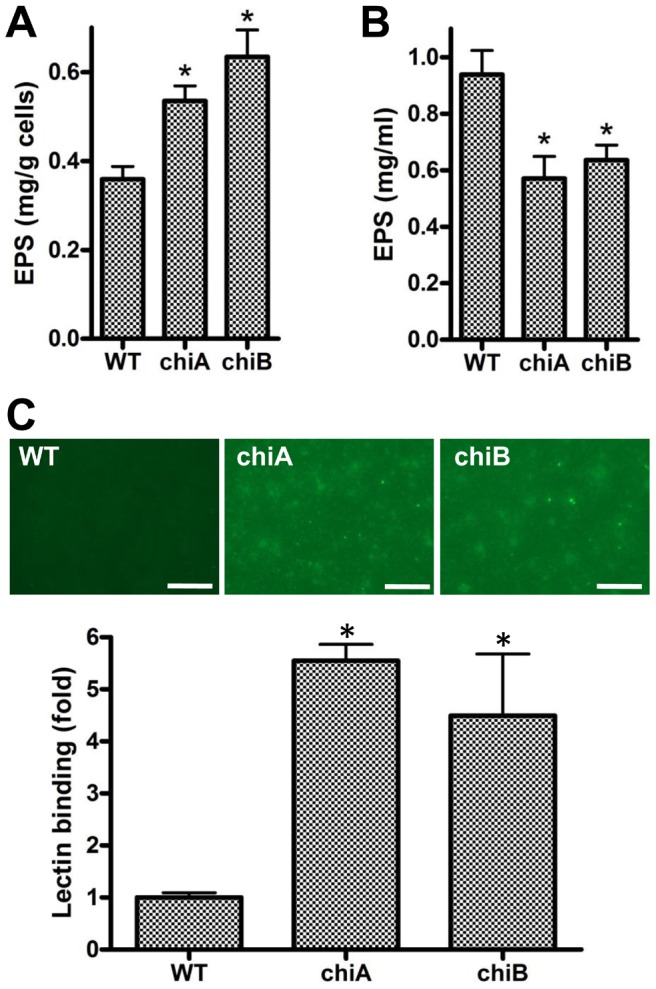
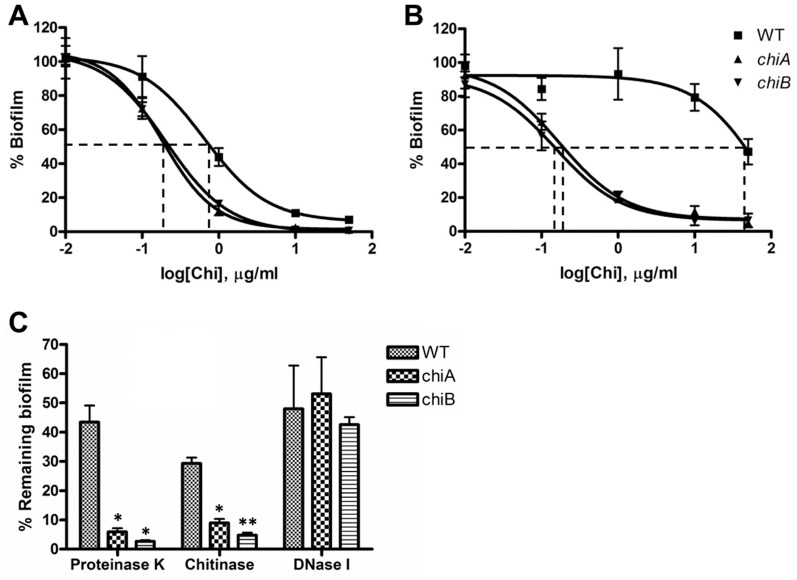
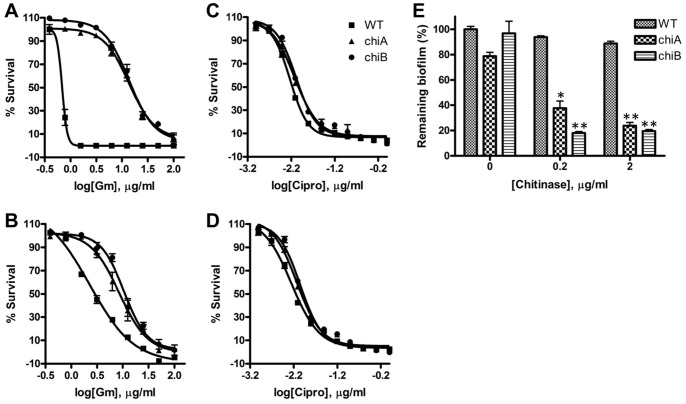
Biofilms, multicellular communities of bacteria, may be an environmental survival and transmission mechanism of Francisella tularensis. Chitinases of F. tularensis ssp. novicida (Fn) have been suggested to regulate biofilm formation on chitin surfaces. However, the underlying mechanisms of how chitinases may regulate biofilm formation are not fully determined. We hypothesized that Fn chitinase modulates bacterial surface properties resulting in the alteration of biofilm formation. We analyzed biofilm formation under diverse conditions using chitinase mutants and their counterpart parental strain. Substratum surface charges affected biofilm formation and initial attachments. Biophysical analysis of bacterial surfaces confirmed that the chi mutants had a net negative-charge. Lectin binding assays suggest that chitinase cleavage of its substrates could have exposed the concanavalin A-binding epitope. Fn biofilm was sensitive to chitinase, proteinase and DNase, suggesting that Fn biofilm contains exopolysaccharides, proteins and extracellular DNA. Exogenous chitinase increased the drug susceptibility of Fn biofilms to gentamicin while decreasing the amount of biofilm. In addition, chitinase modulated bacterial adhesion and invasion of A549 and J774A.1 cells as well as intracellular bacterial replication. Our results support a key role of the chitinase(s) in biofilm formation through modulation of the bacterial surface properties. Our findings position chitinase as a potential anti-biofilm enzyme in Francisella species.
生物膜是细菌的多细胞群落,可能是土拉弗朗西斯菌的一种环境生存和传播机制。有人提出,土拉弗朗西斯菌新凶手亚种(Fn)的几丁质酶可调节几丁质表面的生物膜形成。然而,几丁质酶调节生物膜形成的潜在机制尚未完全明确。我们推测,Fn几丁质酶可调节细菌表面特性,从而改变生物膜的形成。我们使用几丁质酶突变体及其相应的亲本菌株,分析了不同条件下的生物膜形成情况。基质表面电荷影响生物膜形成和初始附着。对细菌表面的生物物理分析证实,chi突变体带有净负电荷。凝集素结合试验表明,几丁质酶对其底物的切割可能暴露了伴刀豆球蛋白A结合表位。Fn生物膜对几丁质酶、蛋白酶和DNA酶敏感,这表明Fn生物膜含有胞外多糖、蛋白质和细胞外DNA。外源性几丁质酶增加了Fn生物膜对庆大霉素的药物敏感性,同时减少了生物膜的量。此外,几丁质酶调节细菌对A549和J774A.1细胞的黏附与侵袭以及细胞内细菌的复制。我们的结果支持了几丁质酶通过调节细菌表面特性在生物膜形成中起关键作用。我们的发现表明几丁质酶是弗朗西斯菌属中一种潜在的抗生物膜酶。