Tan Maxine, Pu Jiantao, Zheng Bin
School of Electrical and Computer Engineering, University of Oklahoma, Norman, OK, 73019, USA.
Department of Radiology, University of Pittsburgh, Pittsburgh, PA, 15213, USA.
Int J Comput Assist Radiol Surg. 2014 Nov;9(6):1005-20. doi: 10.1007/s11548-014-0992-1. Epub 2014 Mar 25.
Improving radiologists' performance in classification between malignant and benign breast lesions is important to increase cancer detection sensitivity and reduce false-positive recalls. For this purpose, developing computer-aided diagnosis schemes has been attracting research interest in recent years. In this study, we investigated a new feature selection method for the task of breast mass classification.
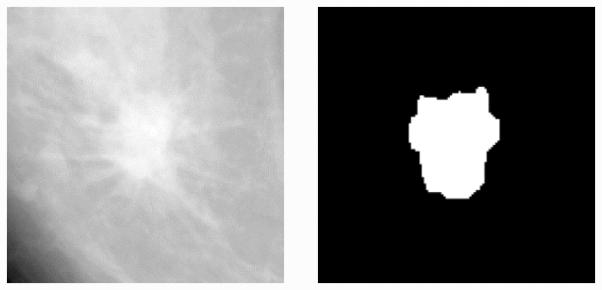
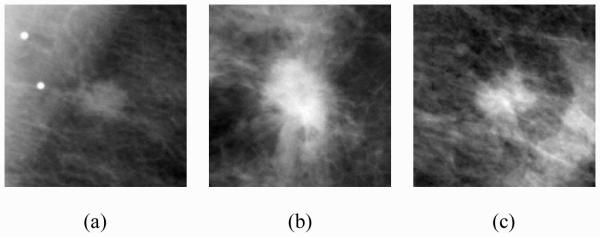
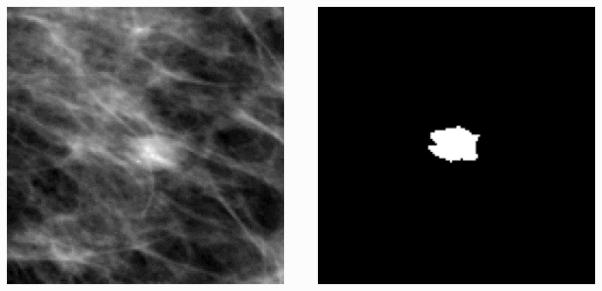
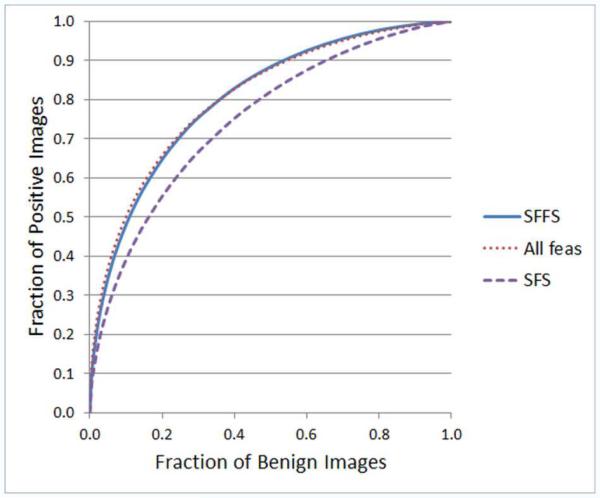
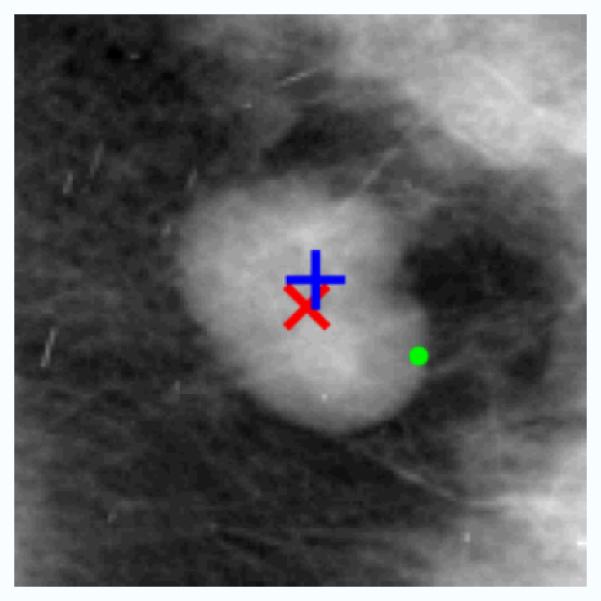
We initially computed 181 image features based on mass shape, spiculation, contrast, presence of fat or calcifications, texture, isodensity, and other morphological features. From this large image feature pool, we used a sequential forward floating selection (SFFS)-based feature selection method to select relevant features and analyzed their performance using a support vector machine (SVM) model trained for the classification task. On a database of 600 benign and 600 malignant mass regions of interest, we performed the study using a tenfold cross-validation method. Feature selection and optimization of the SVM parameters were conducted on the training subsets only.
The area under the receiver operating characteristic curve [Formula: see text] was obtained for the classification task. The results also showed that the most frequently selected features by the SFFS-based algorithm in tenfold iterations were those related to mass shape, isodensity, and presence of fat, which are consistent with the image features frequently used by radiologists in the clinical environment for mass classification. The study also indicated that accurately computing mass spiculation features from the projection mammograms was difficult, and failed to perform well for the mass classification task due to tissue overlap within the benign mass regions.
In conclusion, this comprehensive feature analysis study provided new and valuable information for optimizing computerized mass classification schemes that may have potential to be useful as a "second reader" in future clinical practice.
提高放射科医生对乳腺良恶性病变的分类能力对于提高癌症检测敏感性和减少假阳性召回率至关重要。为此,近年来开发计算机辅助诊断方案一直吸引着研究兴趣。在本研究中,我们针对乳腺肿块分类任务研究了一种新的特征选择方法。
我们最初基于肿块形状、毛刺征、对比度、脂肪或钙化的存在、纹理、等密度以及其他形态学特征计算了181个图像特征。从这个庞大的图像特征库中,我们使用基于顺序前向浮动选择(SFFS)的特征选择方法来选择相关特征,并使用为分类任务训练的支持向量机(SVM)模型分析其性能。在一个包含600个良性和600个恶性肿块感兴趣区域的数据库上,我们使用十折交叉验证方法进行了研究。仅在训练子集上进行特征选择和SVM参数优化。
获得了分类任务的受试者操作特征曲线下面积[公式:见正文]。结果还表明,基于SFFS的算法在十次迭代中最常选择的特征是与肿块形状、等密度和脂肪存在相关的特征,这与放射科医生在临床环境中用于肿块分类的常用图像特征一致。该研究还表明,从乳腺钼靶投影图中准确计算肿块毛刺征特征很困难,并且由于良性肿块区域内的组织重叠,在肿块分类任务中表现不佳。
总之,这项全面的特征分析研究为优化计算机化肿块分类方案提供了新的有价值信息,这些方案可能有潜力在未来临床实践中作为“第二阅片者”发挥作用。