Nguyen Nguyenvu, Jacobs Jeffrey P, Dearani Joseph A, Weinstein Samuel, Novick William M, Jacobs Marshall L, Massey Jeremy, Pasquali Sara K, Walters Henry L, Drullinsky David, Stellin Giovanni, Tchervenkov Christo I
Department of Pediatrics, Ann & Robert H. Lurie Children's Hospital of Chicago, Northwestern University, Feinberg School of Medicine, Chicago, IL, USA.
World J Pediatr Congenit Heart Surg. 2014 Apr;5(2):248-55. doi: 10.1177/2150135113514458.
Nearly 90% of the children with heart disease in low- and middle-income countries (LMICs) cannot access cardiovascular (CV) services. Limitations include inadequate financial, human, and infrastructure resources. Nongovernmental organizations (NGOs) have played crucial roles in providing clinical services and infrastructure supports to LMICs CV programs; however, these outreach efforts are dispersed, inadequate, and lack coordination.
A survey was sent to members of the World Society for Pediatric and Congenital Heart Society and PediHeart.
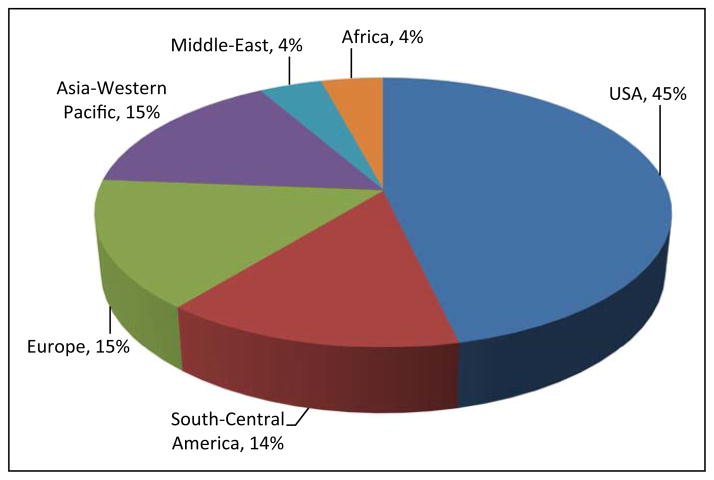
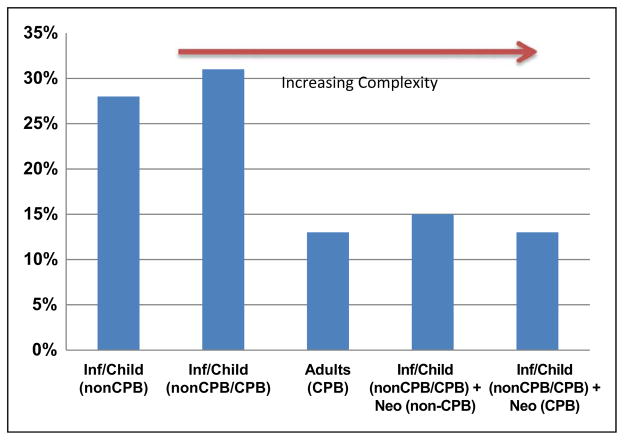
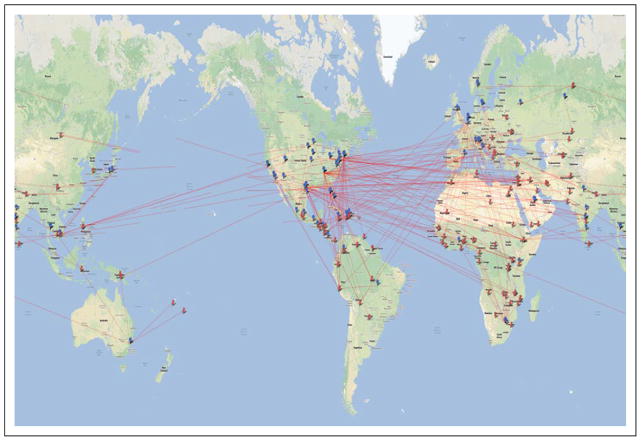
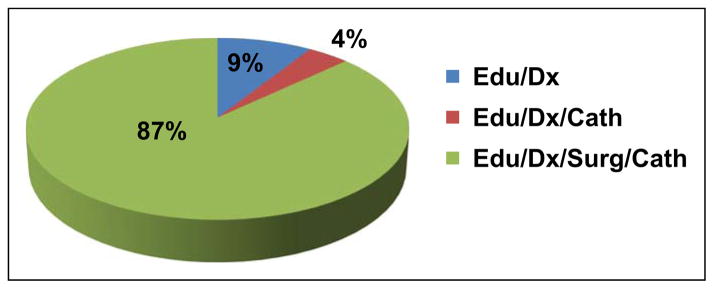
A clearinghouse was created to provide information on NGO structures, geographic reach, and scope of services. The survey identified 80 NGOs supporting CV programs in 92 LMICs. The largest outreach efforts were in South and Central America (42%), followed by Africa (18%), Europe (17%), Asia (17%), and Asia-Western Pacific (6%). Most NGOs (51%) supported two to five outreach missions per year. The majority (87%) of NGOs provided education, diagnostics, and surgical or catheter-based interventions. Working jointly with LMIC partners, 59% of the NGOs performed operations in children and infants; 41% performed nonbypass neonatal operations. Approximately a quarter (26%) reported that partner sites do not perform interventions in between missions.
Disparity and inadequacy in pediatric CV services remain an important problem for LMICs. A global consensus and coordinated efforts are needed to guide strategies on the development of regional centers of excellence, a global outcome database, and a CV program registry. Future efforts should be held accountable for impacts such as growth in the number of independent LMIC programs as well as reduction in mortality and patient waiting lists.
在低收入和中等收入国家(LMICs),近90%的心脏病患儿无法获得心血管(CV)服务。限制因素包括资金、人力和基础设施资源不足。非政府组织(NGOs)在为LMICs的CV项目提供临床服务和基础设施支持方面发挥了关键作用;然而,这些外展工作分散、不足且缺乏协调。
向世界儿科和先天性心脏病学会及儿科心脏学会的成员发送了一份调查问卷。
设立了一个信息中心,以提供有关非政府组织结构、地理覆盖范围和服务范围的信息。该调查确定了80个在92个LMICs支持CV项目的非政府组织。最大规模的外展工作在南美洲和中美洲(42%),其次是非洲(18%)、欧洲(17%)、亚洲(17%)和亚洲-西太平洋地区(6%)。大多数非政府组织(51%)每年支持两到五次外展任务。大多数(87%)非政府组织提供教育、诊断以及手术或基于导管的干预措施。与LMICs的合作伙伴共同开展工作时,59%的非政府组织为儿童和婴儿实施手术;41%实施非体外循环新生儿手术。约四分之一(26%)报告称,合作站点在任务间隔期间不进行干预。
儿科CV服务的差异和不足仍然是LMICs面临的一个重要问题。需要全球共识和协调努力来指导关于建立区域卓越中心、全球成果数据库和CV项目登记处的战略。未来的努力应在诸如独立LMIC项目数量的增长以及死亡率和患者等候名单的减少等影响方面承担责任。