Victorio Carla Bianca Luena, Xu Yishi, Ng Qimei, Chow Vincent T K, Chua Kaw Bing
Temasek Lifesciences Laboratory, 1 Research Link, National University of Singapore, Singapore; Host and Pathogen Interactivity Laboratory, Department of Microbiology, Yong Loo Lin School of Medicine, National University Health System, National University of Singapore, Singapore.
Temasek Lifesciences Laboratory, 1 Research Link, National University of Singapore, Singapore.
PLoS One. 2014 Mar 26;9(3):e92719. doi: 10.1371/journal.pone.0092719. eCollection 2014.
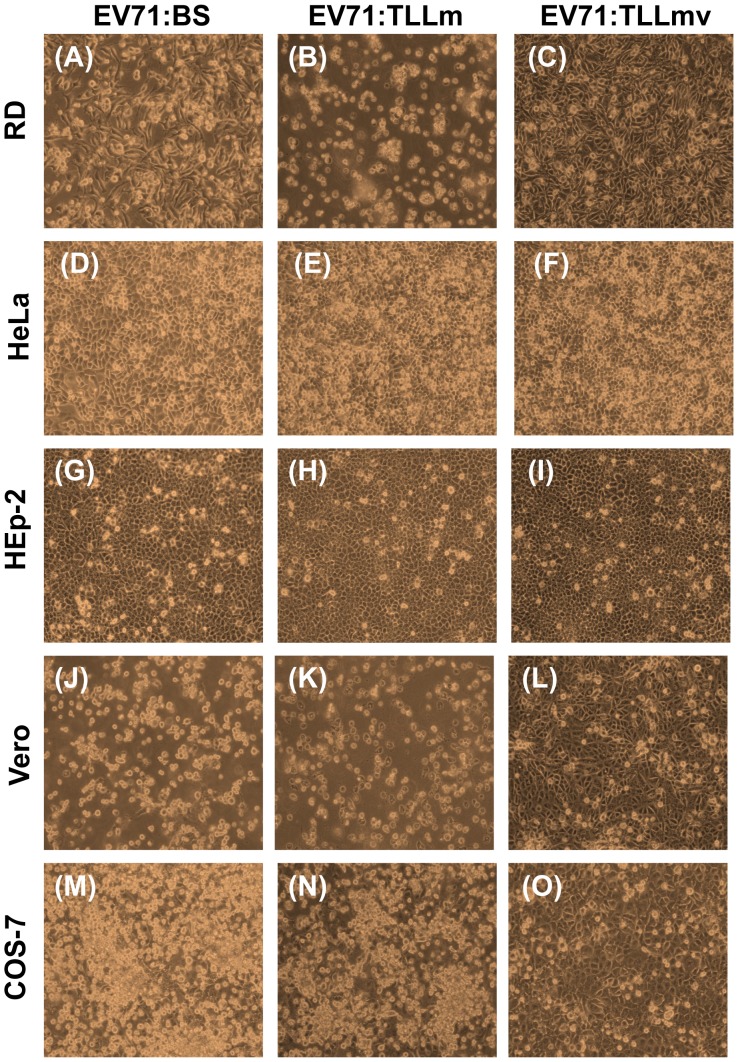
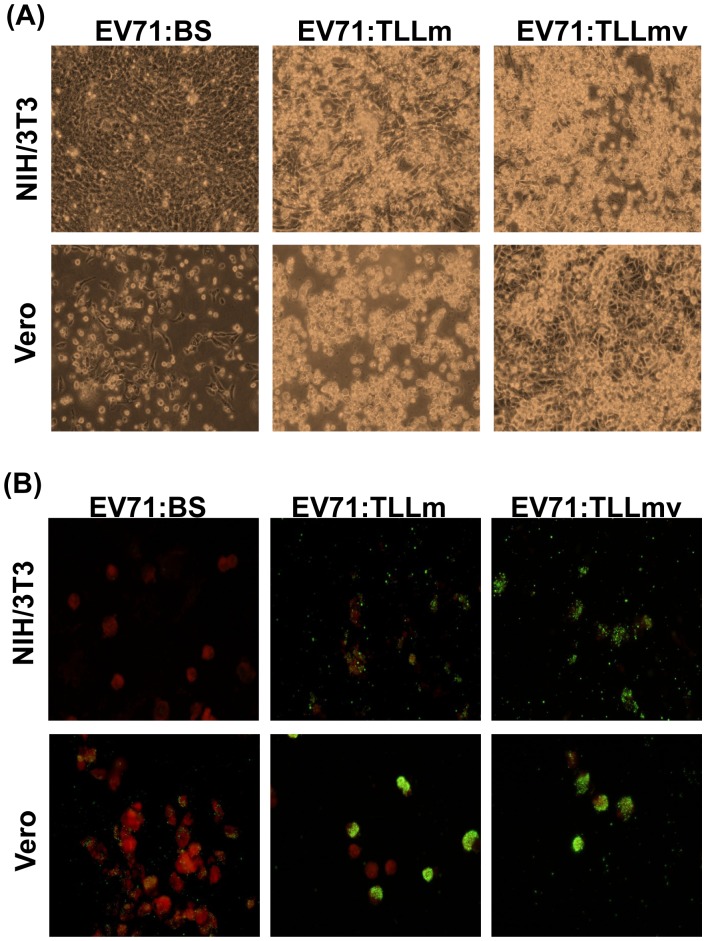
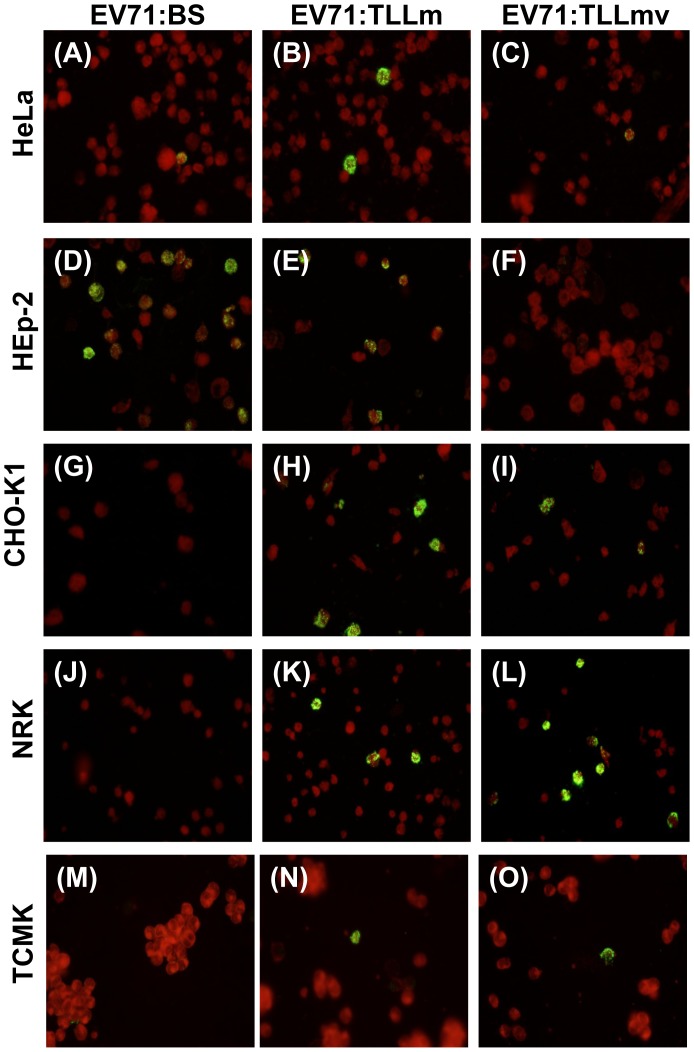
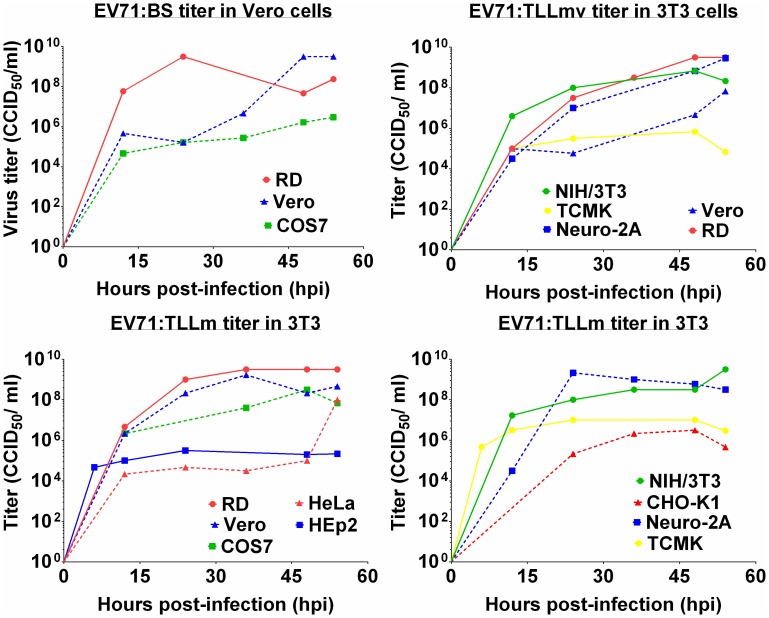
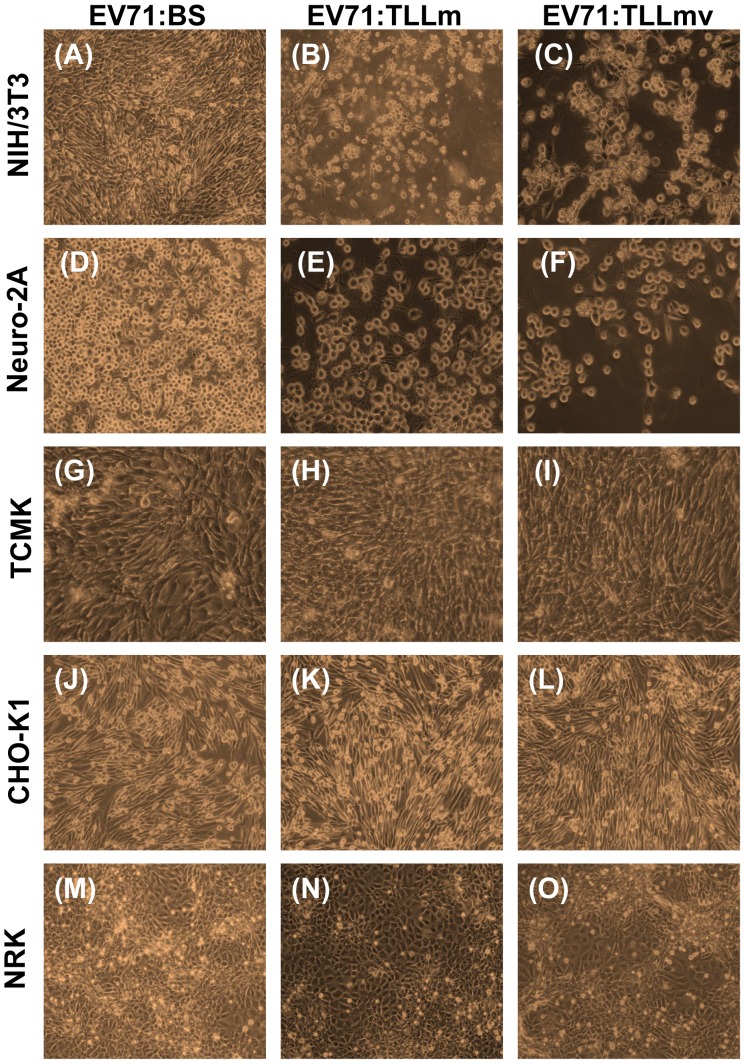
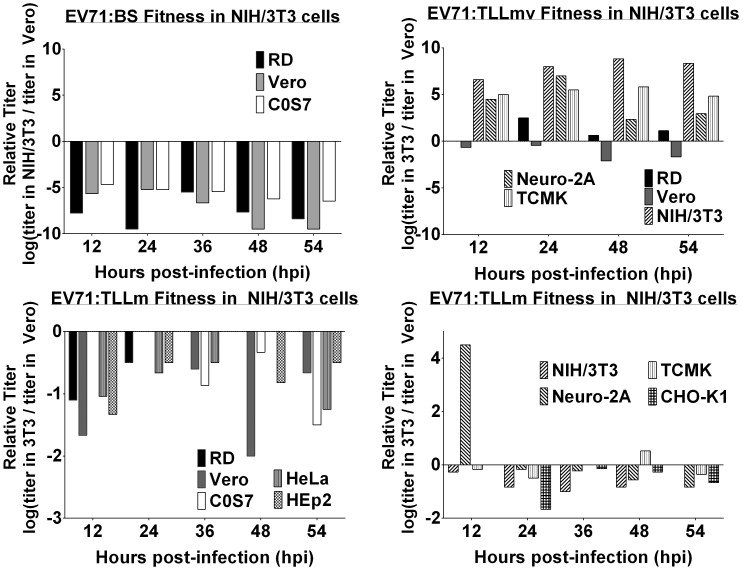
Since its identification in 1969, Enterovirus 71 (EV71) has been causing periodic outbreaks of infection in children worldwide and most prominently in the Asia-Pacific Region. Understanding the pathogenesis of Enterovirus 71 (EV71) is hampered by the virus's inability to infect small animals and replicate in their derived in vitro cultured cells. This manuscript describes the phenotypic and genotypic characteristics of two selected EV71 strains (EV71:TLLm and EV71:TLLmv), which have been adapted to replicate in mouse-derived NIH/3T3 cells, in contrast to the original parental virus which is only able to replicate in primate cell lines. The EV71:TLLm strain exhibited productive infection in all primate and rodent cell lines tested, while EV71:TLLmv exhibited greater preference for mouse cell lines. EV71:TLLmv displayed higher degree of adaptation and temperature adaptability in NIH/3T3 cells than in Vero cells, suggesting much higher fitness in NIH/3T3 cells. In comparison with the parental EV71:BS strain, the adapted strains accumulated multiple adaptive mutations in the genome resulting in amino acid substitutions, most notably in the capsid-encoding region (P1) and viral RNA-dependent RNA polymerase (3D). Two mutations, E167D and L169F, were mapped to the VP1 canyon that binds the SCARB2 receptor on host cells. Another two mutations, S135T and K140I, were located in the VP2 neutralization epitope spanning amino acids 136-150. This is the first report of human EV71 with the ability to productively infect rodent cell lines in vitro.
自1969年被发现以来,肠道病毒71型(EV71)在全球范围内,尤其是在亚太地区,不断引发儿童感染的周期性爆发。由于该病毒无法感染小动物并在其衍生的体外培养细胞中复制,因此对肠道病毒71型(EV71)发病机制的了解受到阻碍。本手稿描述了两种选定的EV71毒株(EV71:TLLm和EV71:TLLmv)的表型和基因型特征,这两种毒株已适应在源自小鼠的NIH/3T3细胞中复制,而原始亲本病毒仅能在灵长类细胞系中复制。EV71:TLLm毒株在所有测试的灵长类和啮齿类细胞系中均表现出有效感染,而EV71:TLLmv对小鼠细胞系表现出更大的偏好。与Vero细胞相比,EV71:TLLmv在NIH/3T3细胞中表现出更高程度的适应性和温度适应性,表明其在NIH/3T3细胞中的适应性更强。与亲本EV71:BS毒株相比,适应后的毒株在基因组中积累了多个适应性突变,导致氨基酸替换,最显著的是在衣壳编码区(P1)和病毒RNA依赖性RNA聚合酶(3D)中。两个突变,E167D和L169F,定位于与宿主细胞上的SCARB2受体结合的VP1峡谷。另外两个突变,S135T和K140I,位于跨越氨基酸136 - 150的VP2中和表位中。这是关于人类EV71能够在体外有效感染啮齿类细胞系的首次报道。