Neurovirology Project, Tokyo Metropolitan Institute of Medical Science, Tokyo 156-8506, Japan.
Viruses. 2021 Aug 21;13(8):1661. doi: 10.3390/v13081661.
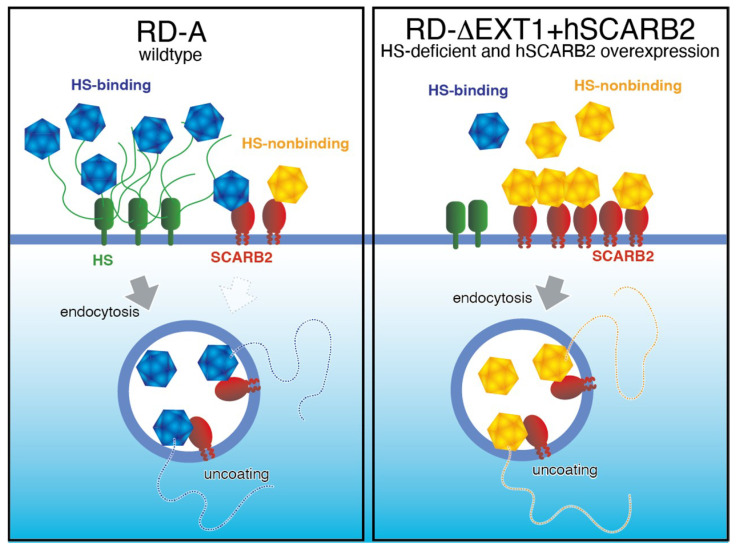
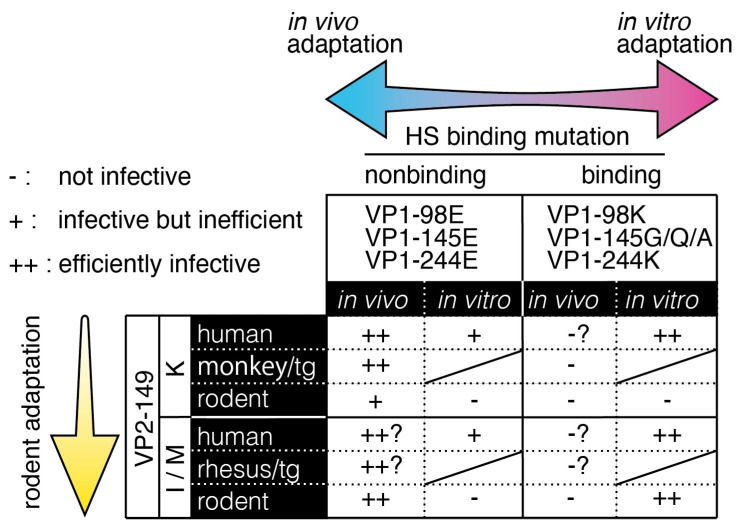
Outbreaks of hand, foot, and mouth disease caused by enterovirus-A71 (EV-A71) can result in many deaths, due to central nervous system complications. Outbreaks with many fatalities have occurred sporadically in the Asia-Pacific region and have become a serious public health concern. It is hypothesized that virulent mutations in the EV-A71 genome cause these occasional outbreaks. Analysis of EV-A71 neurovirulence determinants is important, but there are no virulence determinants that are widely accepted among researchers. This is because most studies have been done in artificially infected mouse models and because EV-A71 mutates very quickly to adapt to the artificial host environment. Although EV-A71 uses multiple receptors for infection, it is clear that adaptation-related mutations alter the binding specificity of the receptors and allow the virus to adopt the best entry route for each environment. Such mutations have confused interpretations of virulence in animal models. This article will discuss how environment-adapted mutations in EV-A71 occur, how they affect virulence, and how such mutations can be avoided. We also discuss future perspectives for EV-A71 virulence research.
肠道病毒 A71(EV-A71)引起的手足口病疫情可导致中枢神经系统并发症,进而造成许多死亡。在亚太地区,这种疫情时有爆发,且已成为严重的公共卫生关切。人们推测,EV-A71 基因组中的毒力突变导致了这些偶发疫情。分析 EV-A71 的神经毒力决定因素非常重要,但目前还没有得到研究人员广泛认可的毒力决定因素。这是因为大多数研究都是在人工感染的小鼠模型中进行的,而且 EV-A71 突变非常快,以适应人工宿主环境。尽管 EV-A71 使用多种受体进行感染,但很明显,与适应相关的突变改变了受体的结合特异性,使病毒能够采用每种环境下最佳的进入途径。这种突变使得对动物模型中毒力的解释变得混乱。本文将讨论 EV-A71 如何发生环境适应性突变,这些突变如何影响毒力,以及如何避免这种突变。我们还讨论了 EV-A71 毒力研究的未来展望。