Center for Lung Biology, Department of Medicine, Division of Dermatology, University of Washington, Seattle, WA, USA.
Division of Pulmonary and Critical Care Medicine, University of Washington, Seattle, WA, USA.
J Inflamm Res. 2014 Feb 20;7:29-38. doi: 10.2147/JIR.S55672. eCollection 2014.
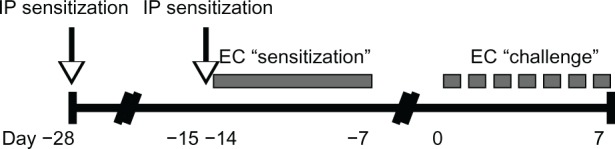
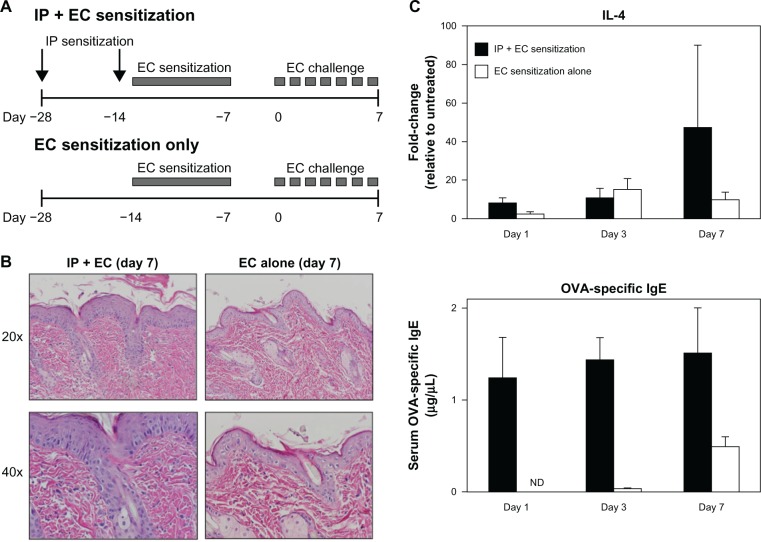
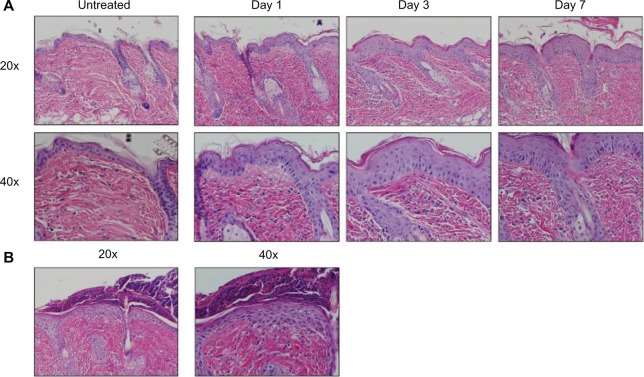
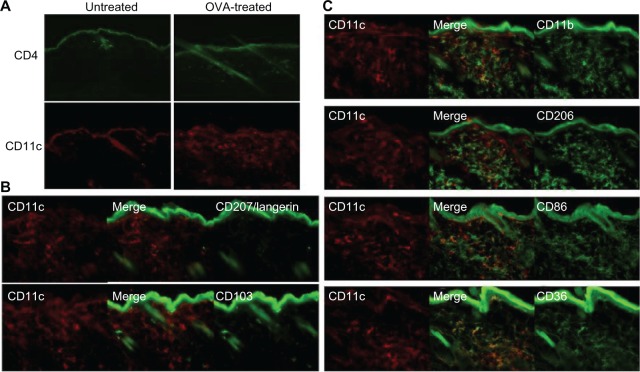
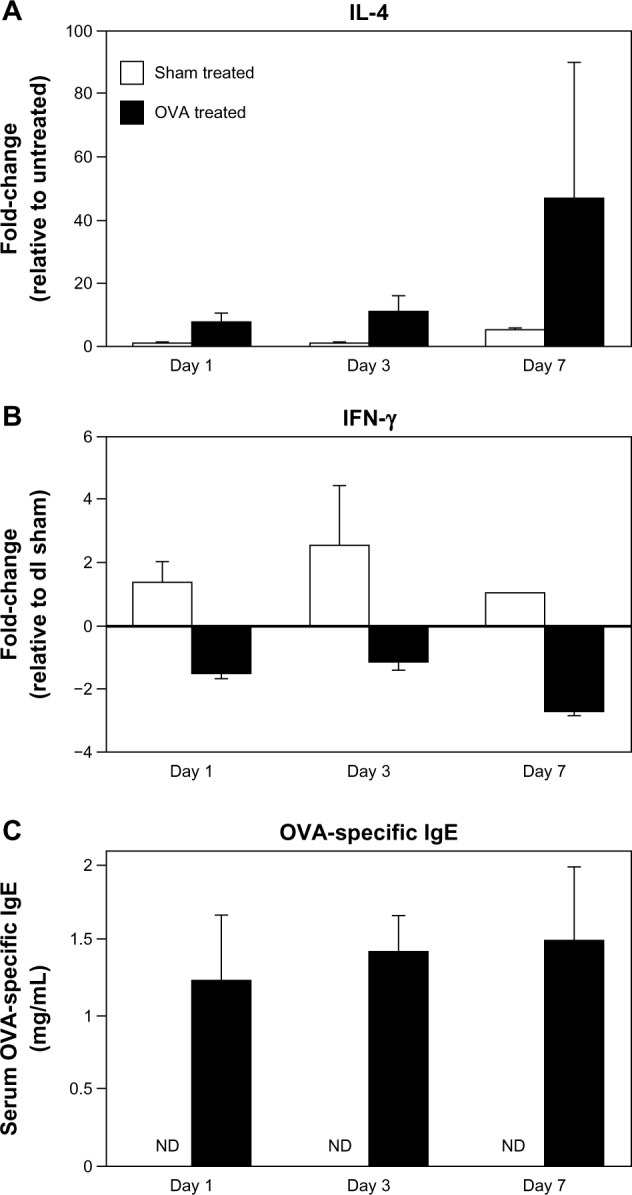
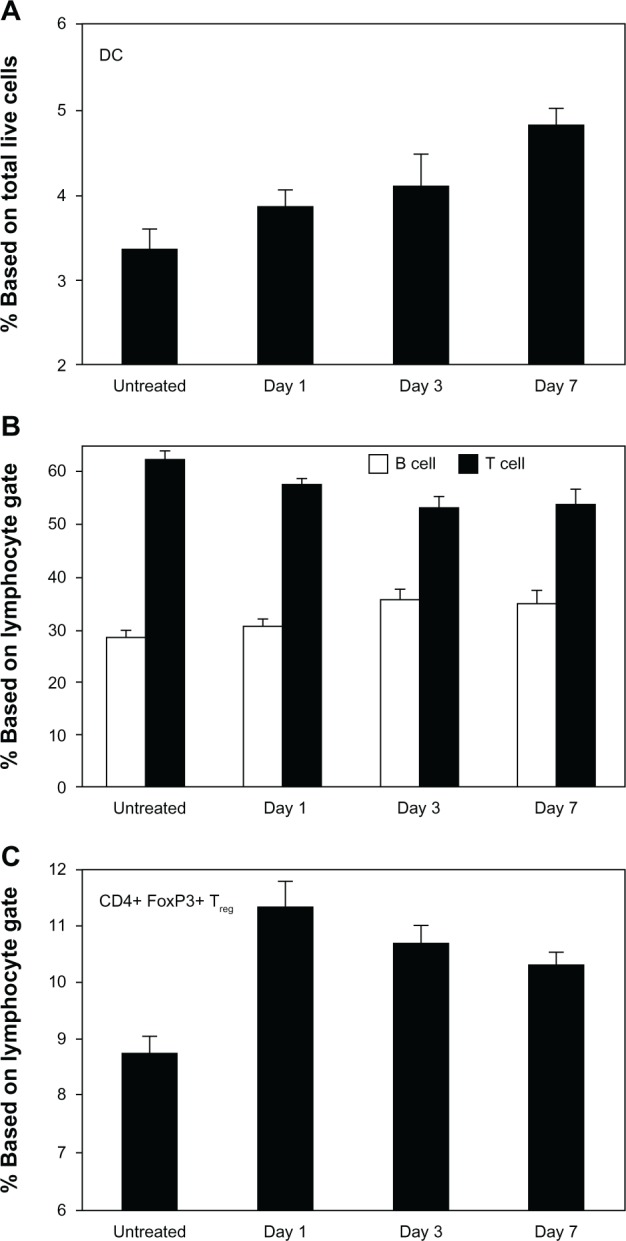
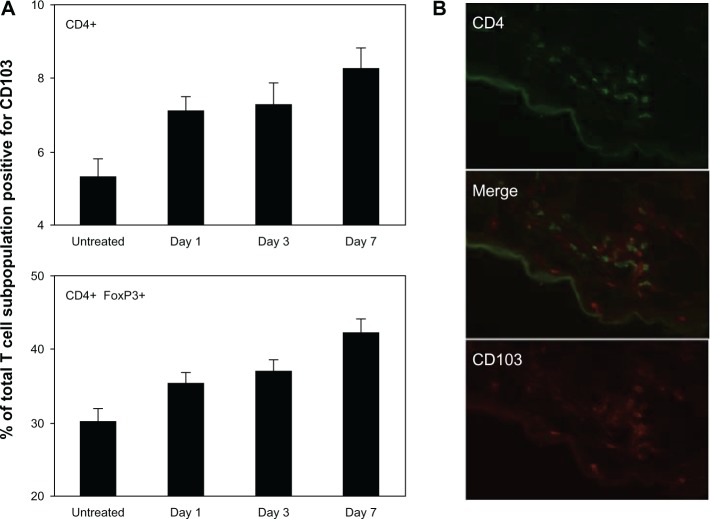
Mouse models of atopic dermatitis based on epicutaneous sensitization have shed light on the role of epicutaneous allergen entry in the development of respiratory and gastrointestinal allergy. However, the contribution of non-cutaneous modes of sensitization to skin diseases has not been evaluated. We assessed if systemic ovalbumin administration, in conjunction with local sensitization, could prime for a robust inflammatory response. Furthermore, we attempted to elucidate important aspects of disease pathogenesis previously unaddressed in mouse models. Mice that underwent intraperitoneal ovalbumin sensitization prior to epicutaneous challenge demonstrated an acute (Th2-polarized) atopic dermatitis-like phenotype upon local challenge. The inflammatory response was strikingly more robust than in mice that underwent epicutaneous sensitization alone. The lesional infiltrate contained a dendritic cell population that corresponded phenotypically with inflammatory dendritic epidermal cells of significance in human disease. Finally, in accordance with observations in human atopic dermatitis, there was an increase in cluster of differentiation (CD) 103 (αE subunit)-expressing CD4(+) T lymphocytes. However, the absence of CD103 on approximately 50% of infiltrating cells argues against a primary role for the αEβ7 integrin in tissue homing. In conclusion, we present a mouse model of atopic dermatitis that reveals novel insights into the pathogenesis of this complex disease.
基于皮肤致敏的特应性皮炎小鼠模型揭示了皮肤过敏原进入在呼吸道和胃肠道过敏发展中的作用。然而,非皮肤致敏模式对皮肤疾病的贡献尚未得到评估。我们评估了全身性卵清蛋白给药与局部致敏相结合是否可以引发强烈的炎症反应。此外,我们试图阐明在小鼠模型中以前未解决的重要疾病发病机制方面的问题。在进行皮肤致敏之前接受腹腔卵清蛋白致敏的小鼠在局部挑战时表现出急性(Th2 极化)特应性皮炎样表型。炎症反应明显比仅接受皮肤致敏的小鼠更为强烈。病变浸润物中存在一群树突状细胞,其表型与人类疾病中具有重要意义的炎症性表皮树突状细胞相对应。最后,与特应性皮炎患者的观察结果一致,CD4+T 淋巴细胞中表达分化群(CD)103(αE 亚基)的细胞数量增加。然而,大约 50%的浸润细胞上缺乏 CD103,这表明αEβ7 整合素在组织归巢中并非主要作用。总之,我们提出了一种特应性皮炎小鼠模型,该模型揭示了这种复杂疾病发病机制的新见解。