Palamar Joseph J, Calzada Esther J, Theise Rachelle, Huang Keng-Yen, Petkova Eva, Brotman Laurie Miller
a New York University Langone Medical Center.
Behav Med. 2015;41(4):177-85. doi: 10.1080/08964289.2014.907770. Epub 2014 Sep 30.
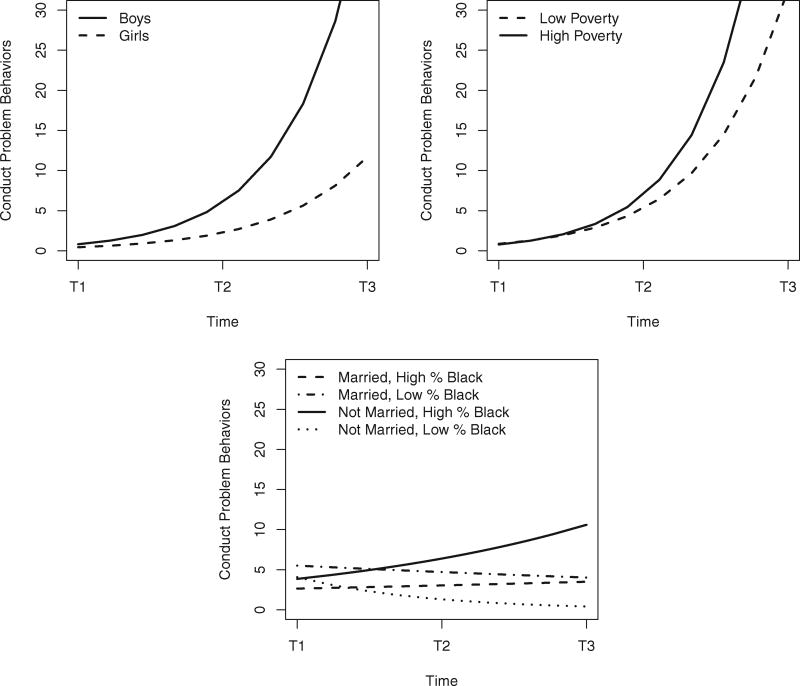
Minority children attending schools in urban socioeconomically disadvantaged neighborhoods are at high risk for conduct problems. Although a number of family and neighborhood characteristics have been implicated in the onset and progression of conduct problems, there remains incomplete understanding of the unique contributions of poverty-related factors early in development. This prospective study of 298 black public school children considered family- and neighborhood-level predictors of teacher-reported conduct problems from pre-kindergarten through first grade. Results from multi-level analyses indicate that percentage of poor residents in a student's neighborhood made a robust independent contribution to the prediction of development of conduct problems, over and above family- and other neighborhood-level demographic factors. For children of single parents, the percentage of black residents in the neighborhood also predicted the development of conduct problems. School-based interventions to prevent conduct problems should consider impact for children at highest risk based on neighborhood poverty.
在城市社会经济条件不利社区上学的少数族裔儿童出现行为问题的风险很高。尽管一些家庭和社区特征与行为问题的发生和发展有关,但对于贫困相关因素在发育早期的独特作用仍缺乏全面了解。这项针对298名黑人公立学校儿童的前瞻性研究考察了从学前班到一年级期间教师报告的行为问题在家庭和社区层面的预测因素。多层次分析结果表明,学生所在社区贫困居民的比例对行为问题发展的预测有强大的独立贡献,超过了家庭和其他社区层面的人口统计学因素。对于单亲家庭的孩子,社区中黑人居民的比例也能预测行为问题的发展。基于社区贫困情况,以学校为基础的预防行为问题干预措施应考虑对风险最高的儿童的影响。