KEMRI-Wellcome Trust Research Programme, P,O, Box 230-80108, Kilifi, Kenya.
BMC Infect Dis. 2014 Mar 28;14:170. doi: 10.1186/1471-2334-14-170.
Plasmodium falciparum erythrocyte membrane protein 1(PfEMP1) is a family of variant surface antigens (VSA) that mediate the adhesion of parasite infected erythrocytes to capillary endothelial cells within host tissues. Opinion is divided over the role of PfEMP1 in the widespread endothelial activation associated with severe malaria. In a previous study we found evidence for differential associations between defined VSA subsets and specific syndromes of severe malaria: group A-like PfEMP1 expression and the "rosetting" phenotype were associated with impaired consciousness and respiratory distress, respectively. This study explores the involvement of widespread endothelial activation in these associations.
We used plasma angiopoietin-2 as a marker of widespread endothelial activation. Using logistic regression analysis, we explored the relationships between plasma angiopoietin-2 levels, parasite VSA expression and the two syndromes of severe malaria, impaired consciousness and respiratory distress.
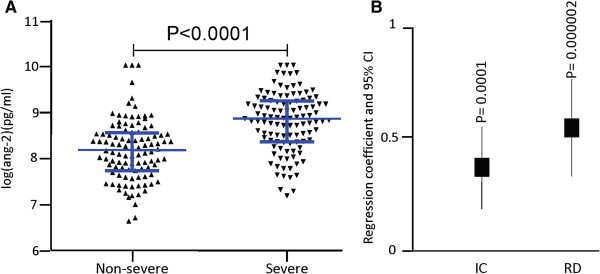
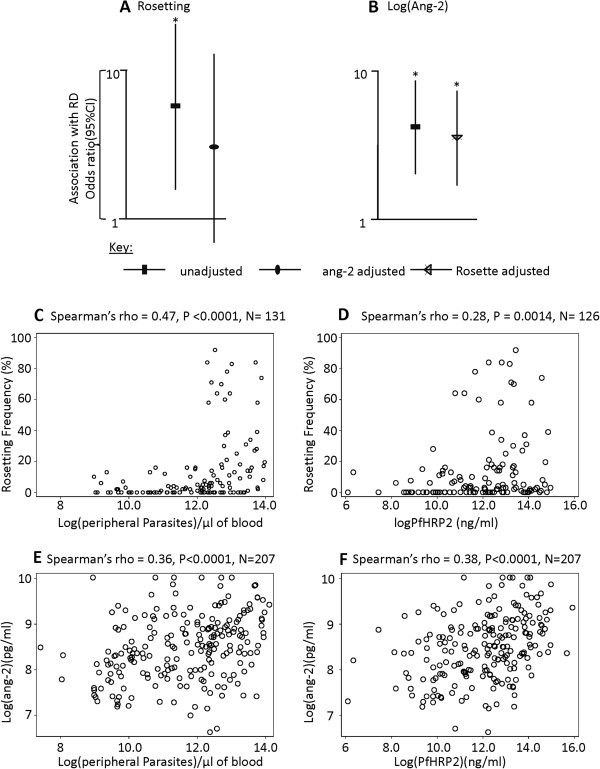
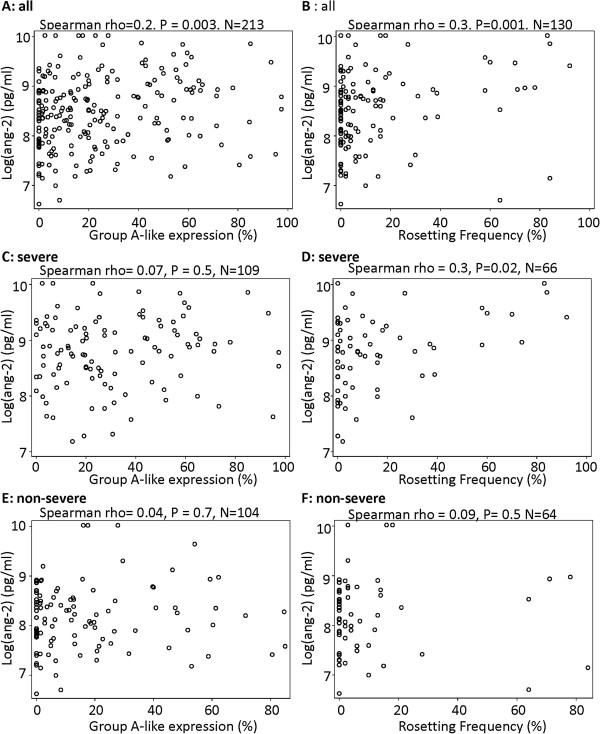
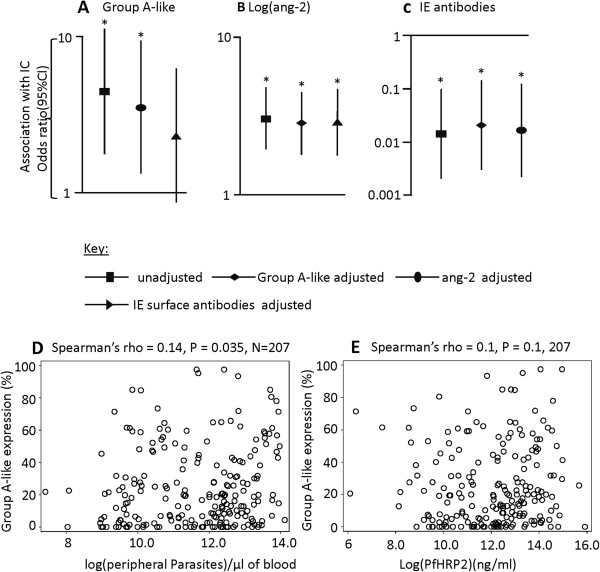
Plasma angiopoietin-2 was associated with both syndromes. The rosetting phenotype did not show an independent association with respiratory distress when adjusted for angiopoietin-2, consistent with a single pathogenic mechanism involving widespread endothelial activation. In contrast, group A-like PfEMP1 expression and angiopoietin-2 maintained independent associations with impaired consciousness when adjusted for each other.
The results are consistent with multiple pathogenic mechanisms leading to severe malaria and heterogeneity in the pathophysiology of impaired consciousness. The observed association between group A-like PfEMP1 and impaired consciousness does not appear to involve widespread endothelial activation.
恶性疟原虫红细胞膜蛋白 1(PfEMP1)是一个变异表面抗原(VSA)家族,介导寄生虫感染的红细胞与宿主组织内毛细血管内皮细胞的黏附。PfEMP1 在与严重疟疾相关的广泛内皮细胞激活中的作用存在争议。在之前的研究中,我们发现了明确的 VSA 亚群与严重疟疾的特定综合征之间的差异相关性的证据:A 样 PfEMP1 表达和“成缗钱状”表型分别与意识障碍和呼吸窘迫相关。本研究探讨了广泛内皮细胞激活在这些关联中的作用。
我们使用血浆血管生成素-2 作为广泛内皮细胞激活的标志物。我们使用逻辑回归分析,探讨了血浆血管生成素-2 水平、寄生虫 VSA 表达与两种严重疟疾综合征(意识障碍和呼吸窘迫)之间的关系。
血浆血管生成素-2与两种综合征均相关。在调整血管生成素-2 后,成缗钱状表型与呼吸窘迫之间没有独立的相关性,这与涉及广泛内皮细胞激活的单一致病机制一致。相比之下,当相互调整时,A 样 PfEMP1 表达和血管生成素-2 与意识障碍保持独立相关性。
结果与导致严重疟疾的多种致病机制以及意识障碍的病理生理学异质性一致。观察到的 A 样 PfEMP1 与意识障碍之间的关联似乎不涉及广泛的内皮细胞激活。