Balanza Núria, Erice Clara, Ngai Michelle, Varo Rosauro, Kain Kevin C, Bassat Quique
ISGlobal, Hospital Clínic - Universitat de Barcelona, Barcelona, Spain.
Sandra-Rotman Centre for Global Health, Toronto General Research Institute, University Health Network-Toronto General Hospital, Toronto, ON, Canada.
Front Pediatr. 2020 Sep 18;8:552083. doi: 10.3389/fped.2020.552083. eCollection 2020.
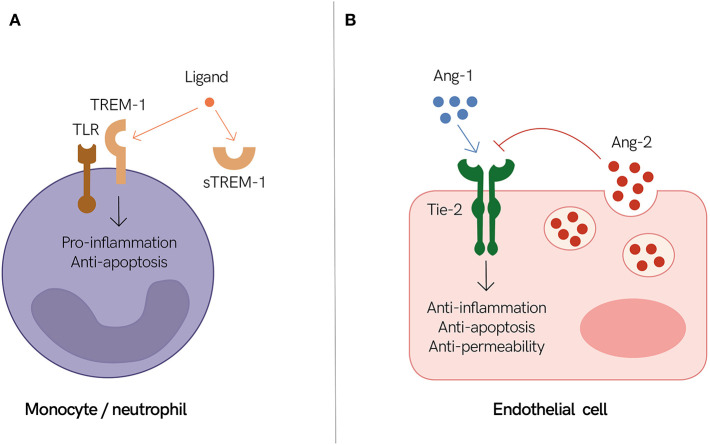
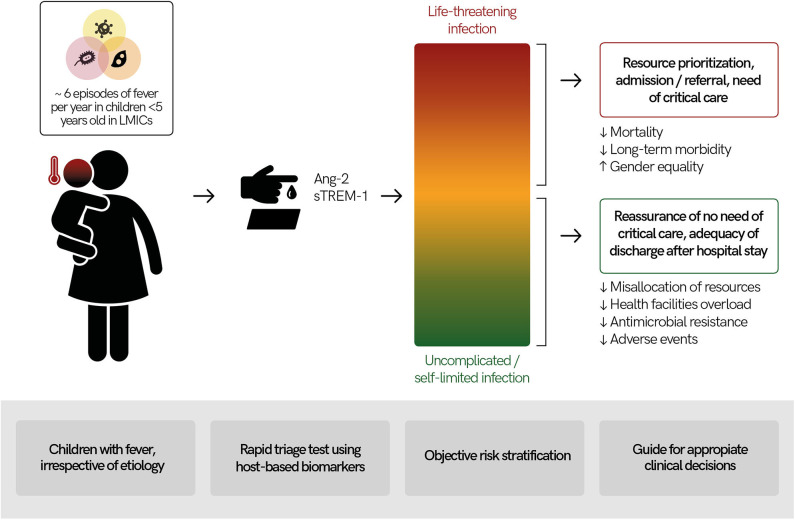
Fever is one of the leading causes for pediatric medical consultation and the most common symptom at clinical presentation in low- and middle-income countries (LMICs). Most febrile episodes are due to self-limited infections, but a small proportion of children will develop life-threatening infections. The early recognition of children who have or are progressing to a critical illness among all febrile cases is challenging, and there are currently no objective and quantitative tools to do so. This results in increased morbidity and mortality among children with impending life-threatening infections, whilst contributing to the unnecessary prescription of antibiotics, overwhelming health care facilities, and harm to patients receiving avoidable antimicrobial treatment. Specific fever origin is difficult to ascertain and co-infections in LMICs are common. However, many severe infections share common pathways of host injury irrespective of etiology, including immune and endothelial activation that contribute to the pathobiology of sepsis (i.e., pathogen "agnostic" mechanisms of disease). Importantly, mediators of these pathways are independent markers of disease severity and outcome. We propose that measuring circulating levels of these factors can provide quantitative and objective evidence to: enable early recognition of severe infection; guide patient triage and management; enhance post-discharge risk stratification and follow up; and mitigate potential gender bias in clinical decisions. Here, we review the clinical and biological evidence supporting the clinical utility of host immune and endothelial activation biomarkers as components of novel rapid triage tests, and discuss the challenges and needs for developing and implementing such tools.
发热是儿科就诊的主要原因之一,也是低收入和中等收入国家(LMICs)临床就诊时最常见的症状。大多数发热性疾病是由自限性感染引起的,但一小部分儿童会发展为危及生命的感染。在所有发热病例中,早期识别患有或正在发展为危重症的儿童具有挑战性,目前尚无客观和定量的工具来进行识别。这导致有潜在危及生命感染的儿童发病率和死亡率增加,同时导致抗生素的不必要使用、医疗保健设施不堪重负,以及对接受不必要抗菌治疗的患者造成伤害。在LMICs中,特定的发热源很难确定,合并感染很常见。然而,许多严重感染无论病因如何,都有共同的宿主损伤途径,包括免疫和内皮细胞激活,这些都促成了脓毒症的病理生物学过程(即病原体“不可知”的疾病机制)。重要的是,这些途径的介质是疾病严重程度和预后的独立标志物。我们认为,检测这些因子的循环水平可以提供定量和客观的证据,以:早期识别严重感染;指导患者分诊和管理;加强出院后风险分层和随访;以及减轻临床决策中潜在的性别偏见。在此,我们综述了支持宿主免疫和内皮细胞激活生物标志物作为新型快速分诊检测组成部分的临床和生物学证据,并讨论了开发和实施此类工具的挑战与需求。