1] Department of Environmental Health, Center for Nanotechnology and Nanotoxicology, Harvard School of Public Health, 655 Huntington Ave Boston, Massachusetts 02115, USA [2].
Division of Earth and Ocean Sciences, Nicholas School of the Environment, 207A Old Chemistry Building, Box 90227 Duke University, Durham, North Carolina 27708, USA.
Nat Commun. 2014 Mar 28;5:3514. doi: 10.1038/ncomms4514.
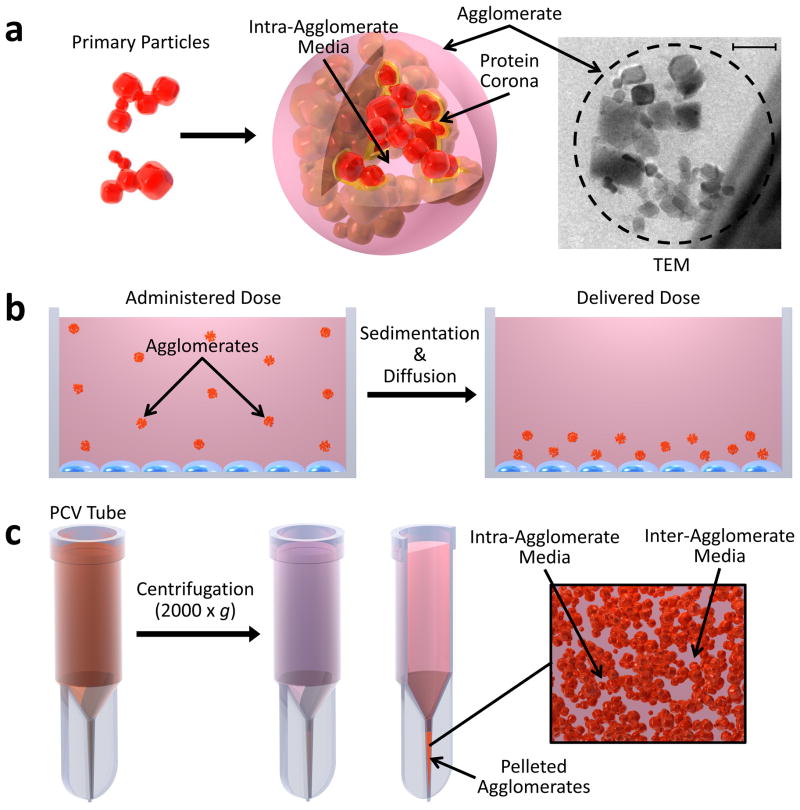
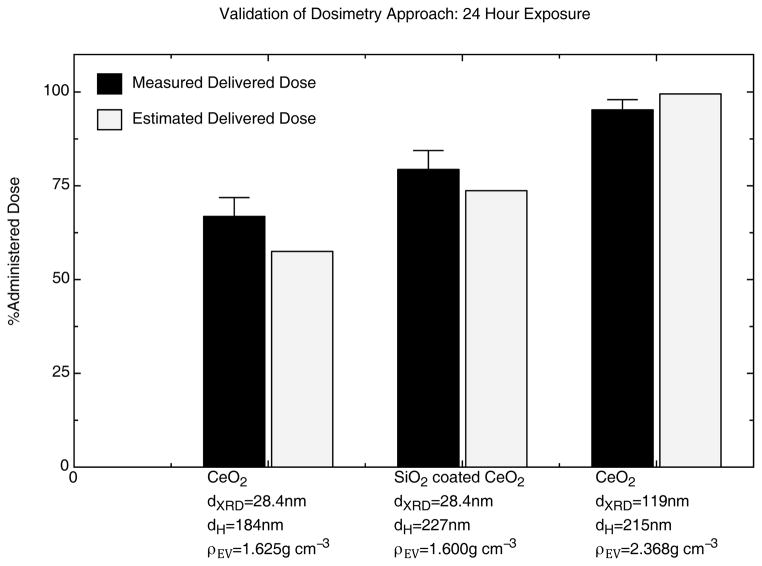
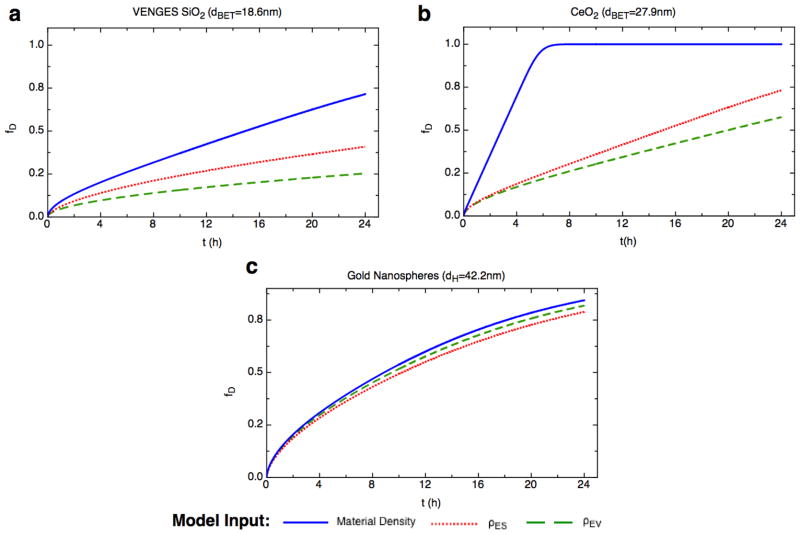
The need for accurate in vitro dosimetry remains a major obstacle to the development of cost-effective toxicological screening methods for engineered nanomaterials. An important key to accurate in vitro dosimetry is the characterization of sedimentation and diffusion rates of nanoparticles suspended in culture media, which largely depend upon the effective density and diameter of formed agglomerates in suspension. Here we present a rapid and inexpensive method for accurately measuring the effective density of nano-agglomerates in suspension. This novel method is based on the volume of the pellet obtained by benchtop centrifugation of nanomaterial suspensions in a packed cell volume tube, and is validated against gold-standard analytical ultracentrifugation data. This simple and cost-effective method allows nanotoxicologists to correctly model nanoparticle transport, and thus attain accurate dosimetry in cell culture systems, which will greatly advance the development of reliable and efficient methods for toxicological testing and investigation of nano-bio interactions in vitro.
准确的体外剂量测定仍然是开发经济高效的工程纳米材料毒理学筛选方法的主要障碍。准确的体外剂量测定的一个重要关键是对悬浮在培养基中的纳米颗粒的沉降和扩散速率进行表征,这在很大程度上取决于悬浮液中形成的团聚体的有效密度和直径。在这里,我们提出了一种快速而廉价的方法来准确测量悬浮纳米团聚体的有效密度。这种新方法基于在填充细胞体积管中进行台式离心分离纳米材料悬浮液后获得的颗粒体积,并与金标准分析超速离心数据进行了验证。这种简单且具有成本效益的方法使纳米毒理学家能够正确地模拟纳米颗粒的传输,从而在细胞培养系统中实现准确的剂量测定,这将极大地促进可靠和有效的毒理学测试方法的发展,并研究体外纳米-生物相互作用。