Mu R, Wang Y-B, Wu M, Yang Y, Song W, Li T, Zhang W-N, Tan B, Li A-L, Wang N, Xia Q, Gong W-L, Wang C-G, Zhou T, Guo N, Sang Z-H, Li H-Y
State Key Laboratory of Proteomics, Institute of Basic Medical Sciences, National Center of Biomedical Analysis, Beijing, China.
Department of Cancer Biology, Kimmel Cancer Center, Thomas Jefferson University, Philadelphia, PA, USA.
Cell Death Dis. 2014 Mar 27;5(3):e1151. doi: 10.1038/cddis.2014.117.
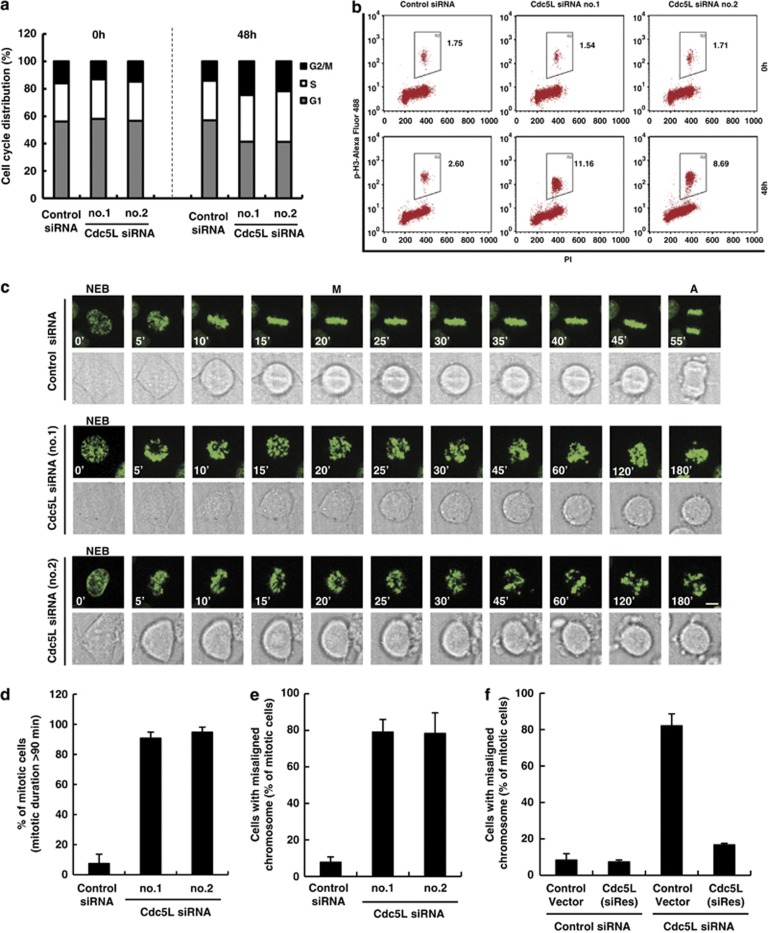
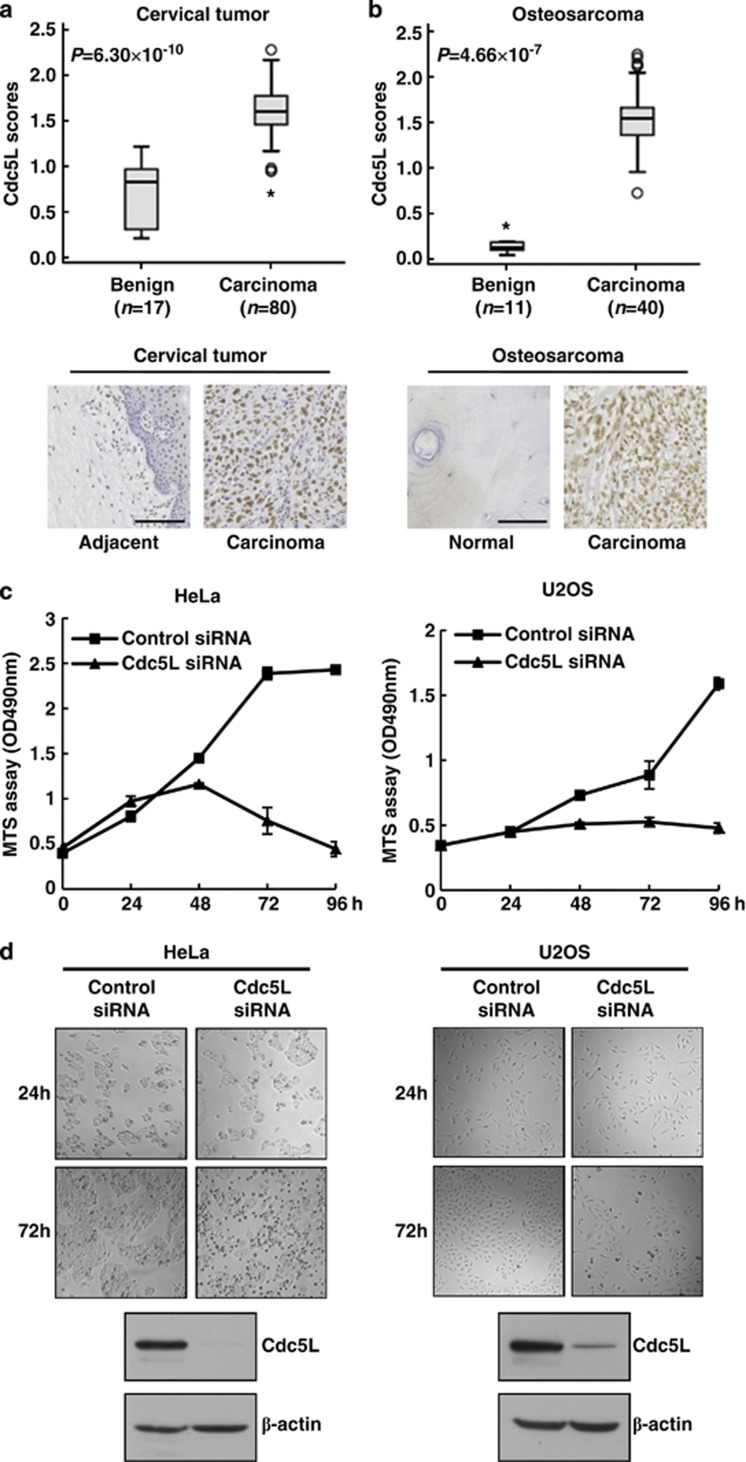
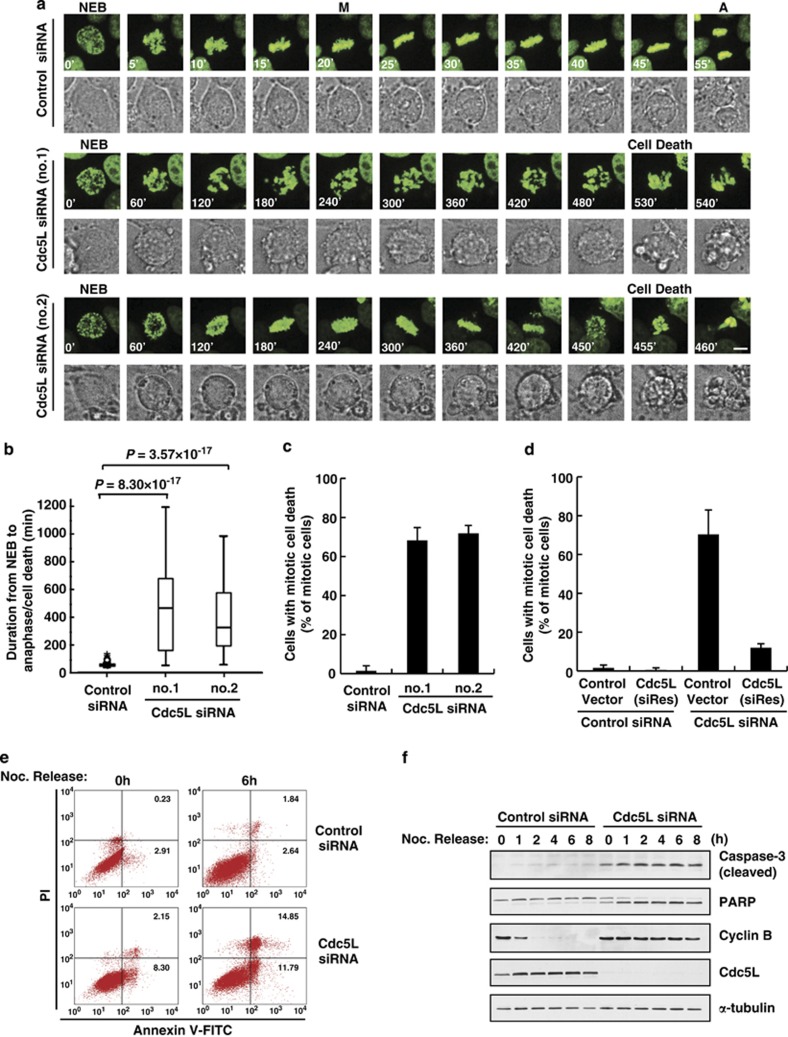
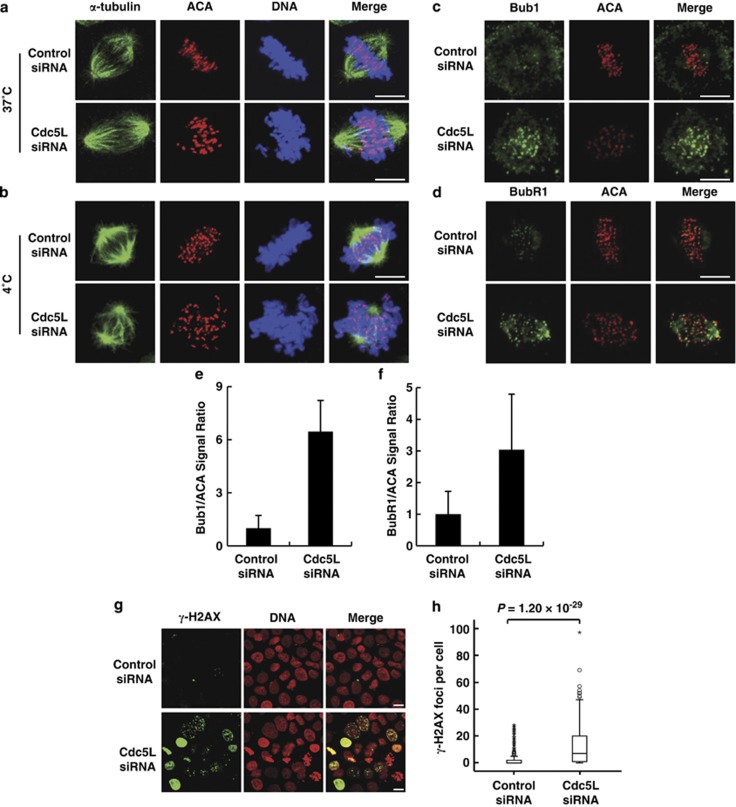
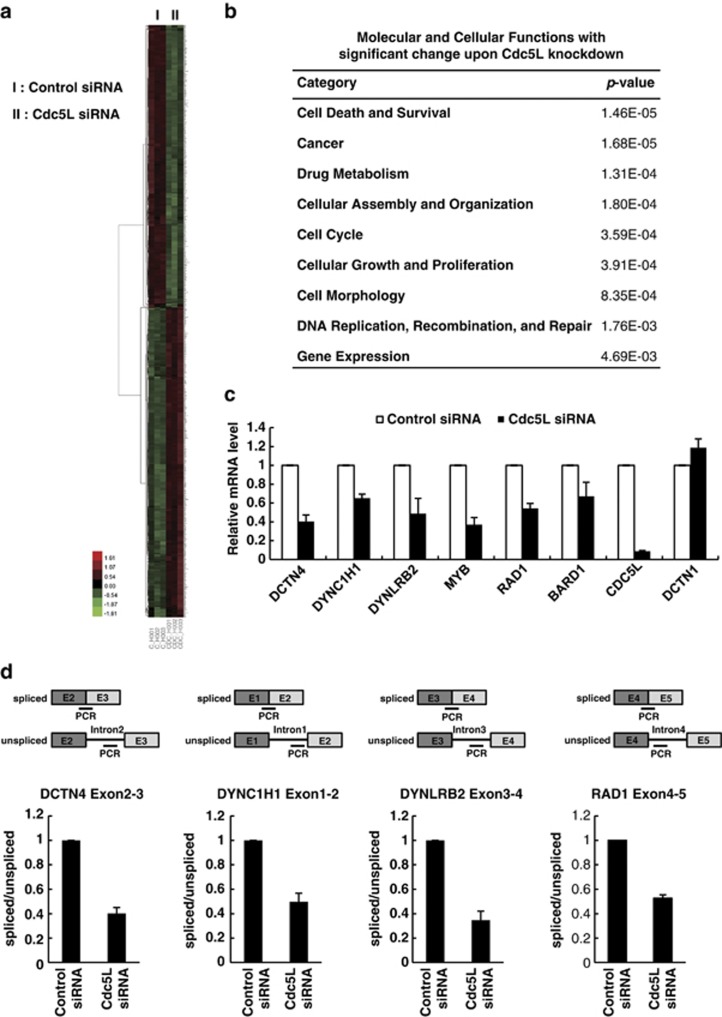
Disturbing mitotic progression via targeted anti-mitotic therapy is an attractive strategy for cancer treatment. Therefore, the exploration and elucidation of molecular targets and pathways in mitosis are critical for the development of anti-mitotic drugs. Here, we show that cell division cycle 5-like (Cdc5L), a pre-mRNA splicing factor, is a regulator of mitotic progression. Depletion of Cdc5L causes dramatic mitotic arrest, chromosome misalignments and sustained activation of spindle assembly checkpoint, eventually leading to mitotic catastrophe. Moreover, these defects result from severe impairment of kinetochore-microtubule attachment and serious DNA damage. Genome-wide gene expression analysis reveals that Cdc5L modulates the expression of a set of genes involved in the mitosis and the DNA damage response. We further found that the pre-mRNA splicing efficiency of these genes were impaired when Cdc5L was knocked down. Interestingly, Cdc5L is highly expressed in cervical tumors and osteosarcoma. Finally, we demonstrate that downregulation of Cdc5L decreases the cell viability of related tumor cells. These results suggest that Cdc5L is a key regulator of mitotic progression and highlight the potential of Cdc5L as a target for cancer therapy.
通过靶向抗有丝分裂疗法干扰有丝分裂进程是一种颇具吸引力的癌症治疗策略。因此,探索和阐明有丝分裂中的分子靶点及信号通路对于抗有丝分裂药物的研发至关重要。在此,我们表明细胞分裂周期5样蛋白(Cdc5L),一种前体mRNA剪接因子,是有丝分裂进程的调节因子。Cdc5L的缺失会导致显著的有丝分裂停滞、染色体排列紊乱以及纺锤体组装检查点的持续激活,最终导致有丝分裂灾难。此外,这些缺陷是由于着丝粒 - 微管附着的严重受损和严重的DNA损伤所致。全基因组基因表达分析表明,Cdc5L调节一组参与有丝分裂和DNA损伤反应的基因的表达。我们进一步发现,当Cdc5L被敲低时,这些基因的前体mRNA剪接效率受损。有趣的是,Cdc5L在宫颈肿瘤和骨肉瘤中高表达。最后,我们证明Cdc5L的下调会降低相关肿瘤细胞的活力。这些结果表明Cdc5L是有丝分裂进程的关键调节因子,并突出了Cdc5L作为癌症治疗靶点的潜力。