Chabot Philippe R, Raiola Luca, Lussier-Price Mathieu, Morse Thomas, Arseneault Genevieve, Archambault Jacques, Omichinski James G
Département de Biochimie et Médicine Moléculaire, Université de Montréal, Succursale Centre-Ville, Montréal, Québec, Canada.
Département de Biochimie et Médicine Moléculaire, Université de Montréal, Succursale Centre-Ville, Montréal, Québec, Canada; Institut de Recherches Cliniques de Montréal, Montréal, Québec, Canada.
PLoS Pathog. 2014 Mar 27;10(3):e1004042. doi: 10.1371/journal.ppat.1004042. eCollection 2014 Mar.
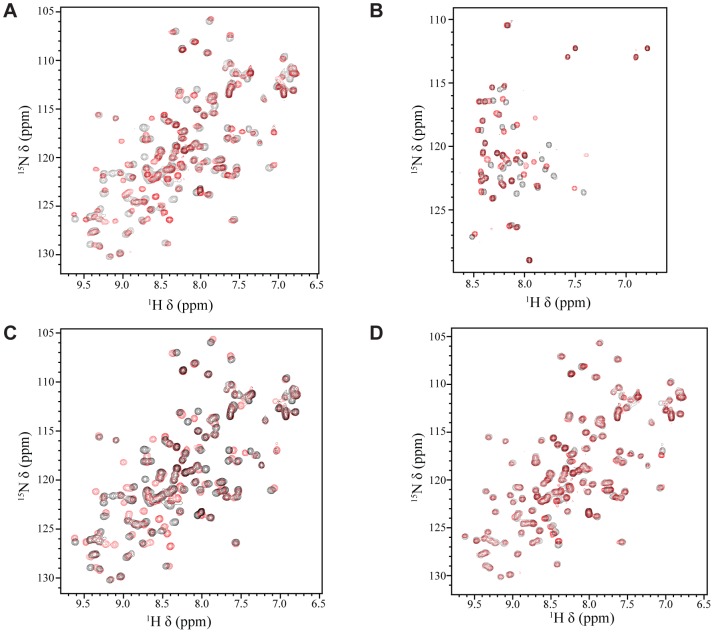
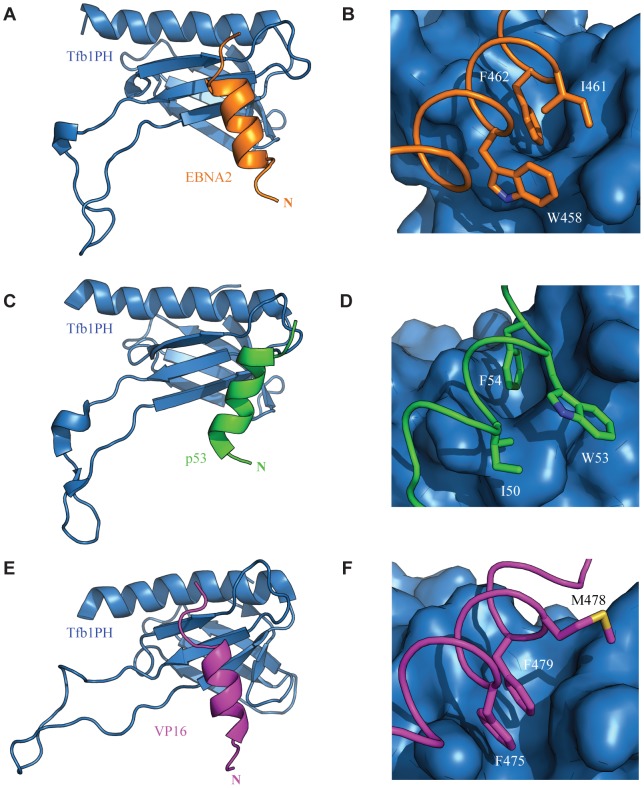
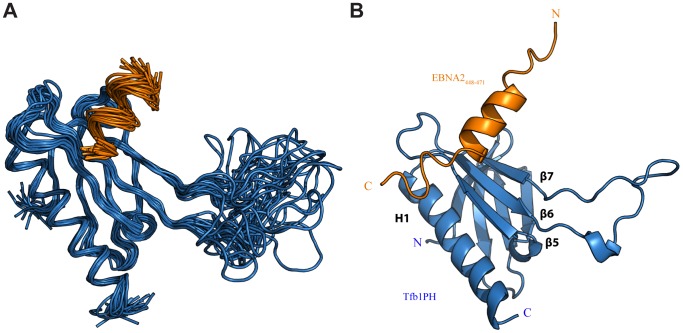
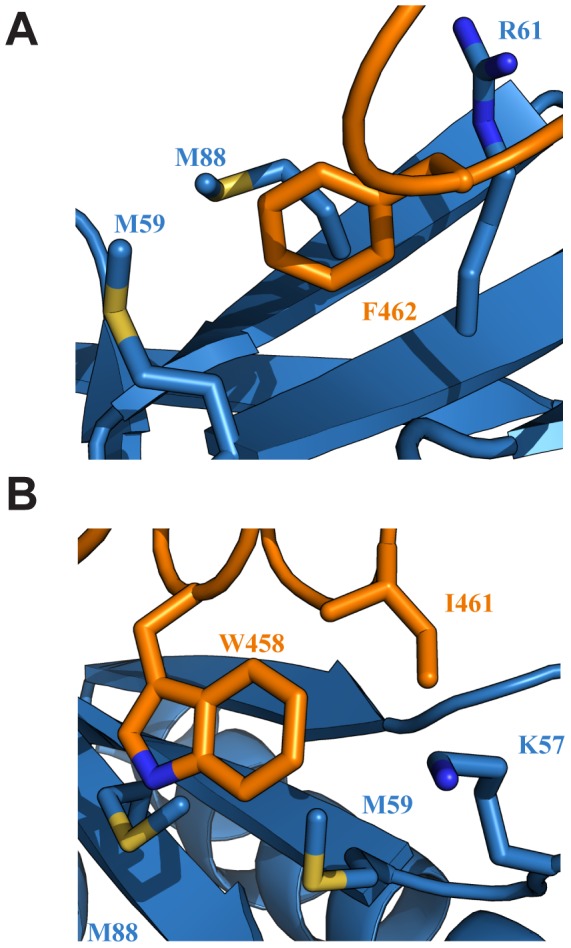
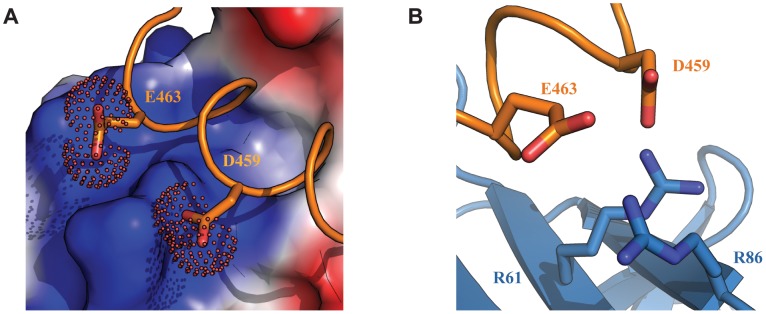
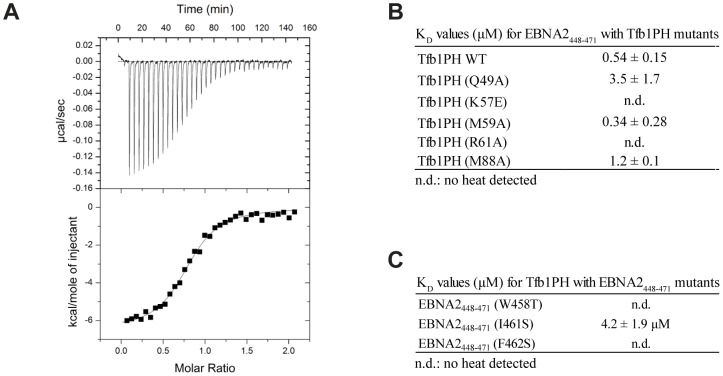
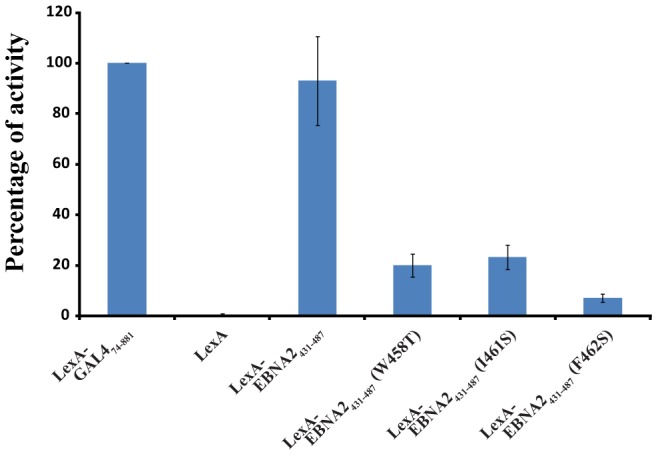
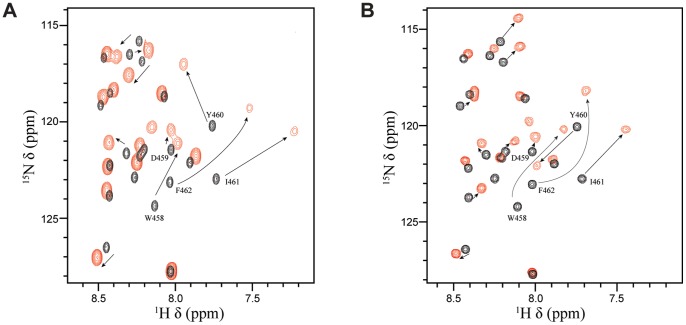
Infection with the Epstein-Barr virus (EBV) can lead to a number of human diseases including Hodgkin's and Burkitt's lymphomas. The development of these EBV-linked diseases is associated with the presence of nine viral latent proteins, including the nuclear antigen 2 (EBNA2). The EBNA2 protein plays a crucial role in EBV infection through its ability to activate transcription of both host and viral genes. As part of this function, EBNA2 associates with several host transcriptional regulatory proteins, including the Tfb1/p62 (yeast/human) subunit of the general transcription factor IIH (TFIIH) and the histone acetyltransferase CBP(CREB-binding protein)/p300, through interactions with its C-terminal transactivation domain (TAD). In this manuscript, we examine the interaction of the acidic TAD of EBNA2 (residues 431-487) with the Tfb1/p62 subunit of TFIIH and CBP/p300 using nuclear magnetic resonance (NMR) spectroscopy, isothermal titration calorimeter (ITC) and transactivation studies in yeast. NMR studies show that the TAD of EBNA2 binds to the pleckstrin homology (PH) domain of Tfb1 (Tfb1PH) and that residues 448-471 (EBNA2₄₄₈₋₄₇₁) are necessary and sufficient for this interaction. NMR structural characterization of a Tfb1PH-EBNA2₄₄₈₋₄₇₁ complex demonstrates that the intrinsically disordered TAD of EBNA2 forms a 9-residue α-helix in complex with Tfb1PH. Within this helix, three hydrophobic amino acids (Trp458, Ile461 and Phe462) make a series of important interactions with Tfb1PH and their importance is validated in ITC and transactivation studies using mutants of EBNA2. In addition, NMR studies indicate that the same region of EBNA2 is also required for binding to the KIX domain of CBP/p300. This study provides an atomic level description of interactions involving the TAD of EBNA2 with target host proteins. In addition, comparison of the Tfb1PH-EBNA2₄₄₈₋₄₇₁ complex with structures of the TAD of p53 and VP16 bound to Tfb1PH highlights the versatility of intrinsically disordered acidic TADs in recognizing common target host proteins.
感染爱泼斯坦-巴尔病毒(EBV)可导致多种人类疾病,包括霍奇金淋巴瘤和伯基特淋巴瘤。这些与EBV相关疾病的发生与九种病毒潜伏蛋白的存在有关,其中包括核抗原2(EBNA2)。EBNA2蛋白通过激活宿主和病毒基因的转录,在EBV感染中发挥关键作用。作为该功能的一部分,EBNA2通过与其C端反式激活结构域(TAD)相互作用,与几种宿主转录调节蛋白相关联,包括通用转录因子IIH(TFIIH)的Tfb1/p62(酵母/人类)亚基以及组蛋白乙酰转移酶CBP(CREB结合蛋白)/p300。在本论文中,我们使用核磁共振(NMR)光谱、等温滴定量热法(ITC)以及酵母中的反式激活研究,研究了EBNA2的酸性TAD(431 - 487位氨基酸残基)与TFIIH的Tfb1/p62亚基以及CBP/p300之间的相互作用。NMR研究表明,EBNA2的TAD与Tfb1的普列克底物蛋白同源(PH)结构域(Tfb1PH)结合,并且448 - 471位氨基酸残基(EBNA2₄₄₈₋₄₇₁)对于这种相互作用是必要且充分的。Tfb1PH - EBNA2₄₄₈₋₄₇₁复合物的NMR结构表征表明,EBNA2内在无序的TAD与Tfb1PH形成了一个9个氨基酸残基的α螺旋。在这个螺旋中,三个疏水氨基酸(Trp458、Ile461和Phe462)与Tfb1PH进行了一系列重要的相互作用,并且它们的重要性在使用EBNA2突变体的ITC和反式激活研究中得到了验证。此外,NMR研究表明,EBNA2的同一区域对于与CBP/p300的KIX结构域结合也是必需的。这项研究提供了涉及EBNA2的TAD与靶宿主蛋白相互作用的原子水平描述。此外,将Tfb1PH - EBNA2₄₄₈₋₄₇₁复合物与p53和VP16的TAD与Tfb1PH结合的结构进行比较,突出了内在无序的酸性TAD在识别共同靶宿主蛋白方面的多功能性。