Laboratorio de Parasitología, Centro de Investigaciones Regionales "Dr. Hideyo Noguchi", Universidad Autónoma de Yucatán, Mérida, Yucatán, Mexico.
Laboratorio de Parasitología, Centro de Investigaciones Regionales "Dr. Hideyo Noguchi", Universidad Autónoma de Yucatán, Mérida, Yucatán, Mexico; Department of International Health, School of Public Health and Tropical Medicine, Tulane University, New Orleans, Louisiana, United States of America.
PLoS Negl Trop Dis. 2014 Mar 27;8(3):e2763. doi: 10.1371/journal.pntd.0002763. eCollection 2014 Mar.
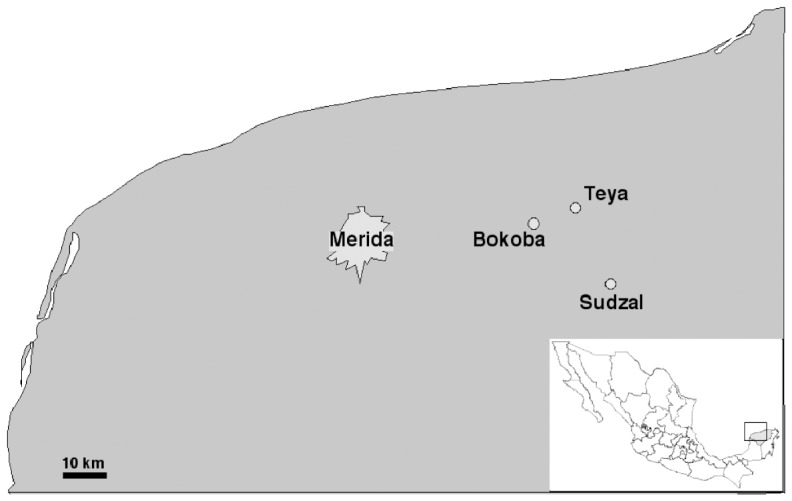
Chagas disease is a vector-borne parasitic disease of major public health importance. Current prevention efforts are based on triatomine vector control to reduce transmission to humans. Success of vector control interventions depends on their acceptability and value to affected communities. We aimed to identify opportunities for and barriers to improved vector control strategies in the Yucatan peninsula, Mexico.
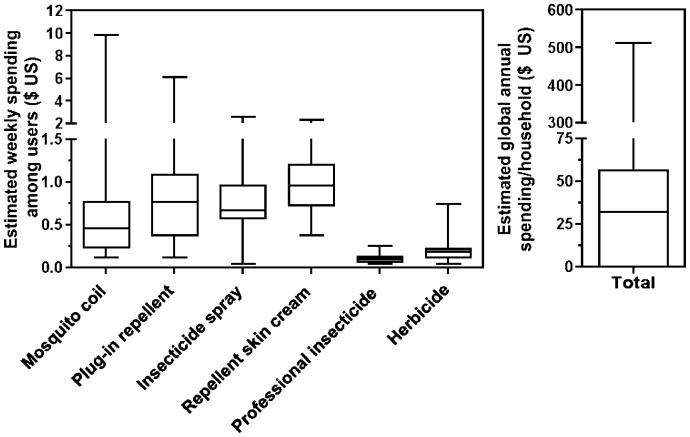
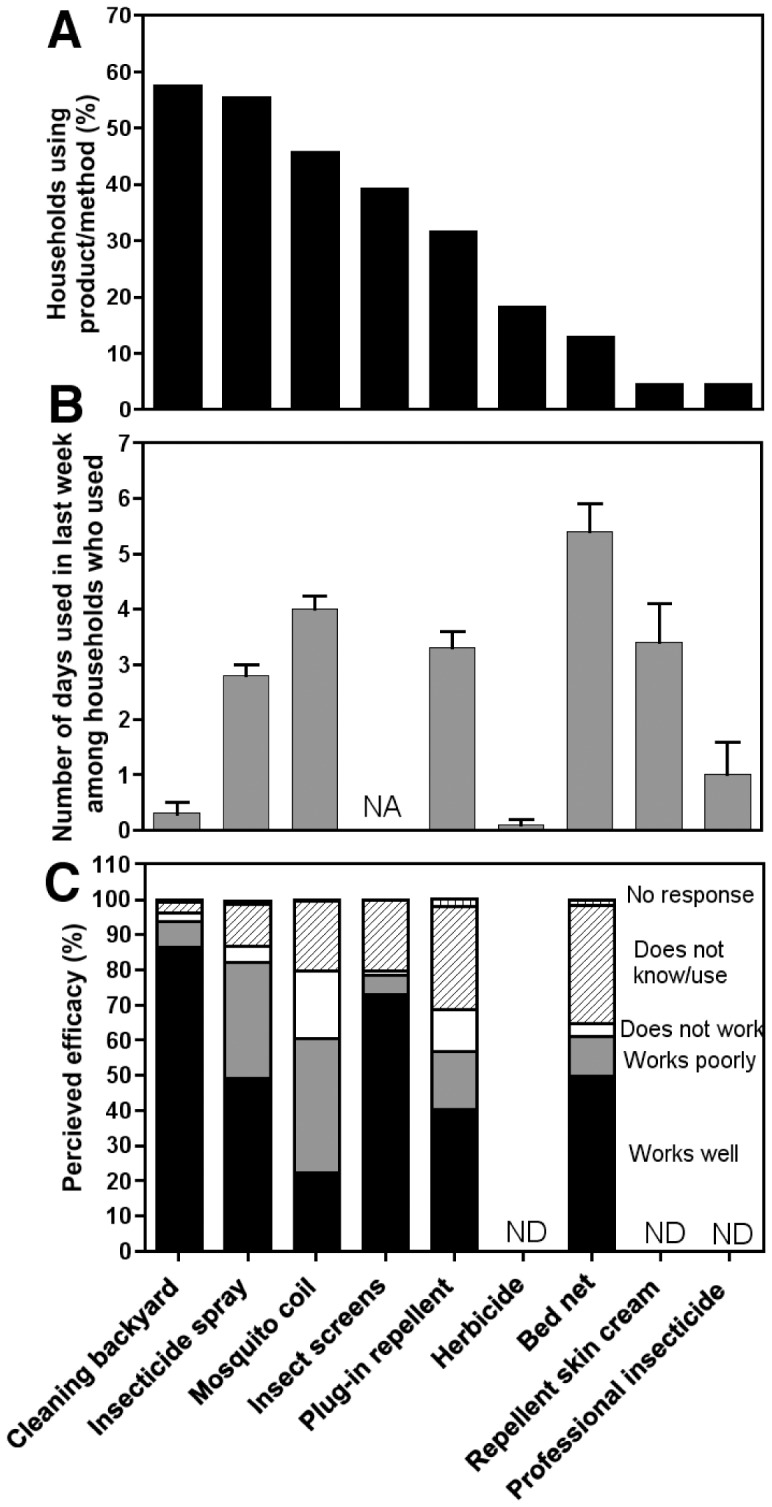
METHODOLOGY/PRINCIPAL FINDINGS: We employed a sequence of qualitative and quantitative research methods to investigate knowledge, attitudes and practices surrounding Chagas disease, triatomines and vector control in three rural communities. Our combined data show that community members are well aware of triatomines and are knowledgeable about their habits. However, most have a limited understanding of the transmission dynamics and clinical manifestations of Chagas disease. While triatomine control is not a priority for community members, they frequently use domestic insecticide products including insecticide spray, mosquito coils and plug-in repellents. Families spend about $32 US per year on these products. Alternative methods such as yard cleaning and window screens are perceived as desirable and potentially more effective. Screens are nonetheless described as unaffordable, in spite of a cost comparable to the average annual spending on insecticide products.
CONCLUSION/SIGNIFICANCE: Further education campaigns and possibly financing schemes may lead families to redirect their current vector control spending from insecticide products to window screens. Also, synergism with mosquito control efforts should be further explored to motivate community involvement and ensure sustainability of Chagas disease vector control.
恰加斯病是一种具有重要公共卫生意义的媒介传播寄生虫病。目前的预防工作基于对传播媒介三锥虫的控制,以减少对人类的传播。媒介控制干预措施的成功取决于它们对受影响社区的可接受性和价值。我们旨在确定在墨西哥尤卡坦半岛改进媒介控制策略的机会和障碍。
方法/主要发现:我们采用了一系列定性和定量研究方法,调查了三个农村社区中围绕恰加斯病、三锥虫和媒介控制的知识、态度和实践。我们综合的数据表明,社区成员非常了解三锥虫,并且对它们的习性有一定的了解。然而,大多数人对恰加斯病的传播动态和临床表现的了解有限。虽然三锥虫控制不是社区成员的首要任务,但他们经常使用家用杀虫剂产品,包括杀虫剂喷雾、蚊香和插电式驱虫剂。家庭每年在这些产品上的花费约为 32 美元。家庭认为院子清洁和窗户纱窗等替代方法是可取的,并且可能更有效。然而,尽管纱窗的价格与每年平均用于杀虫剂产品的花费相当,但纱窗仍被描述为负担不起。
结论/意义:进一步的教育活动和可能的融资计划可能会促使家庭将其目前用于杀虫剂产品的媒介控制支出重新用于窗户纱窗。此外,还应进一步探索与蚊子控制工作的协同作用,以激发社区参与并确保恰加斯病媒介控制的可持续性。