Glia. 2014 May;62(5):804-17. doi: 10.1002/glia.22643.
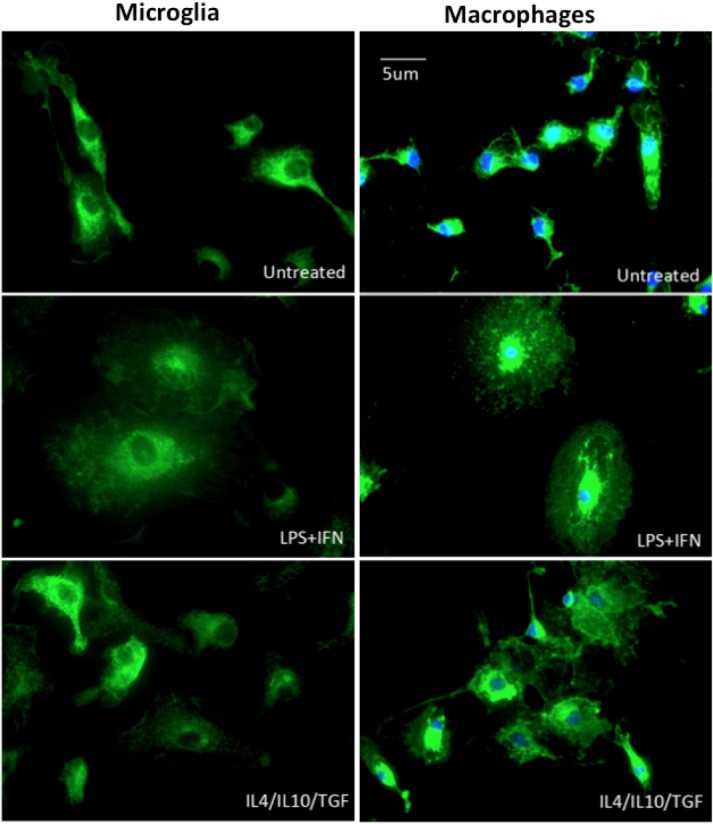
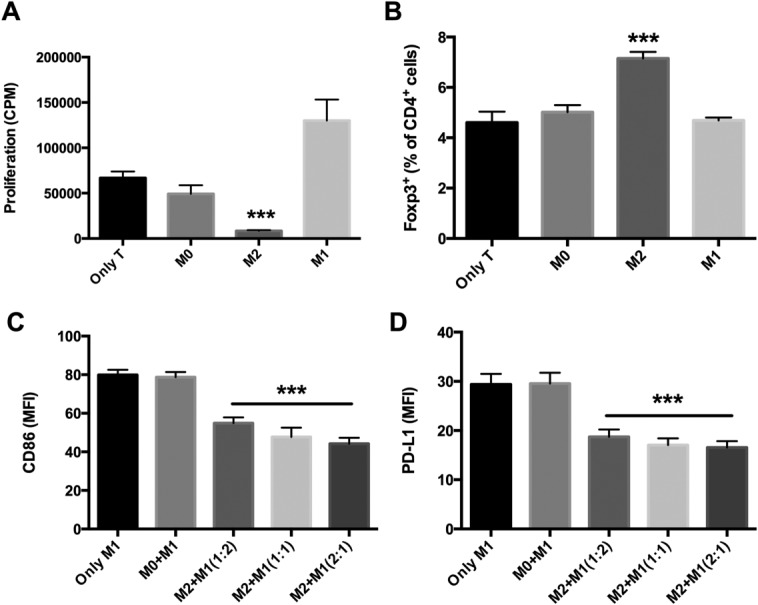
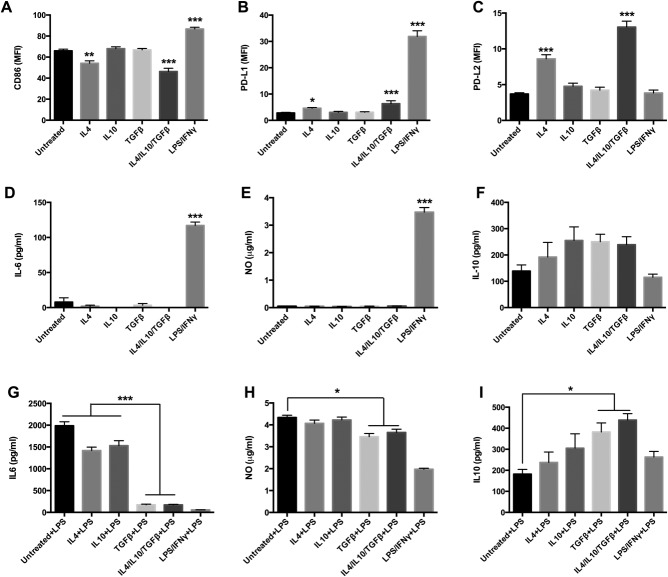
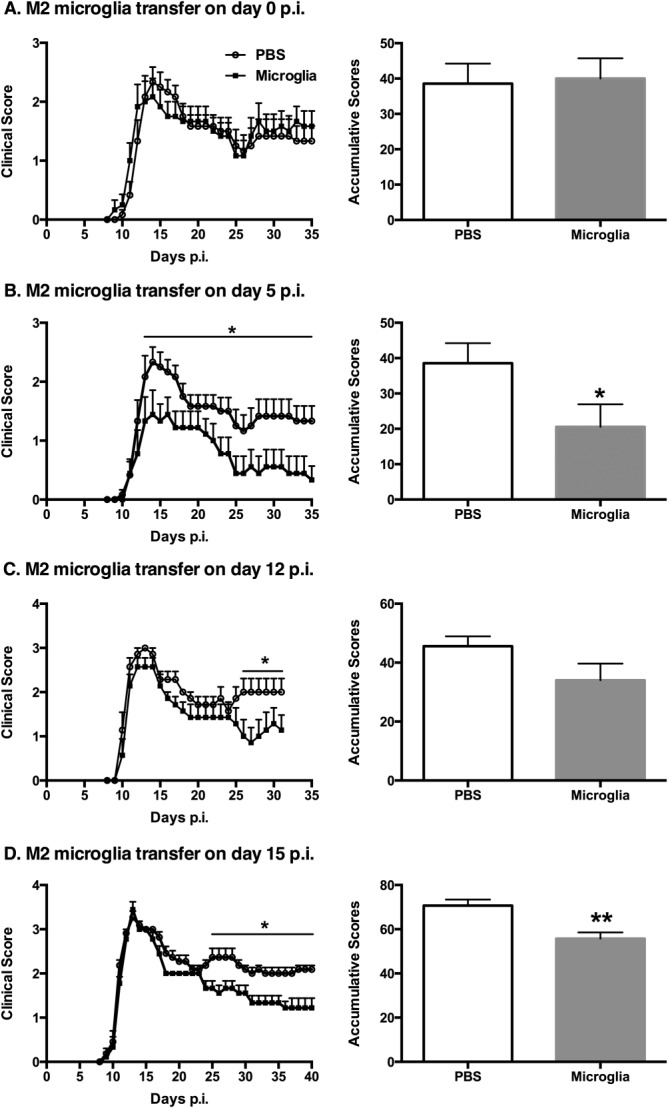
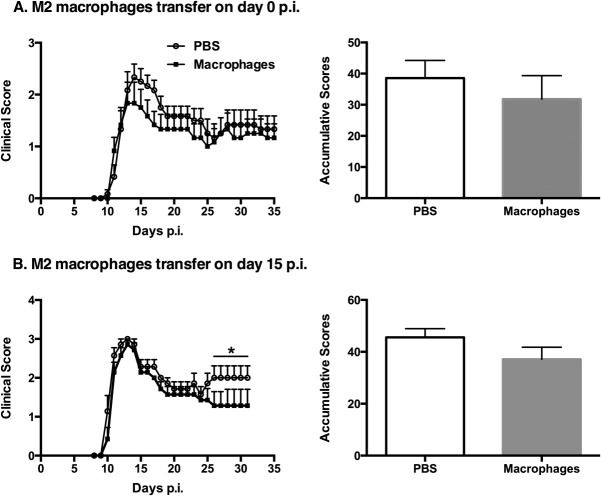
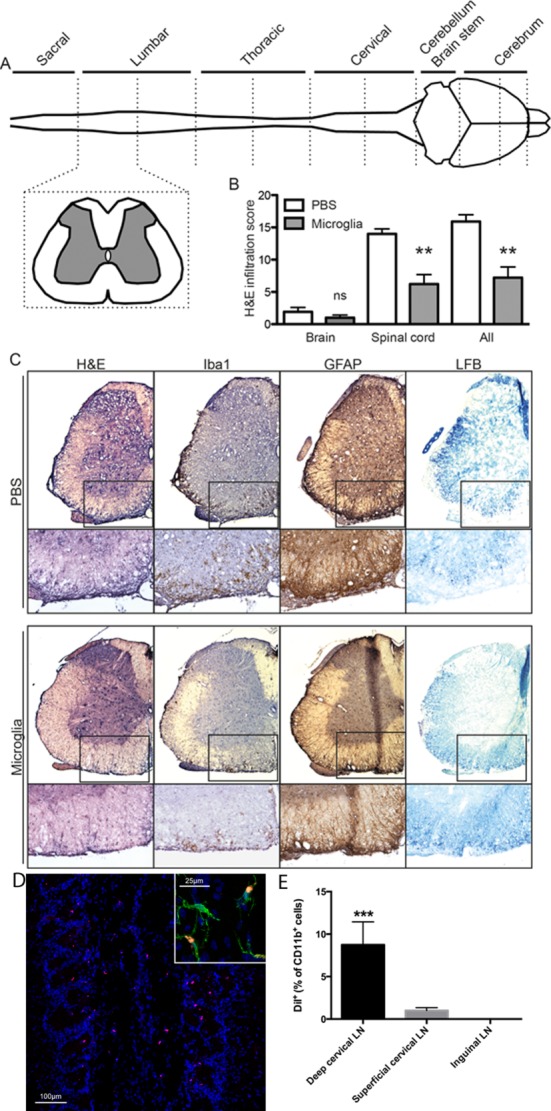
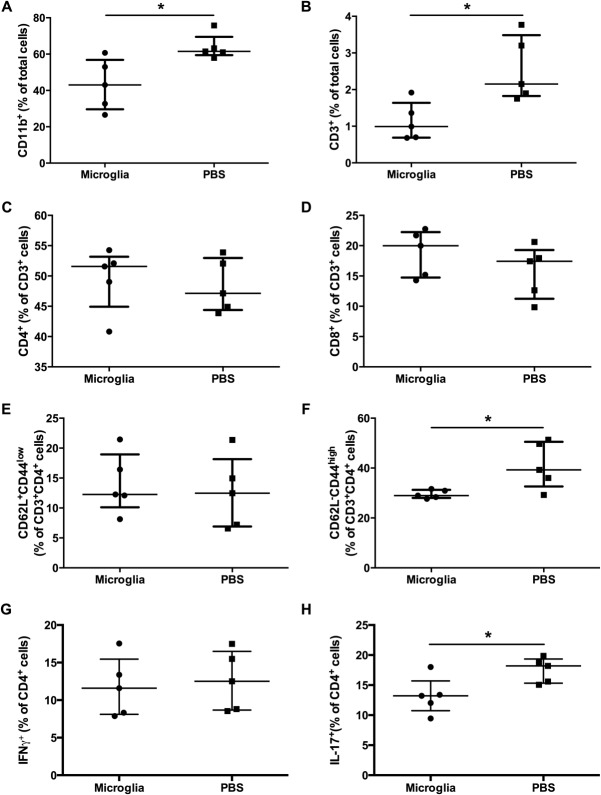
Microglia are resident antigen-presenting cells in the central nervous system (CNS) that either suppress or promote disease depending on their activation phenotype and the microenvironment. Multiple sclerosis (MS) is a chronic inflammatory disease causing demyelination and nerve loss in the CNS, and experimental autoimmune encephalomyelitis (EAE) is an animal model of MS that is widely used to investigate pathogenic mechanisms and therapeutic effects. We isolated and cultured microglia from adult mouse brains and exposed them to specific combinations of stimulatory molecules and cytokines, the combination of IL-4, IL-10, and TGF-β yielding the optimal regime for induction of an immunosuppressive phenotype (M2). M2 microglia were characterized by decreased expression or production of CD86, PD-L1, nitric oxide, and IL-6, increased expression of PD-L2, and having a potent capacity to retain their phenotype on secondary proinflammatory stimulation. M2 microglia induced regulatory T cells, suppressed T-cell proliferation, and downmodulated M1-associated receptor expression in M1 macrophages. Myelin oligodendrocyte glycoprotein (MOG)-induced EAE was induced in DBA/1 mice and at different time points (0, 5, 12, or 15 days postimmunization) 3 × 10⁵ M2 microglia were transferred intranasally. A single transfer of M2 microglia attenuated the severity of established EAE, which was particularly obvious when the cells were injected at 15 days postimmunization. M2 microglia-treated mice had reduced inflammatory responses and less demyelination in the CNS. Our findings demonstrate that adult M2 microglia therapy represents a novel intervention that alleviated established EAE and that this therapeutic principle may have relevance for treatment of MS patients.
小胶质细胞是中枢神经系统(CNS)中常驻的抗原呈递细胞,其激活表型和微环境决定了它们是抑制还是促进疾病。多发性硬化症(MS)是一种慢性炎症性疾病,导致 CNS 脱髓鞘和神经丢失,实验性自身免疫性脑脊髓炎(EAE)是 MS 的动物模型,广泛用于研究发病机制和治疗效果。我们从成年小鼠大脑中分离和培养小胶质细胞,并将其暴露于特定组合的刺激分子和细胞因子中,IL-4、IL-10 和 TGF-β的组合产生了诱导免疫抑制表型(M2)的最佳方案。M2 小胶质细胞的特征是 CD86、PD-L1、一氧化氮和 IL-6 的表达或产生减少,PD-L2 的表达增加,并且在二次促炎刺激下具有保持其表型的强大能力。M2 小胶质细胞诱导调节性 T 细胞,抑制 T 细胞增殖,并下调 M1 巨噬细胞中与 M1 相关的受体表达。在 DBA/1 小鼠中诱导髓鞘少突胶质细胞糖蛋白(MOG)诱导的 EAE,并在不同时间点(免疫后 0、5、12 或 15 天)鼻内转移 3×10⁵ M2 小胶质细胞。单次转移 M2 小胶质细胞可减轻已建立的 EAE 的严重程度,当细胞在免疫后 15 天注射时尤为明显。M2 小胶质细胞处理的小鼠中枢神经系统中的炎症反应和脱髓鞘减少。我们的研究结果表明,成年 M2 小胶质细胞治疗代表了一种新的干预措施,可以缓解已建立的 EAE,并且该治疗原则可能与 MS 患者的治疗有关。