Howard Hughes Medical Institute, The Jackson Laboratory, Bar Harbor, ME, USA.
BMC Genet. 2014 Mar 28;15:42. doi: 10.1186/1471-2156-15-42.
The molecular mechanisms causing pigment dispersion syndrome (PDS) and the pathway(s) by which it progresses to pigmentary glaucoma are not known. Mutations in two melanosomal protein genes (Tyrp1(b) and Gpnmb(R150X)) are responsible for pigment dispersing iris disease, which progresses to intraocular pressure (IOP) elevation and subsequent glaucoma in DBA/2J mice. Melanosomal defects along with ocular immune abnormalities play a role in the propagation of pigment dispersion and progression to IOP elevation. Here, we tested the role of specific immune components in the progression of the iris disease and high IOP.
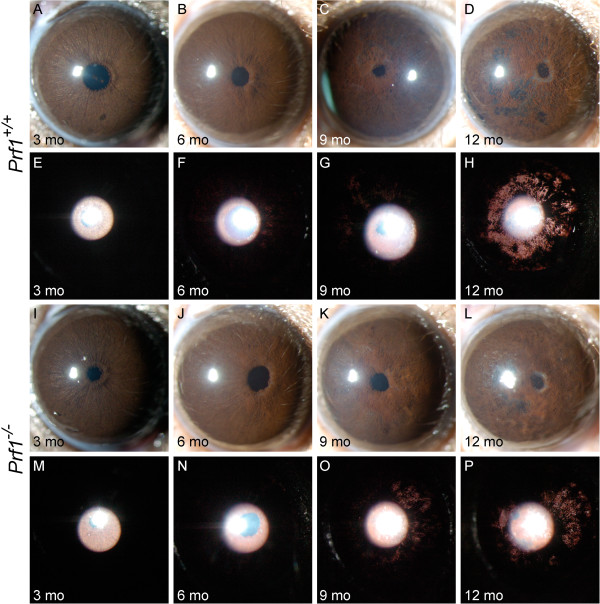
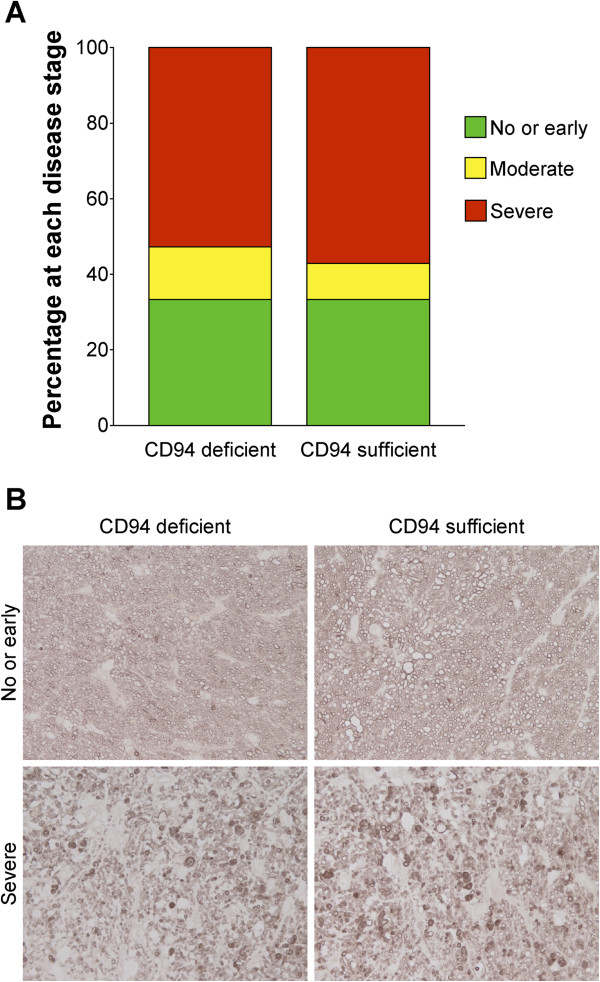
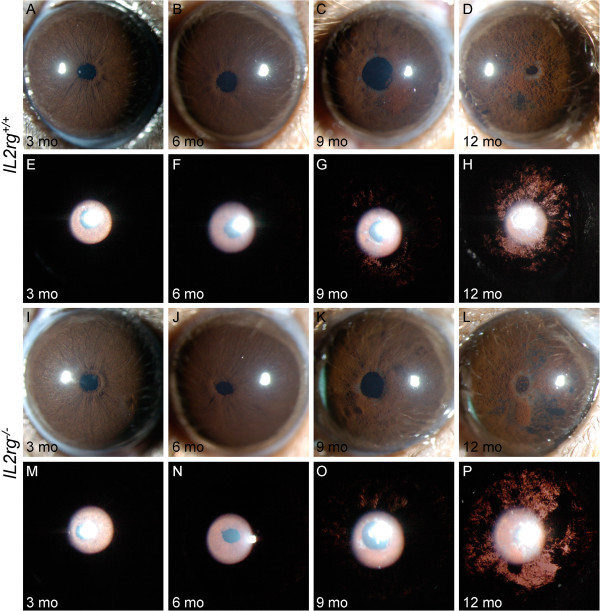
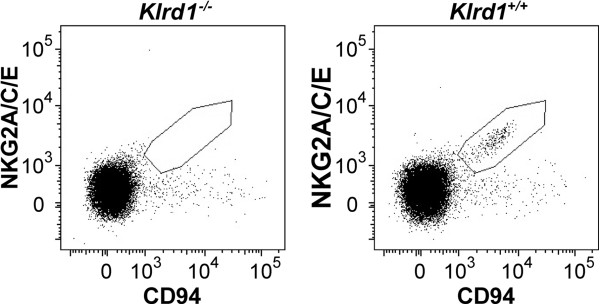
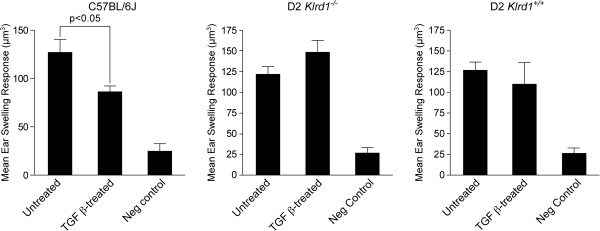
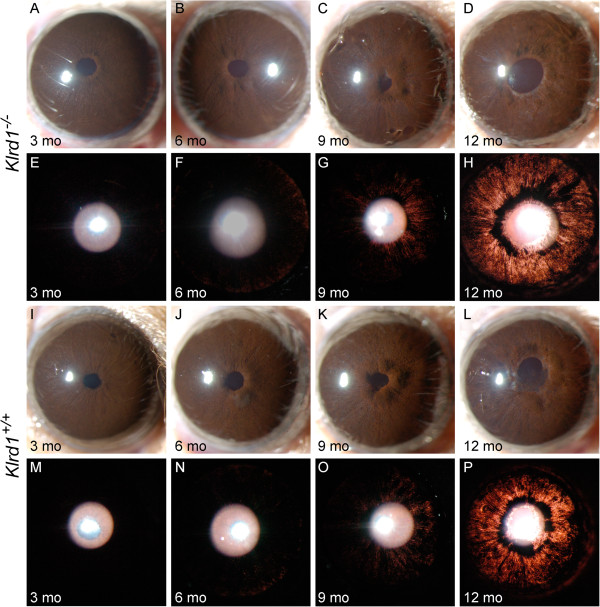
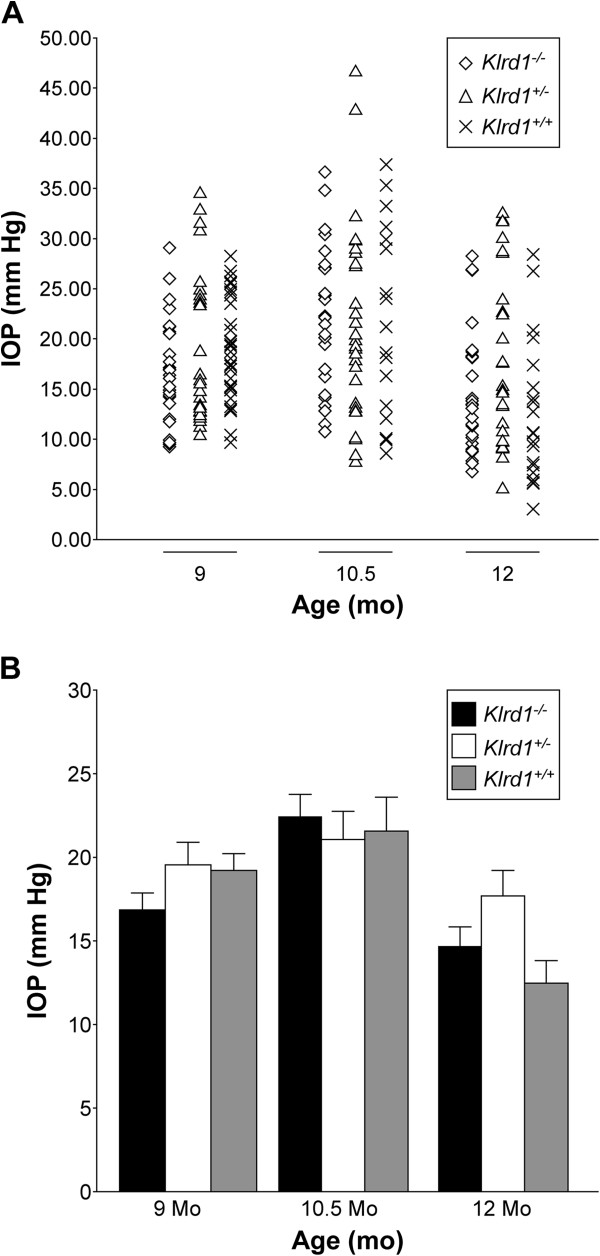
We tested the role of NK cells in disease etiology by genetically modifying the B6.D2-Gpnmb(R150X) Tyrp1(b) strain, which develops the same iris disease as DBA/2J mice. Our findings demonstrate that neither diminishing NK mediated cytotoxic activity (Prf1 mutation) nor NK cell depletion (Il2rg mutation) has any influence on the severity or timing of Gpnmb(R150X) Tyrp1(b) mediated iris disease. Since DBA/2J mice are deficient in CD94, an important immune modulator that often acts as an immune suppressor, we generated DBA/2J mice sufficient in CD94. Sufficiency of CD94 failed to alter either the iris disease or the subsequent IOP elevation. Additionally CD94 status had no detected effect on glaucomatous optic nerve damage.
Our previous data implicate immune components in the manifestation of pigment dispersion and/or IOP elevation in DBA/2J mice. The current study eliminates important immune components, specifically NK cells and CD94 deficiency, as critical in the progression of iris disease and glaucoma. This narrows the field of possible immune components responsible for disease progression.
导致色素播散综合征(PDS)的分子机制以及其进展为色素性青光眼的途径尚不清楚。两种黑素体蛋白基因(Tyrp1(b) 和 Gpnmb(R150X))的突变导致色素播散虹膜病,其在 DBA/2J 小鼠中进展为眼压(IOP)升高和随后的青光眼。黑素体缺陷以及眼部免疫异常在色素播散的传播和 IOP 升高中起作用。在这里,我们测试了特定免疫成分在虹膜疾病和高 IOP 进展中的作用。
我们通过遗传修饰 B6.D2-Gpnmb(R150X) Tyrp1(b) 品系来测试 NK 细胞在疾病病因学中的作用,该品系会发展出与 DBA/2J 小鼠相同的虹膜疾病。我们的研究结果表明,无论是减少 NK 介导的细胞毒性活性(Prf1 突变)还是 NK 细胞耗竭(Il2rg 突变),都不会影响 Gpnmb(R150X) Tyrp1(b) 介导的虹膜疾病的严重程度或发生时间。由于 DBA/2J 小鼠缺乏 CD94,这是一种重要的免疫调节剂,通常作为免疫抑制剂,我们生成了 CD94 充足的 DBA/2J 小鼠。CD94 的充足并没有改变虹膜疾病或随后的 IOP 升高。此外,CD94 状态对青光眼视神经损伤没有检测到影响。
我们之前的数据表明免疫成分参与了 DBA/2J 小鼠中色素播散和/或 IOP 升高的表现。本研究消除了重要的免疫成分,特别是 NK 细胞和 CD94 缺乏,作为虹膜疾病和青光眼进展的关键因素。这缩小了负责疾病进展的可能免疫成分的范围。