1] Institute of Neuroscience and Medicine (INM-6) and Institute for Advanced Simulation (IAS-6), Jülich Research Centre and JARA, Building 15.22, 52425 Jülich, Germany [2].
1] Department of Anatomy and Neurobiology, University of Tennessee Health Science Center, 855 Monroe Ave, Memphis, Tennessee 38163, USA [2].
Nat Commun. 2014 Apr 1;5:3572. doi: 10.1038/ncomms4572.
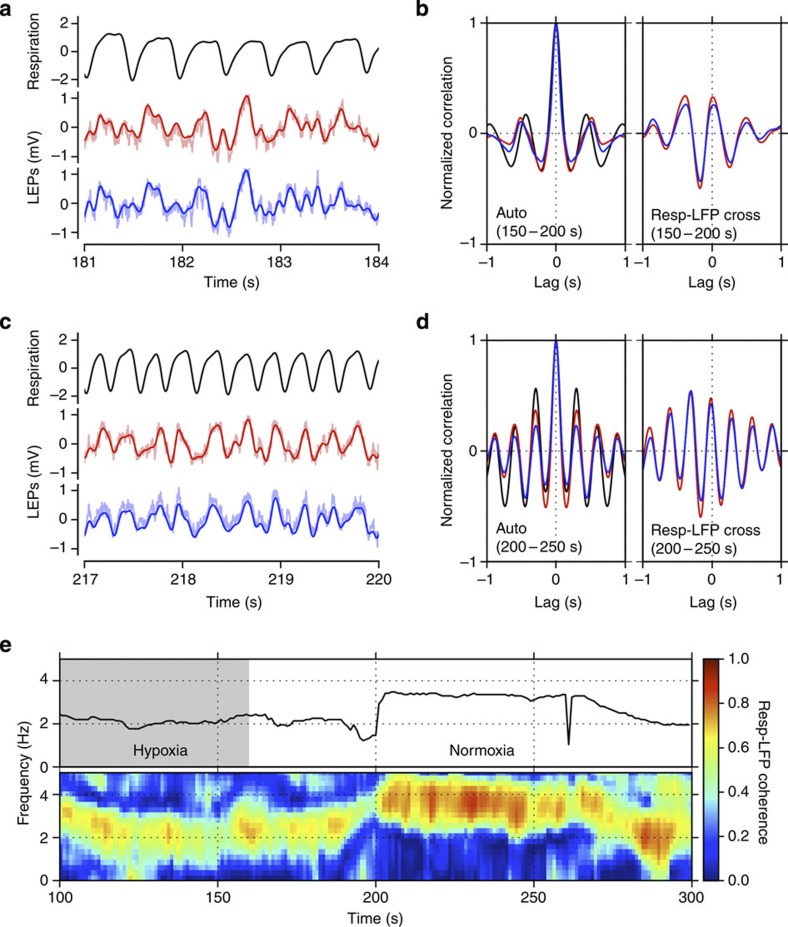
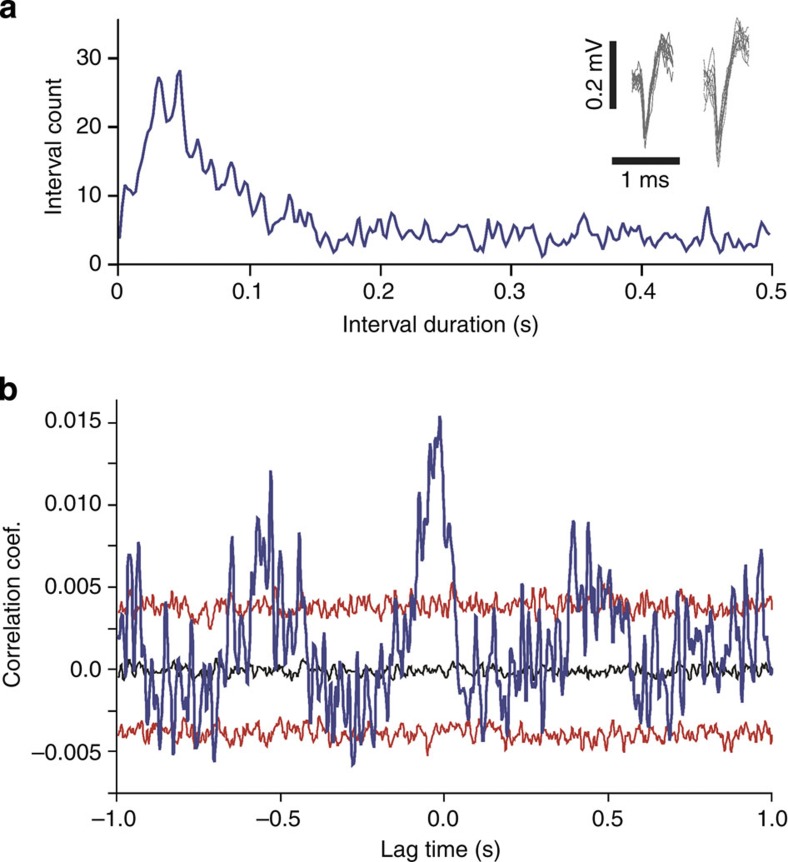
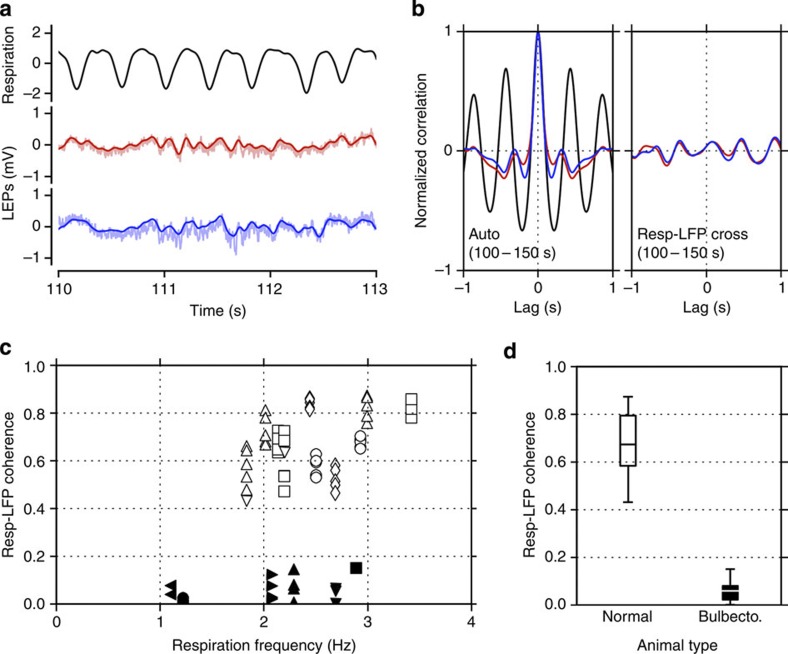
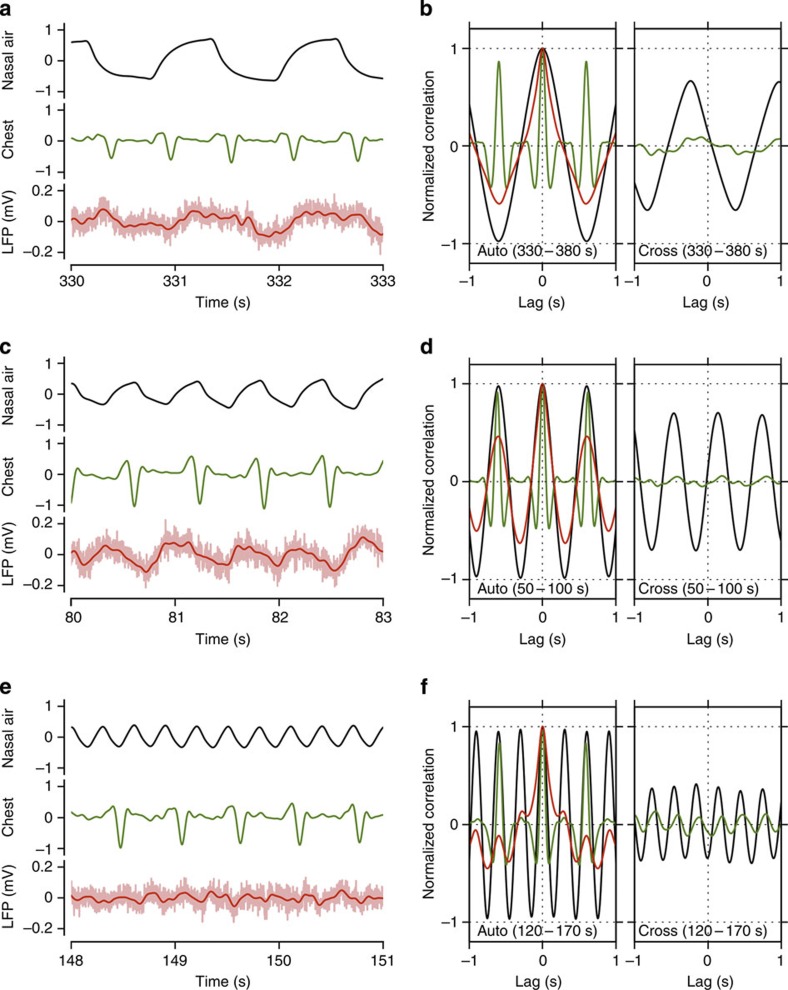
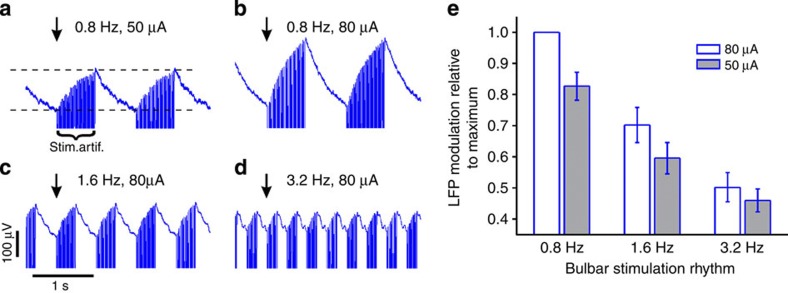
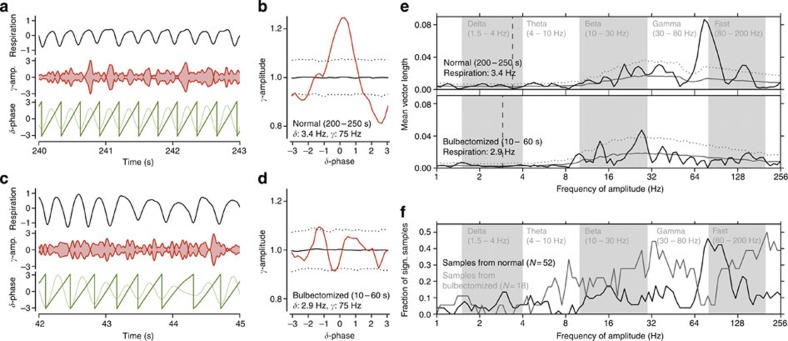
Current evidence suggests that delta oscillations (0.5-4 Hz) in the brain are generated by intrinsic network mechanisms involving cortical and thalamic circuits. Here we report that delta band oscillation in spike and local field potential (LFP) activity in the whisker barrel cortex of awake mice is phase locked to respiration. Furthermore, LFP oscillations in the gamma frequency band (30-80 Hz) are amplitude modulated in phase with the respiratory rhythm. Removal of the olfactory bulb eliminates respiration-locked delta oscillations and delta-gamma phase-amplitude coupling. Our findings thus suggest respiration-locked olfactory bulb activity as a main driving force behind delta oscillations and gamma power modulation in the whisker barrel cortex in the awake state.
目前的证据表明,大脑中的德尔塔震荡(0.5-4 Hz)是由涉及皮质和丘脑回路的内在网络机制产生的。在这里,我们报告说,在清醒小鼠的胡须桶状皮层中,尖峰和局部场电位 (LFP) 活动的德尔塔频带震荡与呼吸同步锁定。此外,伽马频带(30-80 Hz)的 LFP 震荡在相位上与呼吸节律幅度调制。去除嗅球可消除与呼吸同步的德尔塔震荡,以及德尔塔-伽马相位-幅度耦合。因此,我们的研究结果表明,与呼吸同步的嗅球活动是清醒状态下胡须桶状皮层中德尔塔震荡和伽马功率调制的主要驱动力。