Lambert M E, Ronai Z A, Weinstein I B, Garrels J I
Cold Spring Harbor Laboratory, New York 11724.
Mol Cell Biol. 1989 Feb;9(2):847-50. doi: 10.1128/mcb.9.2.847-850.1989.
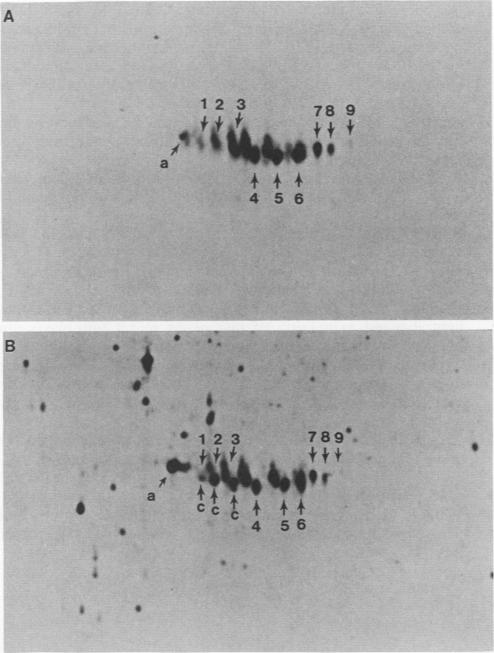
Exposure of primary human fibroblasts or simian virus 40-transformed human keratinocytes to several different classes of DNA damage, including UV light C (254 nm), resulted in a rapid increase in the expression of human major histocompatibility class I (MHC-I) proteins. MHC-I induction was also detected after exposure to low doses of the protein synthesis inhibitor cycloheximide, suggesting that MHC-I induction by DNA damage may be a component in a derepressible cellular SOS pathway.
将原代人成纤维细胞或猿猴病毒40转化的人角质形成细胞暴露于几种不同类型的DNA损伤,包括紫外线C(254纳米),会导致人类主要组织相容性复合体I类(MHC-I)蛋白的表达迅速增加。在暴露于低剂量的蛋白质合成抑制剂环己酰亚胺后也检测到MHC-I的诱导,这表明DNA损伤诱导MHC-I可能是可抑制的细胞SOS途径的一个组成部分。