Sollini Martina, Erba Paola Anna, Fraternali Alessandro, Casali Massimiliano, Di Paolo Maria Liberata, Froio Armando, Frasoldati Andrea, Versari Annibale
Nuclear Medicine Unit, Arcispedale Santa Maria Nuova-IRCCS, Reggio Emilia, 42123 Reggio Emilia, Italy.
Regional Center of Nuclear Medicine, University of Pisa, Arcispedale Santa Maria Nuova-IRCCS, Reggio Emilia, 56125 Pisa, Italy.
ScientificWorldJournal. 2014 Feb 13;2014:194123. doi: 10.1155/2014/194123. eCollection 2014.
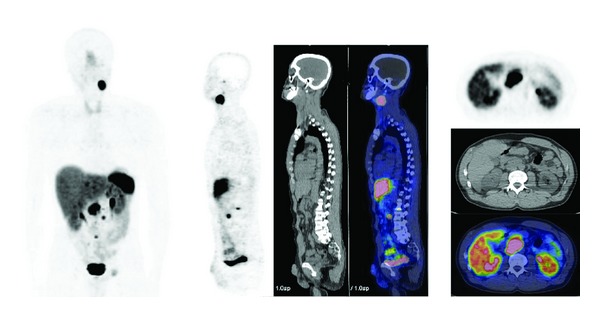
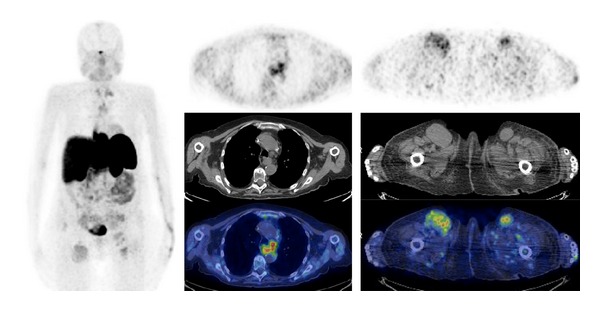
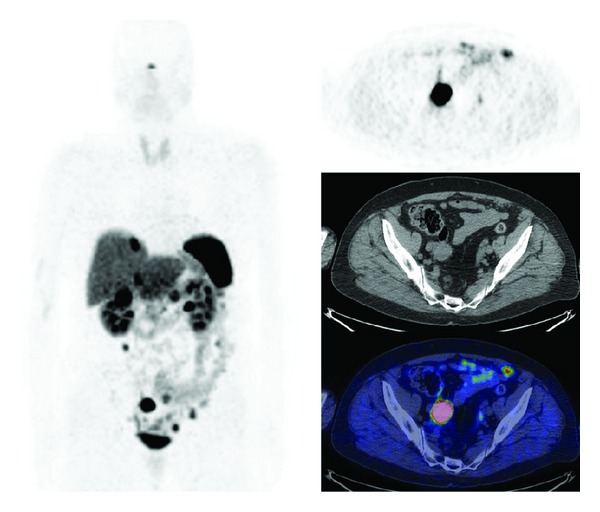
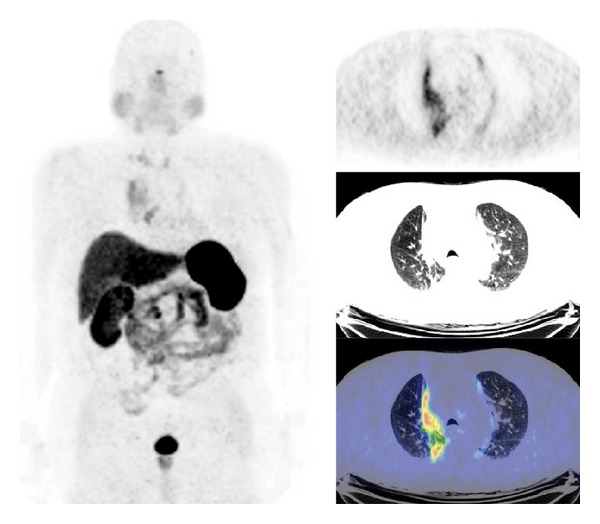
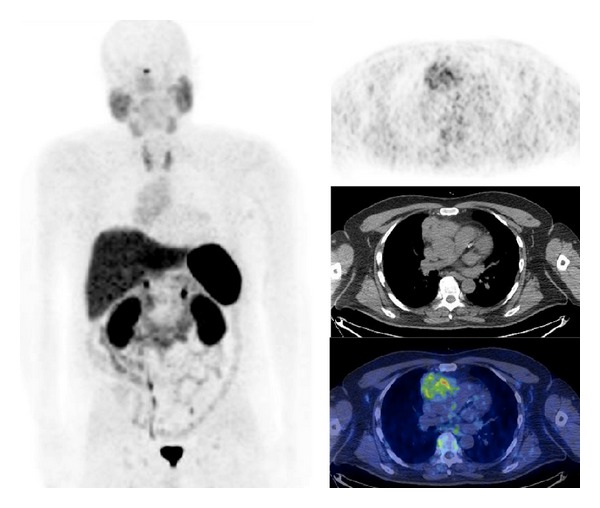
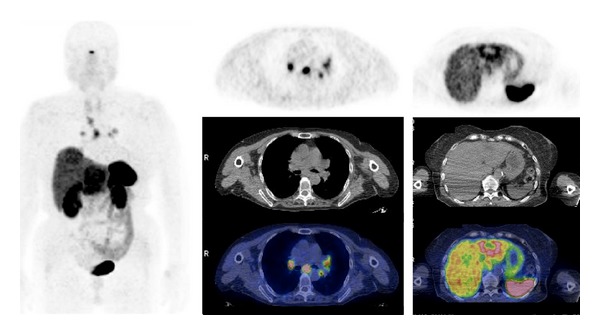
Somatostatin (SST) is a 28-amino-acid cyclic neuropeptide mainly secreted by neurons and endocrine cells. A major interest for SST receptors (SSTR) as target for in vivo diagnostic and therapeutic purposes was born since a series of stable synthetic SST-analouges PET became available, being the native somatostatin non feasible for clinical use due to the very low metabolic stability. The rationale for the employment of SST-analogues to image cancer is both based on the expression of SSTR by tumor and on the high affinity of these compounds for SSTR. The primary indication of SST-analogues imaging is for neuroendocrine tumors (NETs), which usually express a high density of SSTR, so they can be effectively targeted and visualized with radiolabeled SST-analogues in vivo. Particularly, SST-analogues imaging has been widely employed in gastroenteropancreatic (GEP) NETs. Nevertheless, a variety of tumors other than NETs expresses SSTR thus SST-analogues imaging can also be used in these tumors, particularly if treatment with radiolabeled therapeutic SST-analouges PET is being considered. The aim of this paper is to provide a concise overview of the role of positron emission tomography/computed tomography (PET/CT) with (68)Ga-radiolabeled SST-analouges PET in tumors other than GEP-NETs.
生长抑素(SST)是一种由28个氨基酸组成的环状神经肽,主要由神经元和内分泌细胞分泌。自从一系列稳定的合成生长抑素类似物正电子发射断层显像(PET)出现后,生长抑素受体(SSTR)作为体内诊断和治疗靶点引起了人们的极大兴趣,由于天然生长抑素代谢稳定性极低,不适合临床使用。使用生长抑素类似物对癌症进行成像的基本原理既基于肿瘤对SSTR的表达,也基于这些化合物对SSTR的高亲和力。生长抑素类似物成像的主要适应证是神经内分泌肿瘤(NETs),这类肿瘤通常表达高密度的SSTR,因此在体内可用放射性标记的生长抑素类似物有效地靶向并显影。特别是,生长抑素类似物成像已广泛应用于胃肠胰(GEP)NETs。然而,除NETs外的多种肿瘤也表达SSTR,因此生长抑素类似物成像也可用于这些肿瘤,特别是在考虑使用放射性标记的治疗性生长抑素类似物PET进行治疗时。本文的目的是简要概述用(68)Ga放射性标记的生长抑素类似物PET进行正电子发射断层显像/计算机断层扫描(PET/CT)在GEP-NETs以外的肿瘤中的作用。