He Qian, Wang Guanghu, Wakade Sushama, Dasgupta Somsankar, Dinkins Michael, Kong Ji Na, Spassieva Stefka D, Bieberich Erhard
Program in Developmental Neurobiology, Department of Neuroscience and Regenerative Medicine, Medical College of Georgia, Georgia Regents University, Augusta, GA 30912.
Division of Hematology/Oncology, Department of Medicine, Medical University of South Carolina, Charleston, SC 29425
Mol Biol Cell. 2014 Jun;25(11):1715-29. doi: 10.1091/mbc.E13-12-0730. Epub 2014 Apr 2.
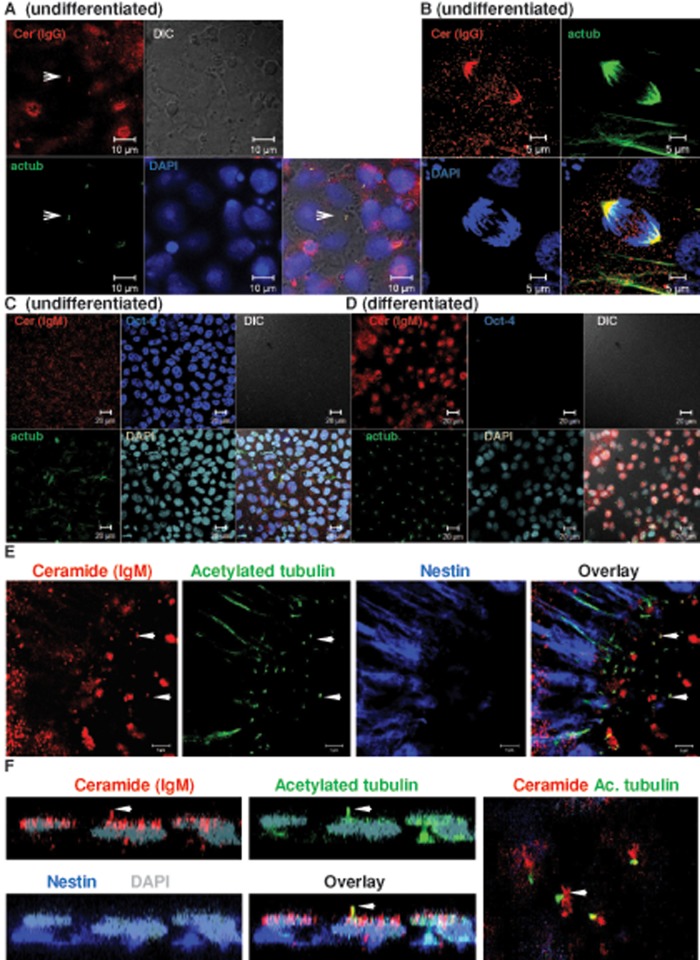
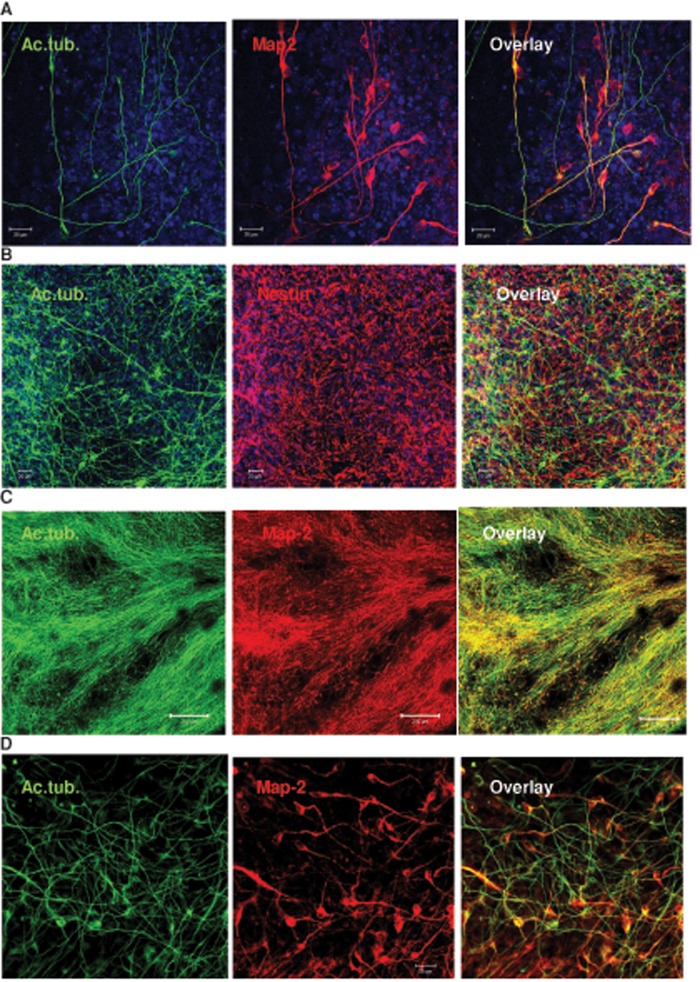
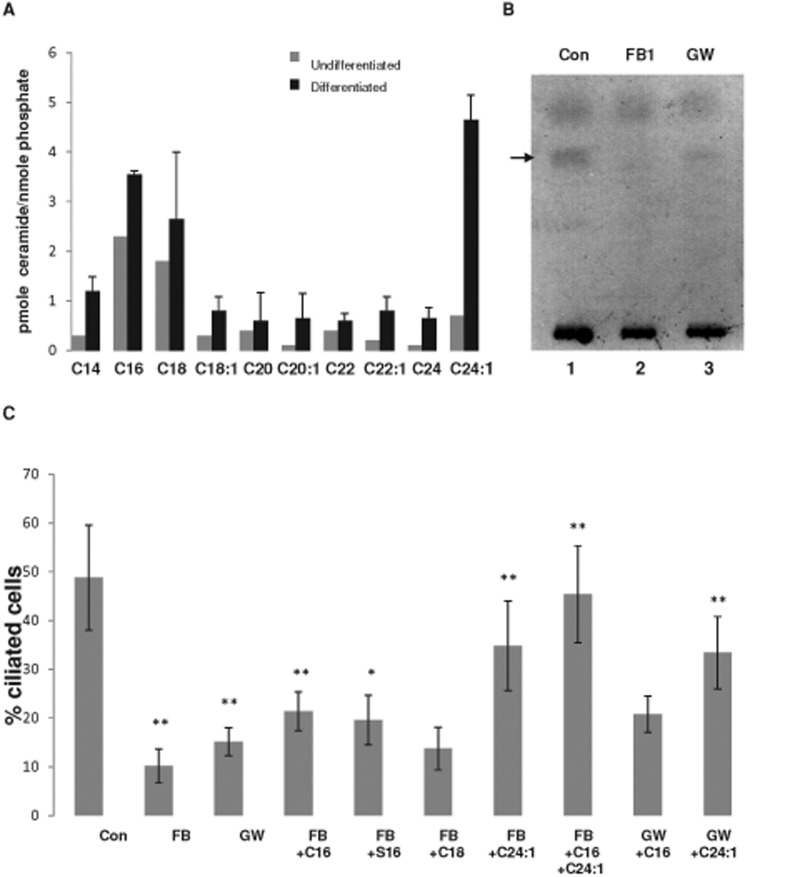
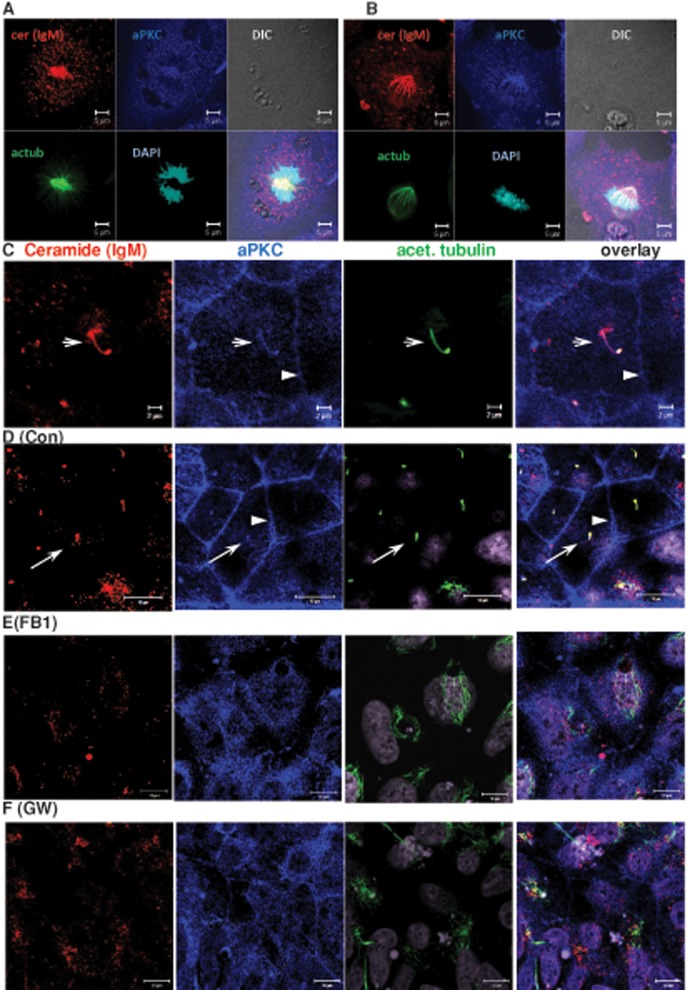
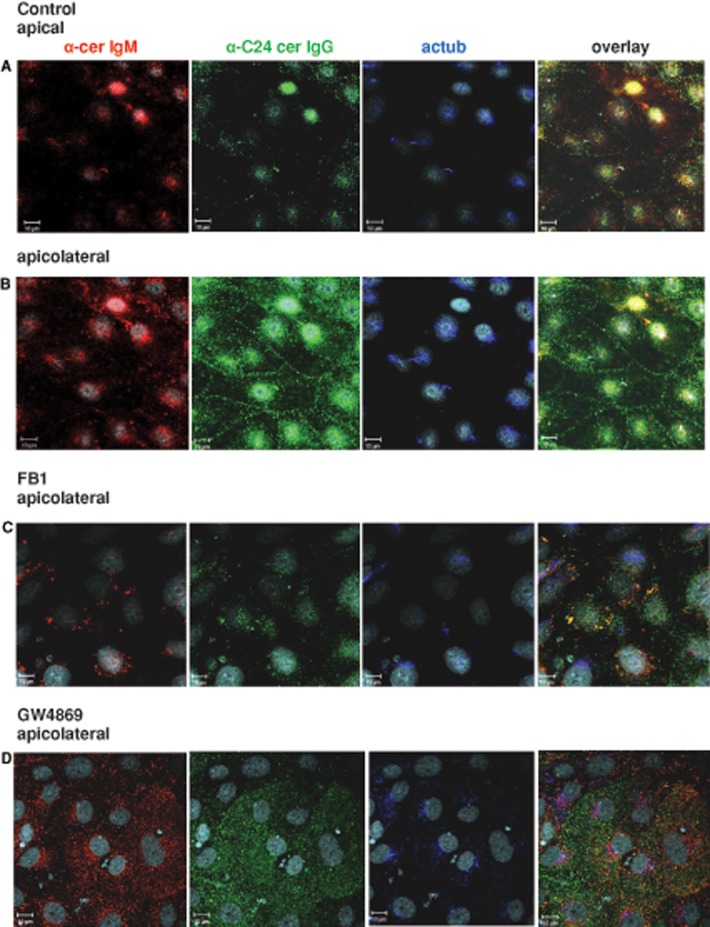
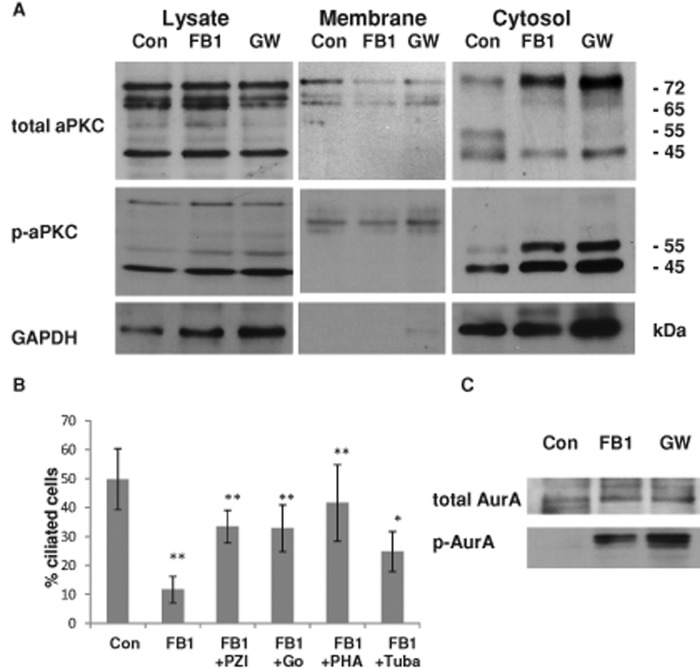
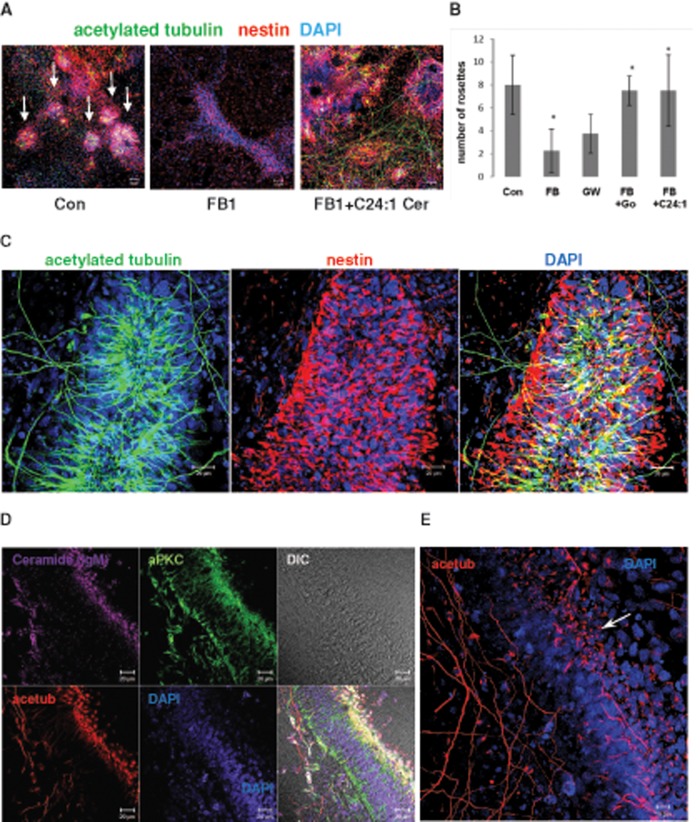
We show here that human embryonic stem (ES) and induced pluripotent stem cell-derived neuroprogenitors (NPs) develop primary cilia. Ciliogenesis depends on the sphingolipid ceramide and its interaction with atypical PKC (aPKC), both of which distribute to the primary cilium and the apicolateral cell membrane in NP rosettes. Neural differentiation of human ES cells to NPs is concurrent with a threefold elevation of ceramide-in particular, saturated, long-chain C16:0 ceramide (N-palmitoyl sphingosine) and nonsaturated, very long chain C24:1 ceramide (N-nervonoyl sphingosine). Decreasing ceramide levels by inhibiting ceramide synthase or neutral sphingomyelinase 2 leads to translocation of membrane-bound aPKC to the cytosol, concurrent with its activation and the phosphorylation of its substrate Aurora kinase A (AurA). Inhibition of aPKC, AurA, or a downstream target of AurA, HDAC6, restores ciliogenesis in ceramide-depleted cells. Of importance, addition of exogenous C24:1 ceramide reestablishes membrane association of aPKC, restores primary cilia, and accelerates neural process formation. Taken together, these results suggest that ceramide prevents activation of HDAC6 by cytosolic aPKC and AurA, which promotes acetylation of tubulin in primary cilia and, potentially, neural processes. This is the first report on the critical role of ceramide generated by nSMase2 in stem cell ciliogenesis and differentiation.
我们在此表明,人类胚胎干细胞(ES)和诱导多能干细胞衍生的神经祖细胞(NP)会形成初级纤毛。纤毛发生依赖于鞘脂神经酰胺及其与非典型蛋白激酶C(aPKC)的相互作用,这两者都分布于NP玫瑰花结中的初级纤毛和顶端外侧细胞膜。人类ES细胞向NP的神经分化与神经酰胺水平升高三倍同时发生,特别是饱和长链C16:0神经酰胺(N-棕榈酰鞘氨醇)和不饱和超长链C24:1神经酰胺(N-神经酰鞘氨醇)。通过抑制神经酰胺合酶或中性鞘磷脂酶2来降低神经酰胺水平,会导致膜结合的aPKC转位至胞质溶胶,同时伴随着其激活以及其底物极光激酶A(AurA)的磷酸化。抑制aPKC、AurA或AurA的下游靶点HDAC6可恢复神经酰胺缺乏细胞中的纤毛发生。重要的是,添加外源性C24:1神经酰胺可重新建立aPKC的膜关联,恢复初级纤毛,并加速神经突形成。综上所述,这些结果表明神经酰胺可防止胞质aPKC和AurA激活HDAC6,从而促进初级纤毛中微管蛋白的乙酰化,并可能促进神经突的形成。这是关于nSMase2产生的神经酰胺在干细胞纤毛发生和分化中的关键作用的首次报道。