Wilckens Kristine A, Woo Sarah G, Erickson Kirk I, Wheeler Mark E
Department of Psychiatry, University of Pittsburgh School of Medicine, Pittsburgh, PA, USA.
J Sleep Res. 2014 Oct;23(5):508-16. doi: 10.1111/jsr.12148. Epub 2014 Apr 3.
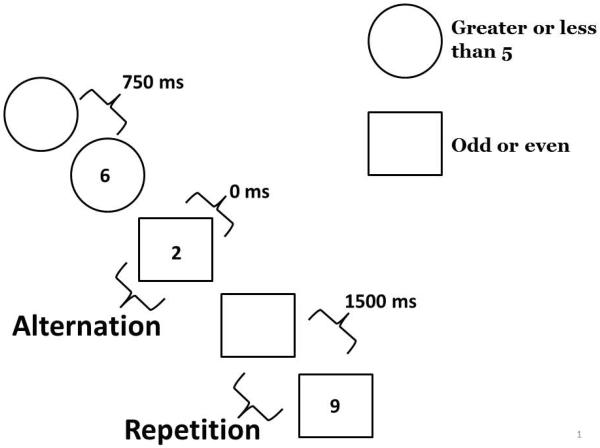
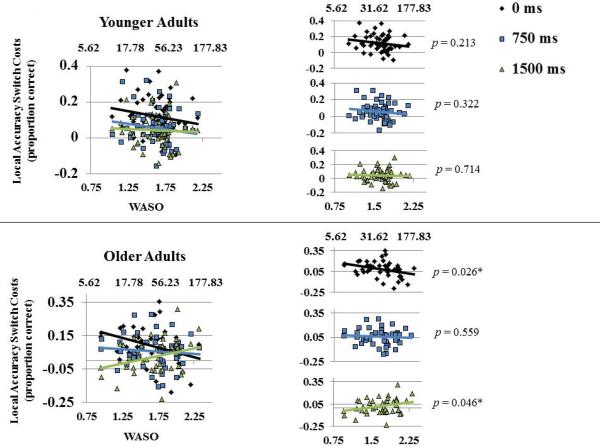
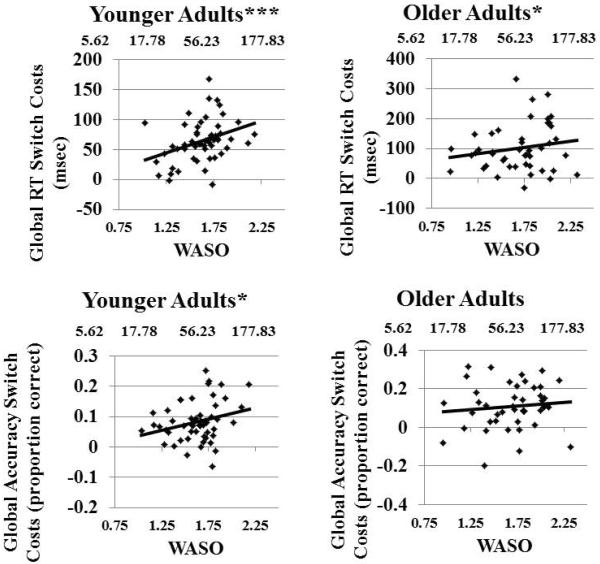
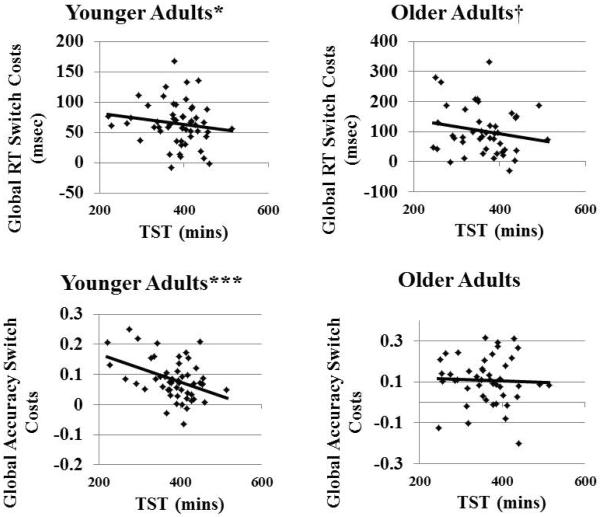
Ageing is associated with changes in sleep and decline executive functions, such as task-switching and task preparation. Given that sleep affects executive function, age-related changes in executive function may be attributable to changes in sleep. The present study used a sleep detection device to examine whether or not wake time after sleep onset and total sleep time moderated age differences in task-switching performance and participants' ability to reduce switch costs when given time to prepare. Participants were cognitively healthy [Mini Mental State Examination > 26] younger (n = 54; mean age = 22.9; 67.8% female) and older (n = 45; mean age 62.8; 71.1% female) adults. Using a task-switching paradigm, which manipulated preparation time, we found that smaller global switch costs were associated with lower wake time after sleep onset and longer total sleep time. Greater preparation effects on local switch costs and adoption of a task-set were associated with lower wake time after sleep onset, although this effect was significant only in older adults when stratified by age group. This association was independent of inhibition and working memory abilities. The lack of interactions between sleep and age group indicated that age differences in switch costs were not moderated by better sleep. Our results suggest that young and older adults may benefit similarly from lower wake time after sleep onset and longer total sleep time in overall performance, and individuals with less wake time after sleep onset are more likely to engage preparatory strategies to reduce switch costs and boost task-switching performance.
衰老与睡眠变化以及执行功能下降有关,如任务切换和任务准备。鉴于睡眠会影响执行功能,执行功能中与年龄相关的变化可能归因于睡眠变化。本研究使用睡眠检测设备来检验睡眠开始后的清醒时间和总睡眠时间是否调节了任务切换表现中的年龄差异,以及参与者在有时间准备时降低切换成本的能力。参与者为认知健康的年轻人(n = 54;平均年龄 = 22.9岁;67.8%为女性)和老年人(n = 45;平均年龄62.8岁;71.1%为女性)。使用一种操纵准备时间的任务切换范式,我们发现较小的全局切换成本与睡眠开始后的清醒时间较短和总睡眠时间较长有关。对局部切换成本和任务集采用的更大准备效应与睡眠开始后的清醒时间较短有关,尽管按年龄组分层时,这种效应仅在老年人中显著。这种关联独立于抑制和工作记忆能力。睡眠与年龄组之间缺乏相互作用表明,切换成本中的年龄差异不会因更好的睡眠而得到调节。我们的结果表明,年轻人和老年人可能在总体表现上从睡眠开始后的清醒时间较短和总睡眠时间较长中获得类似的益处,并且睡眠开始后清醒时间较少的个体更有可能采用准备策略来降低切换成本并提高任务切换表现。