Xue Xue-Yi, Zhao Bo, Chao Lu-Men, Chen Dian-Yang, Cui Wen-Rui, Mao Ying-Bo, Wang Ling-Jian, Chen Xiao-Ya
National Key Laboratory of Plant Molecular Genetics and National Plant Gene Research Center, Institute of Plant Physiology and Ecology, Shanghai Institutes for Biological Sciences, Chinese Academy of Sciences, Shanghai, China; University of Chinese Academy of Sciences, Beijing, China.
National Key Laboratory of Plant Molecular Genetics and National Plant Gene Research Center, Institute of Plant Physiology and Ecology, Shanghai Institutes for Biological Sciences, Chinese Academy of Sciences, Shanghai, China.
PLoS Genet. 2014 Apr 3;10(4):e1004266. doi: 10.1371/journal.pgen.1004266. eCollection 2014 Apr.
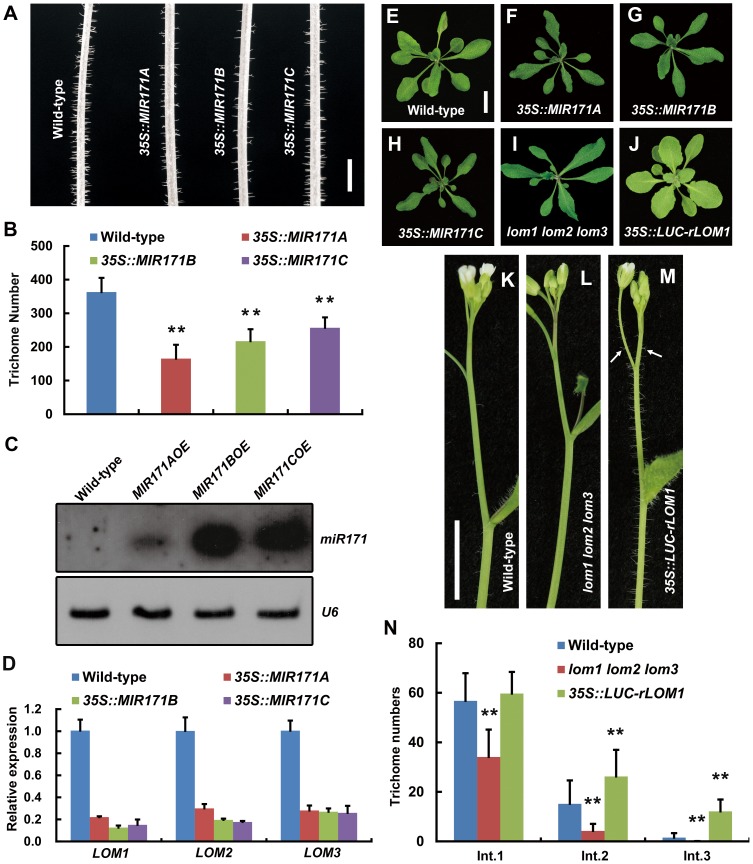
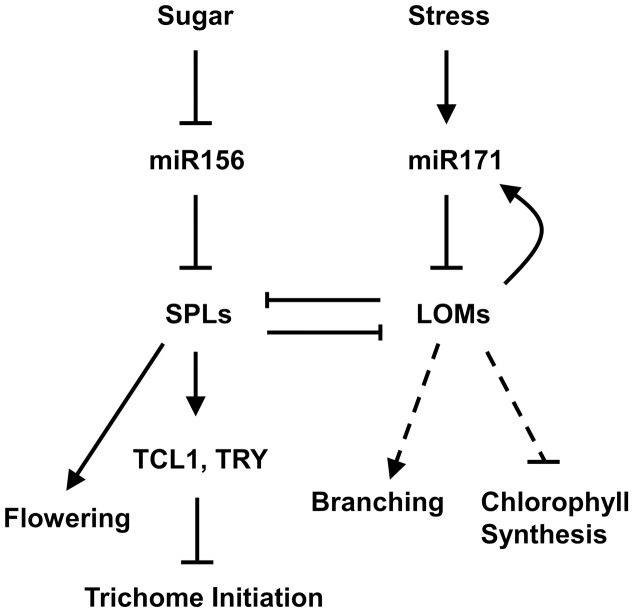
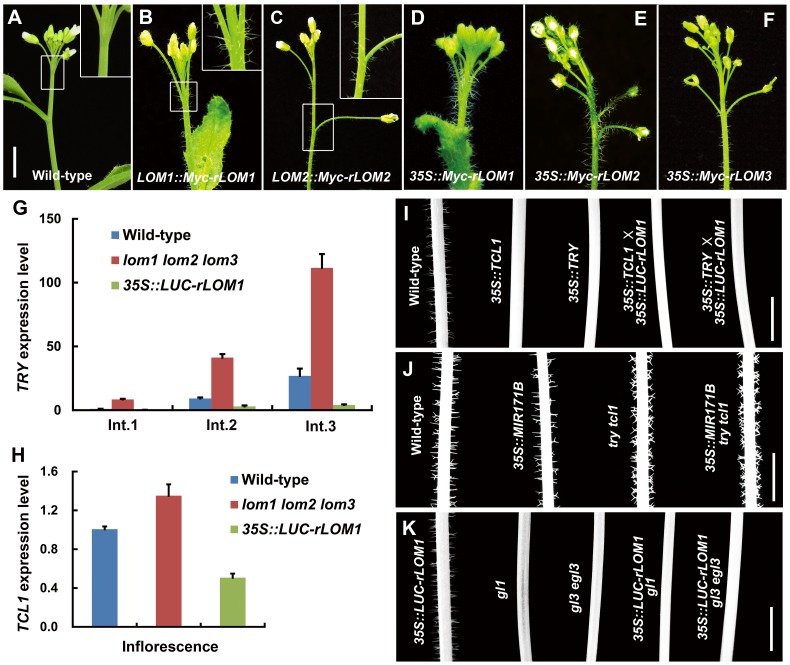
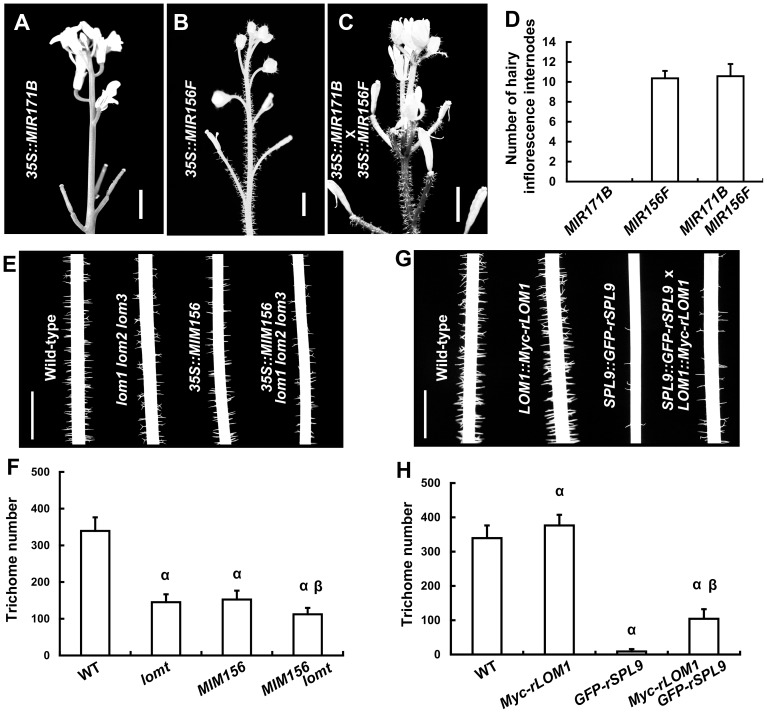
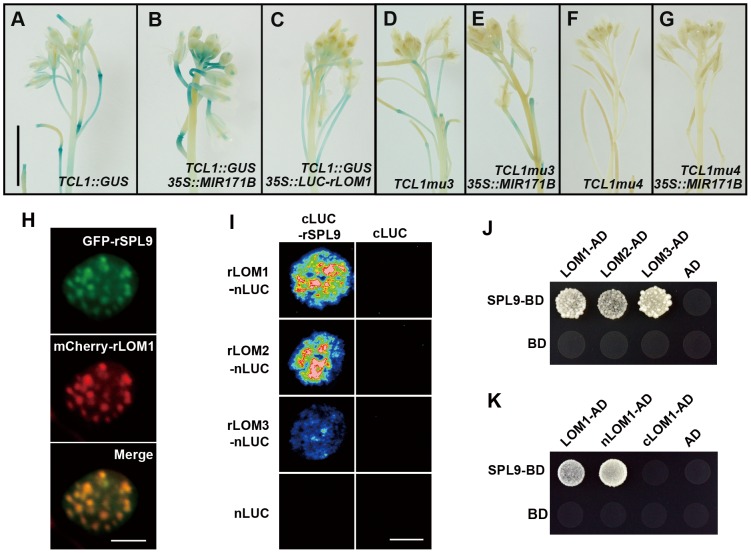
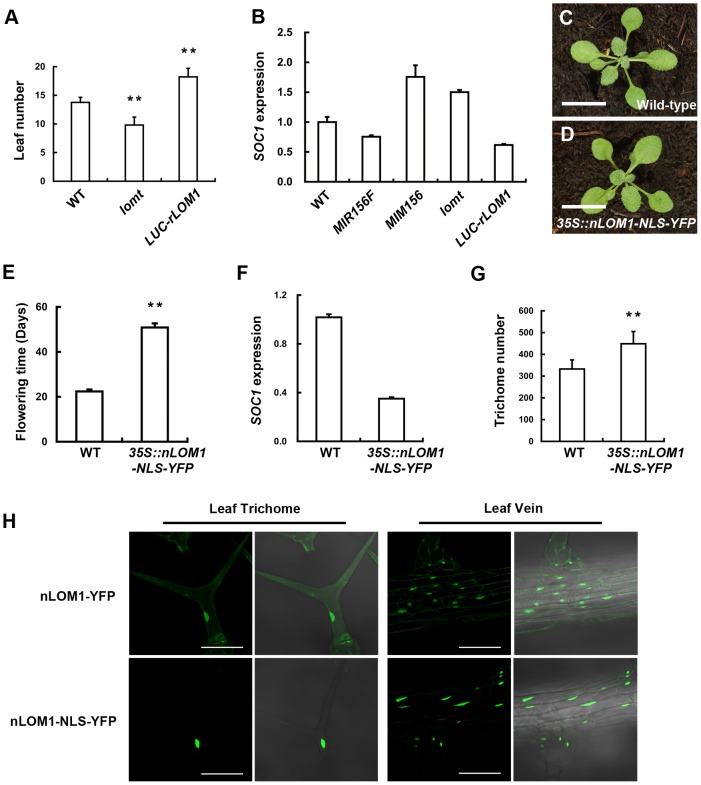
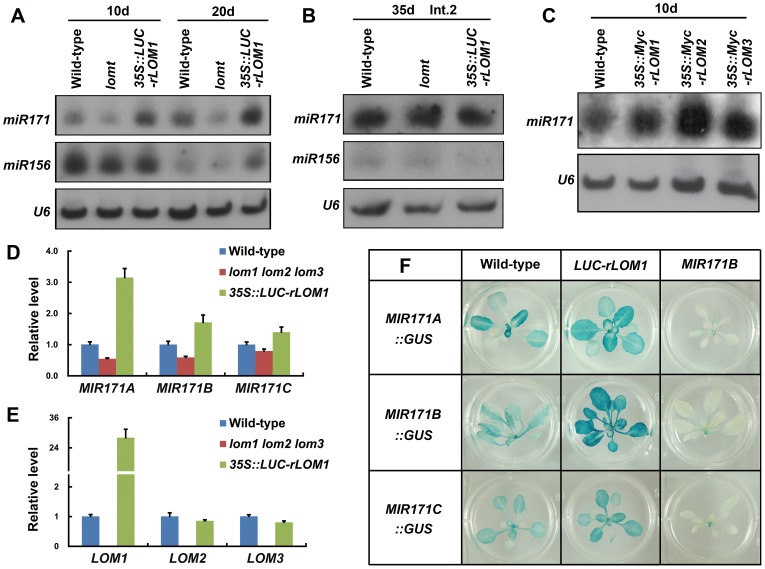
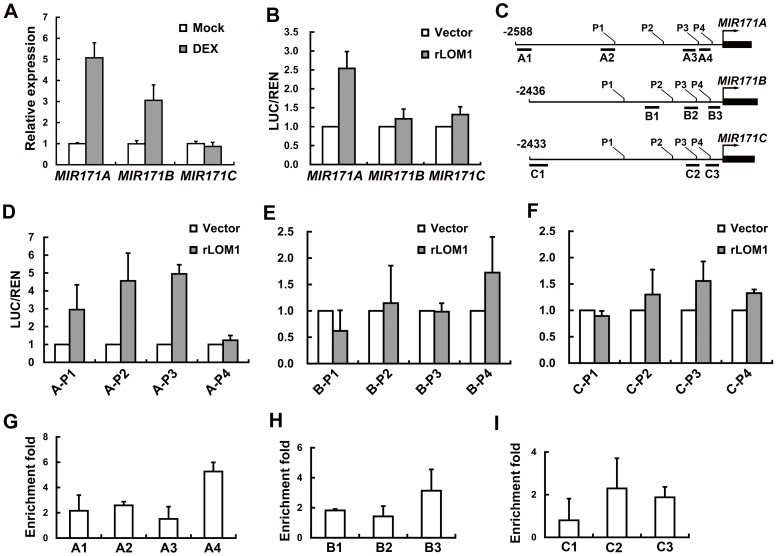
The miR156-targeted squamosa promoter binding protein like (SPL) transcription factors function as an endogenous age cue in regulating plant phase transition and phase-dependent morphogenesis, but the control of SPL output remains poorly understood. In Arabidopsis thaliana the spatial pattern of trichome is a hallmark of phase transition and governed by SPLs. Here, by dissecting the regulatory network controlling trichome formation on stem, we show that the miR171-targeted lost meristems 1 (LOM1), LOM2 and LOM3, encoding GRAS family members previously known to maintain meristem cell polarity, are involved in regulating the SPL activity. Reduced LOM abundance by overexpression of miR171 led to decreased trichome density on stems and floral organs, and conversely, constitutive expression of the miR171-resistant LOM (rLOM) genes promoted trichome production, indicating that LOMs enhance trichome initiation at reproductive stage. Genetic analysis demonstrated LOMs shaping trichome distribution is dependent on SPLs, which positively regulate trichome repressor genes TRICHOMELESS 1 (TCL1) and TRIPTYCHON (TRY). Physical interaction between the N-terminus of LOMs and SPLs underpins the repression of SPL activity. Importantly, other growth and developmental events, such as flowering, are also modulated by LOM-SPL interaction, indicating a broad effect of the LOM-SPL interplay. Furthermore, we provide evidence that MIR171 gene expression is regulated by its targeted LOMs, forming a homeostatic feedback loop. Our data uncover an antagonistic interplay between the two timing miRNAs in controlling plant growth, phase transition and morphogenesis through direct interaction of their targets.
靶向miR156的类鳞状启动子结合蛋白(SPL)转录因子在调节植物阶段转变和阶段依赖性形态发生中作为一种内源性年龄线索发挥作用,但对SPL输出的控制仍知之甚少。在拟南芥中,毛状体的空间模式是阶段转变的标志,并受SPL调控。在这里,通过剖析控制茎上毛状体形成的调控网络,我们发现靶向miR171的失去分生组织1(LOM1)、LOM2和LOM3,它们编码以前已知维持分生组织细胞极性的GRAS家族成员,参与调节SPL活性。通过过表达miR171降低LOM丰度导致茎和花器官上的毛状体密度降低,相反,miR171抗性LOM(rLOM)基因的组成型表达促进了毛状体的产生,表明LOM在生殖阶段增强了毛状体起始。遗传分析表明,LOM塑造毛状体分布依赖于SPL,SPL正向调节毛状体抑制基因无毛1(TCL1)和三联体(TRY)。LOM的N端与SPL之间的物理相互作用支撑了对SPL活性的抑制。重要的是,其他生长和发育事件,如开花,也受到LOM-SPL相互作用的调节,表明LOM-SPL相互作用具有广泛影响。此外,我们提供证据表明MIR171基因表达受其靶向的LOM调节,形成一个稳态反馈环。我们的数据揭示了两种定时miRNA通过其靶标的直接相互作用在控制植物生长、阶段转变和形态发生中的拮抗相互作用。