Rosenberg Julian N, Kobayashi Naoko, Barnes Austin, Noel Eric A, Betenbaugh Michael J, Oyler George A
Department of Chemical & Biomolecular Engineering, Johns Hopkins University, Baltimore, Maryland, United States of America; Synaptic Research LLC, Baltimore, Maryland, United States of America.
Department of Biochemistry, University of Nebraska-Lincoln, Lincoln, Nebraska, United States of America.
PLoS One. 2014 Apr 3;9(4):e92460. doi: 10.1371/journal.pone.0092460. eCollection 2014.
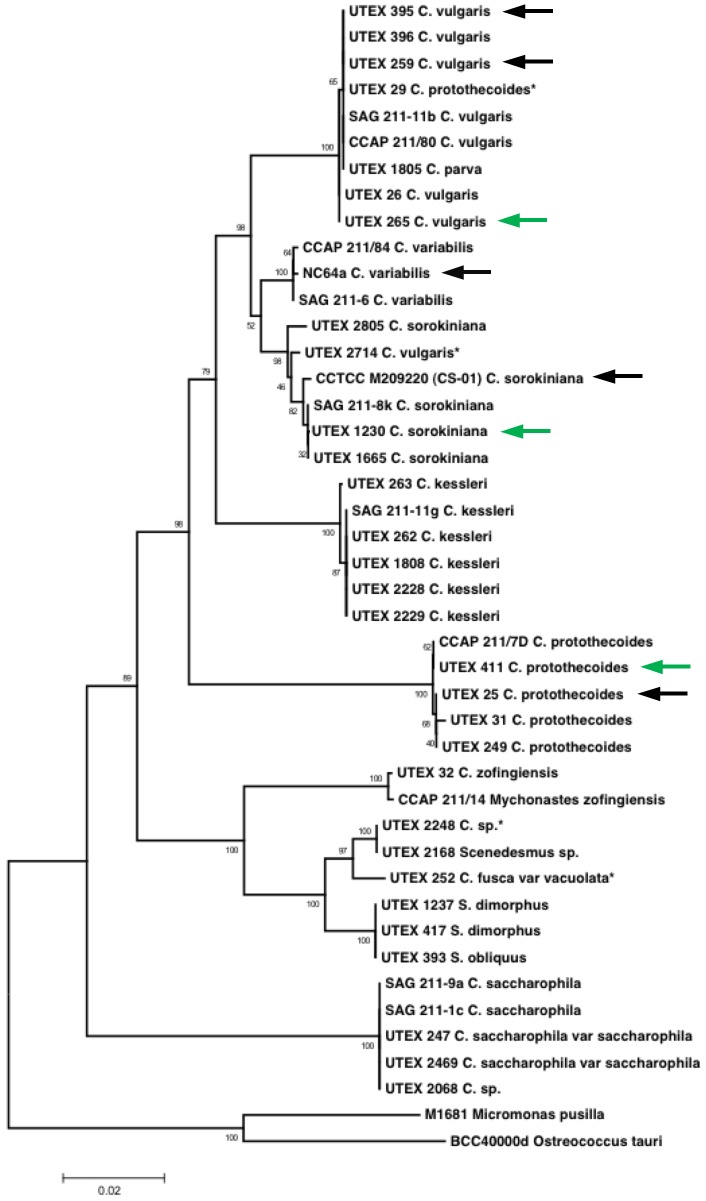
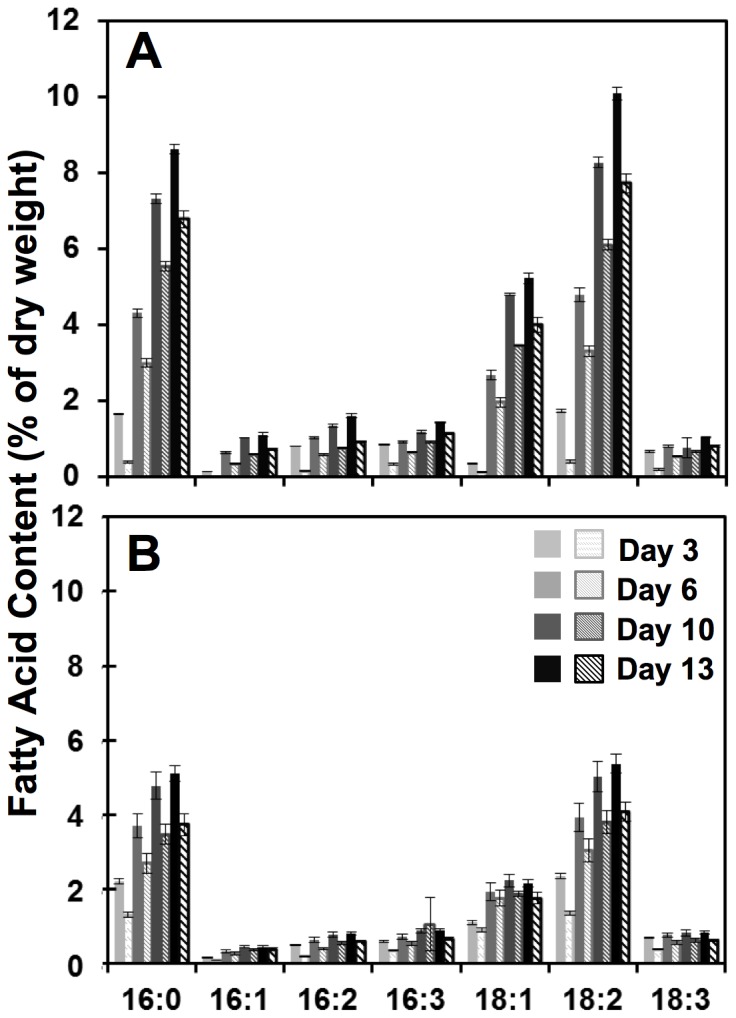
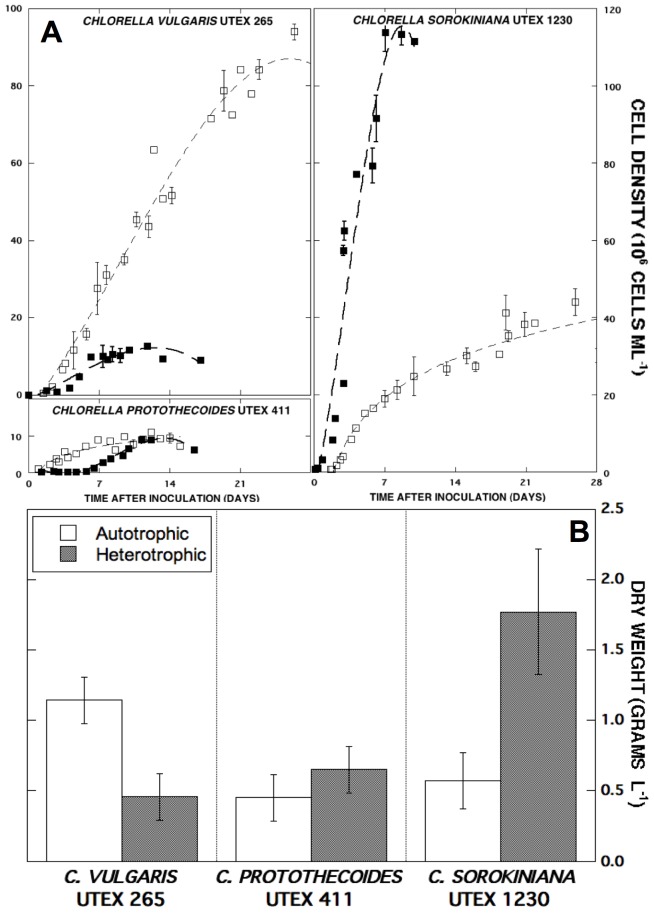
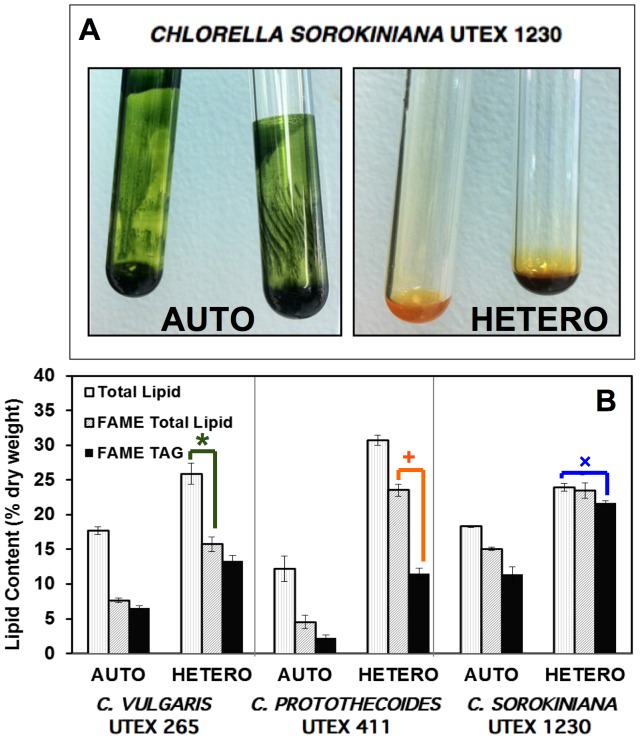
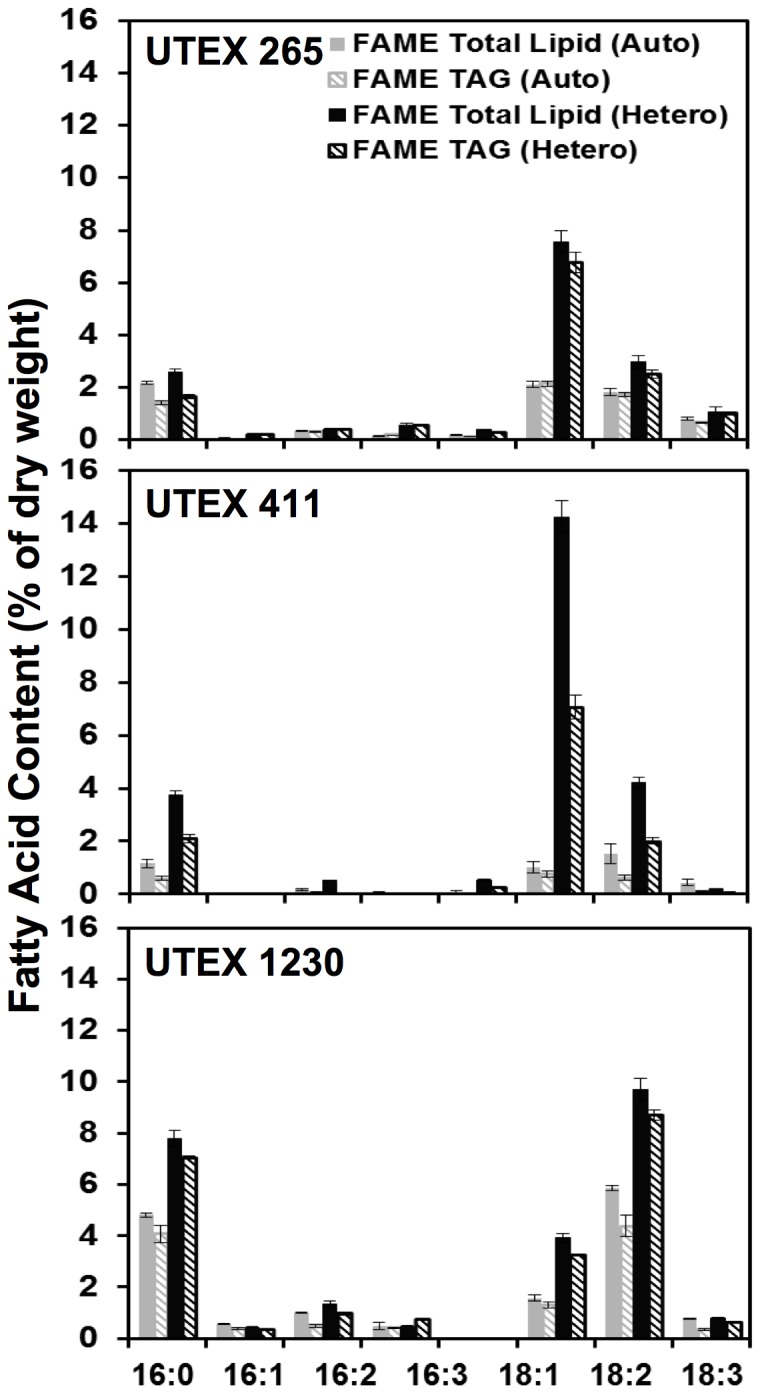
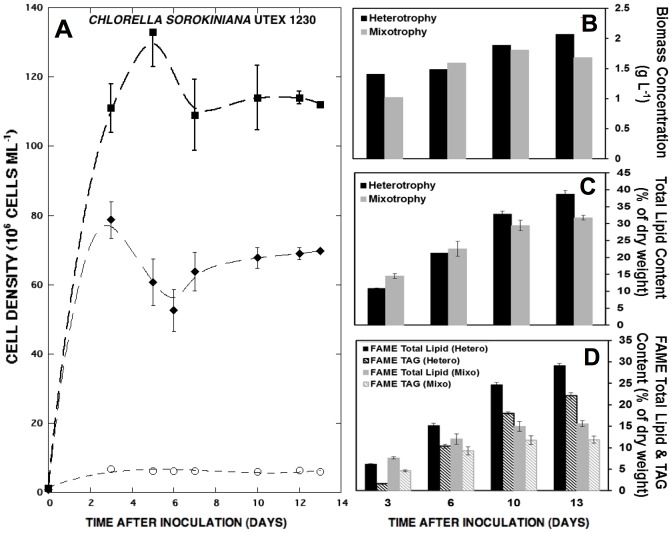
While photosynthetic microalgae, such as Chlorella, serve as feedstocks for nutritional oils and biofuels, heterotrophic cultivation can augment growth rates, support high cell densities, and increase triacylglycerol (TAG) lipid content. However, these species differ significantly in their photoautotrophic and heterotrophic characteristics. In this study, the phylogeny of thirty Chlorella strains was determined in order to inform bioprospecting efforts and detailed physiological assessment of three species. The growth kinetics and lipid biochemistry of C. protothecoides UTEX 411, C. vulgaris UTEX 265, and C. sorokiniana UTEX 1230 were quantified during photoautotrophy in Bold's basal medium (BBM) and heterotrophy in BBM supplemented with glucose (10 g L-1). Heterotrophic growth rates of UTEX 411, 265, and 1230 were found to be 1.5-, 3.7-, and 5-fold higher than their respective autotrophic rates. With a rapid nine-hour heterotrophic doubling time, Chlorella sorokiniana UTEX 1230 maximally accumulated 39% total lipids by dry weight during heterotrophy compared to 18% autotrophically. Furthermore, the discrete fatty acid composition of each strain was examined in order to elucidate lipid accumulation patterns under the two trophic conditions. In both modes of growth, UTEX 411 and 265 produced 18:1 as the principal fatty acid while UTEX 1230 exhibited a 2.5-fold enrichment in 18:2 relative to 18:1. Although the total lipid content was highest in UTEX 411 during heterotrophy, UTEX 1230 demonstrated a two-fold increase in its heterotrophic TAG fraction at a rate of 28.9 mg L(-1) d(-1) to reach 22% of the biomass, corresponding to as much as 90% of its total lipids. Interestingly, UTEX 1230 growth was restricted during mixotrophy and its TAG production rate was suppressed to 18.2 mg L-1 d-1. This constraint on carbon flow raises intriguing questions about the impact of sugar and light on the metabolic regulation of microalgal lipid biosynthesis.
虽然光合微藻,如小球藻,可作为营养油和生物燃料的原料,但异养培养可以提高生长速率、支持高细胞密度并增加三酰甘油(TAG)脂质含量。然而,这些物种在光合自养和异养特性方面存在显著差异。在本研究中,确定了30株小球藻菌株的系统发育,以便为生物勘探工作和对三个物种的详细生理评估提供信息。对原壳小球藻UTEX 411、普通小球藻UTEX 265和索氏小球藻UTEX 1230在Bold基础培养基(BBM)中的光合自养以及在添加葡萄糖(10 g L-1)的BBM中的异养过程中的生长动力学和脂质生物化学进行了定量分析。发现UTEX 411、265和1230的异养生长速率分别比各自的自养速率高1.5倍、3.7倍和5倍。索氏小球藻UTEX 1230的异养倍增时间为9小时,在异养过程中,其最大脂质积累量占干重的39%,而光合自养时为18%。此外,还对每个菌株的离散脂肪酸组成进行了检测,以阐明两种营养条件下的脂质积累模式。在两种生长模式下,UTEX 411和265产生的主要脂肪酸为18:1,而UTEX 1230的18:2相对于18:1富集了2.5倍。虽然异养过程中UTEX 411的总脂质含量最高,但UTEX 1230的异养TAG组分以28.9 mg L(-1) d(-1)的速率增加了两倍,达到生物量的22%,相当于其总脂质的90%。有趣 的是,UTEX 1230在兼养过程中的生长受到限制,其TAG产生速率被抑制至18.2 mg L-1 d-1。这种对碳流的限制引发了关于糖和光对微藻脂质生物合成代谢调控影响的有趣问题。