Kobayashi Naoko, Noel Eric A, Barnes Austin, Rosenberg Julian, DiRusso Concetta, Black Paul, Oyler George A
Department of Biochemistry, University of Nebraska-Lincoln, 1901 Vine Street, Lincoln, NE, 68588, USA.
Lipids. 2013 Oct;48(10):1035-49. doi: 10.1007/s11745-013-3828-9. Epub 2013 Aug 23.
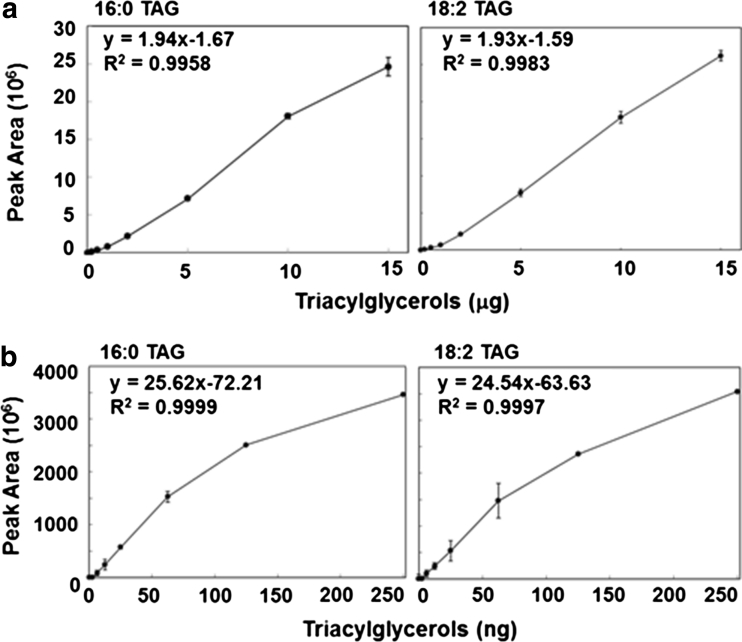
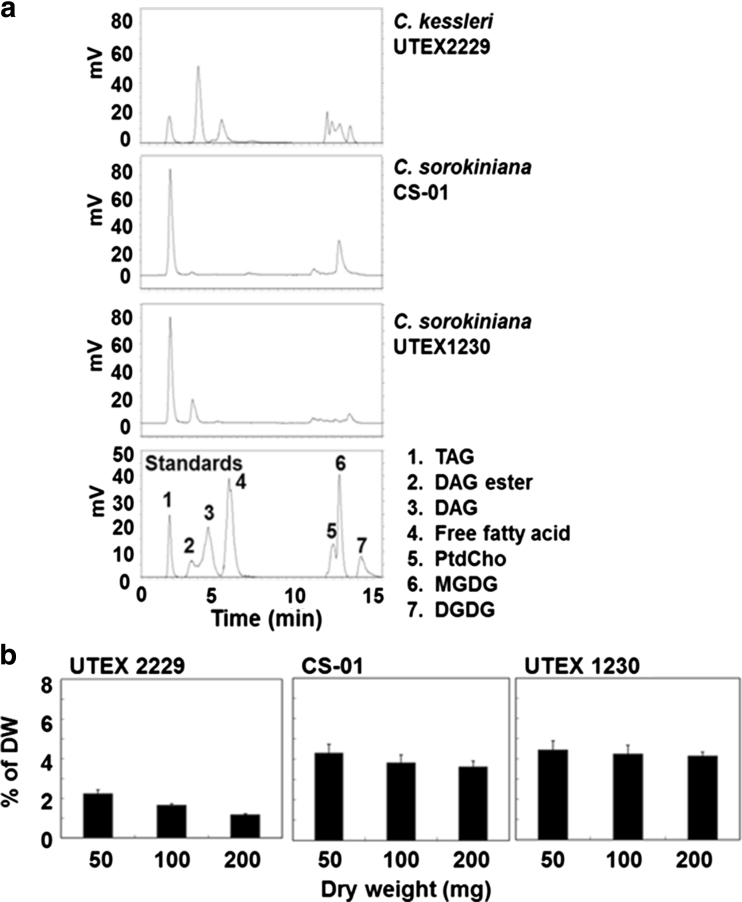
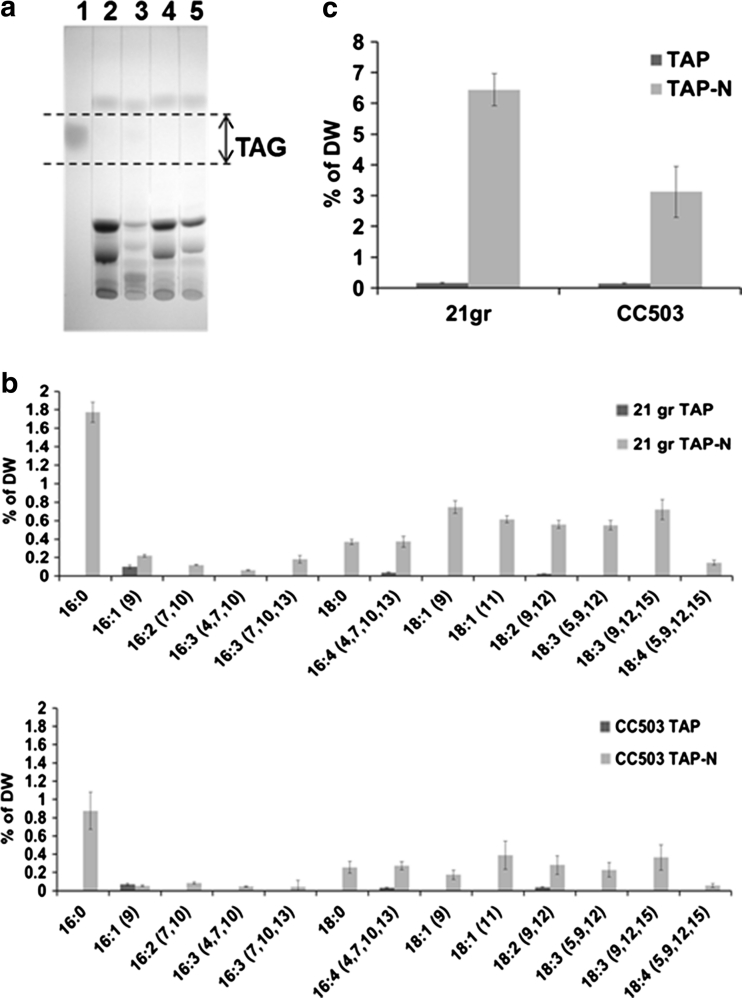
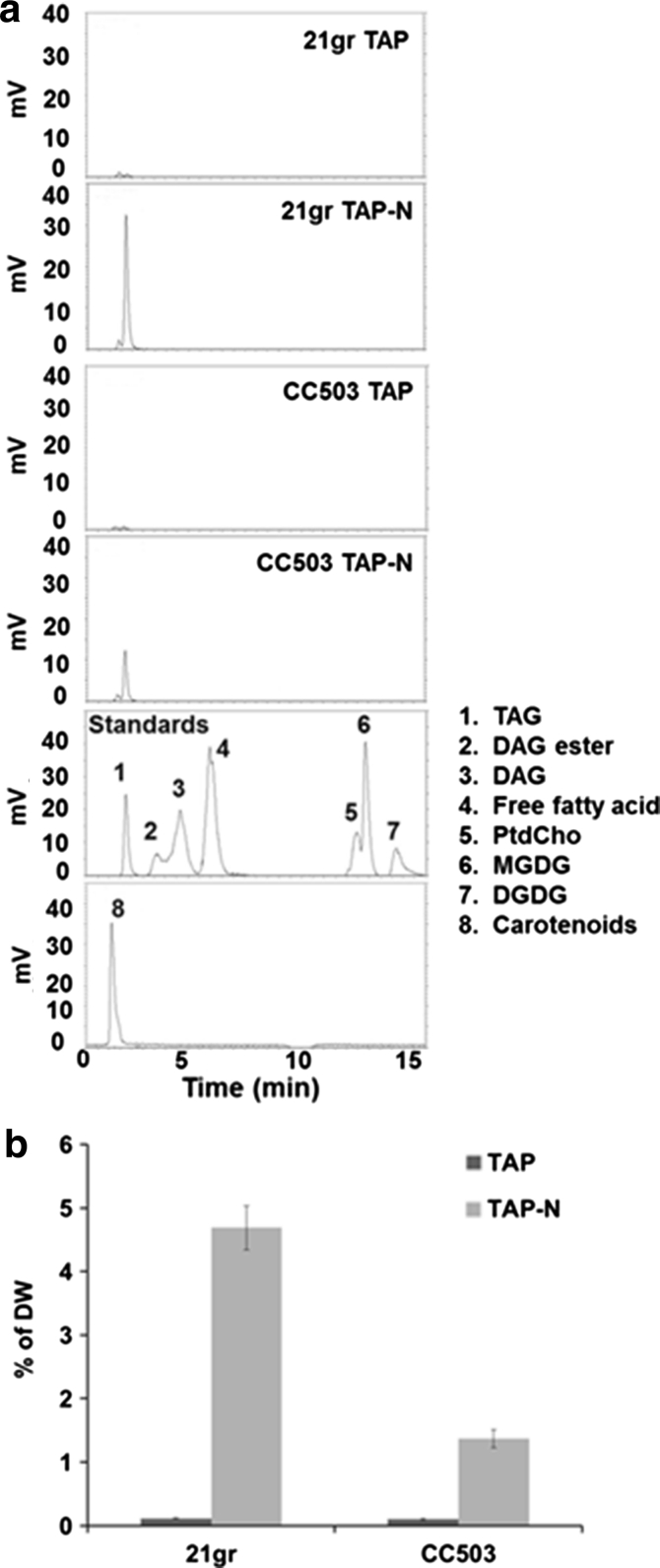
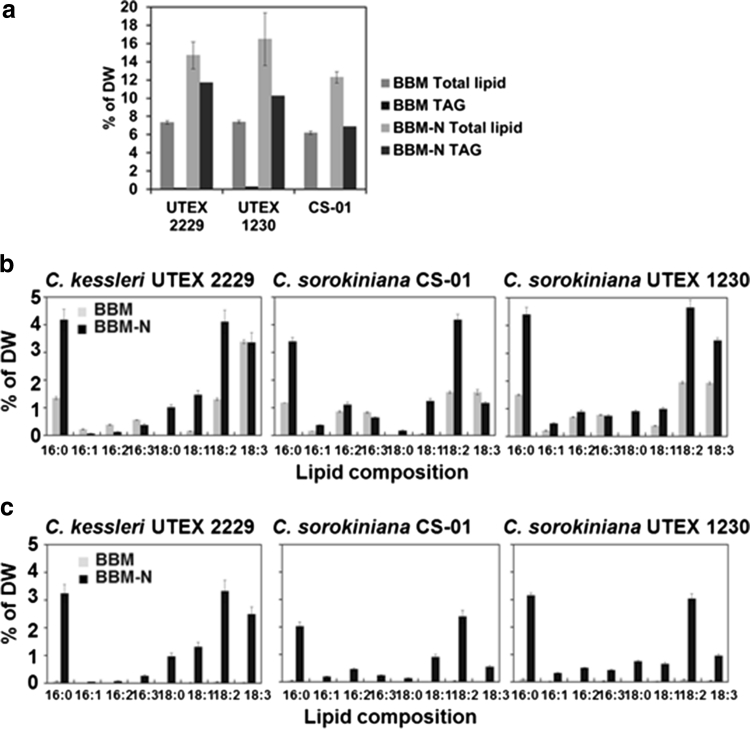
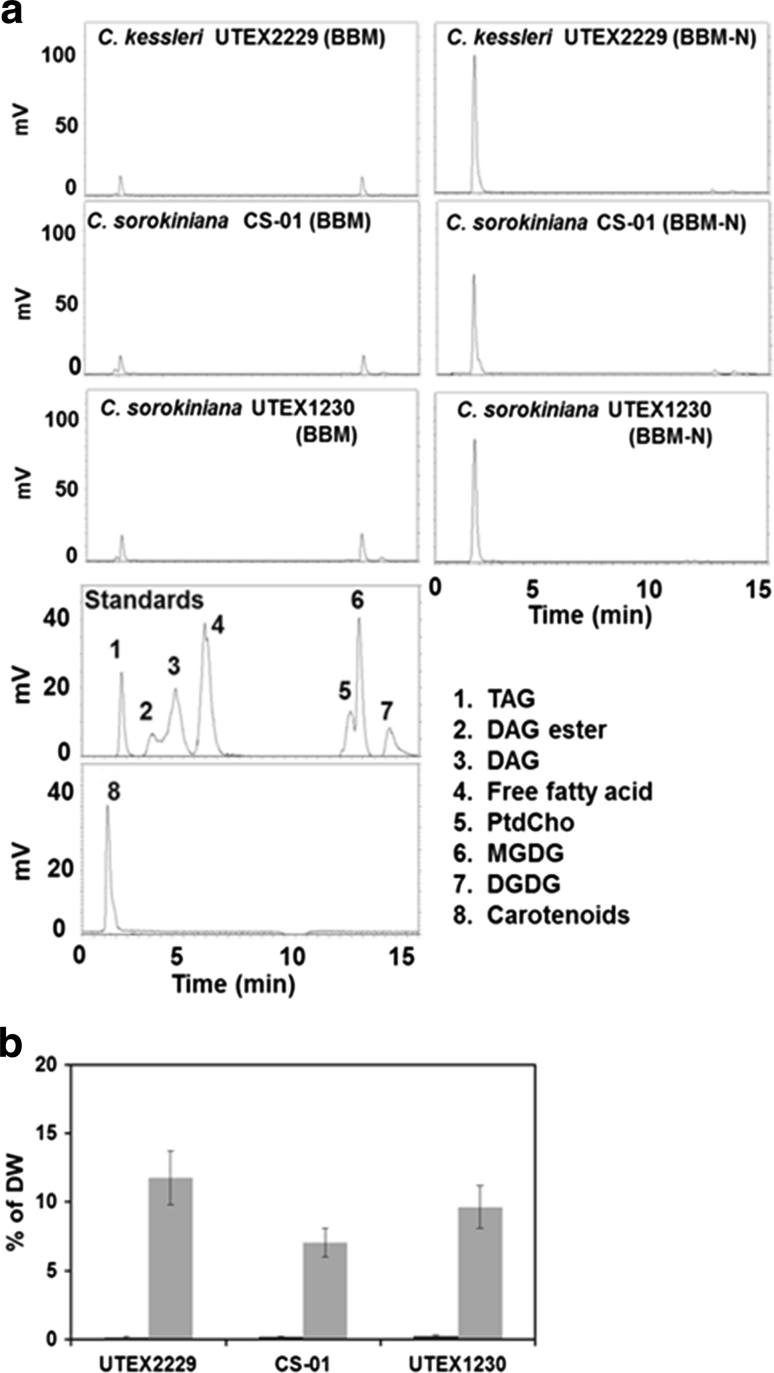
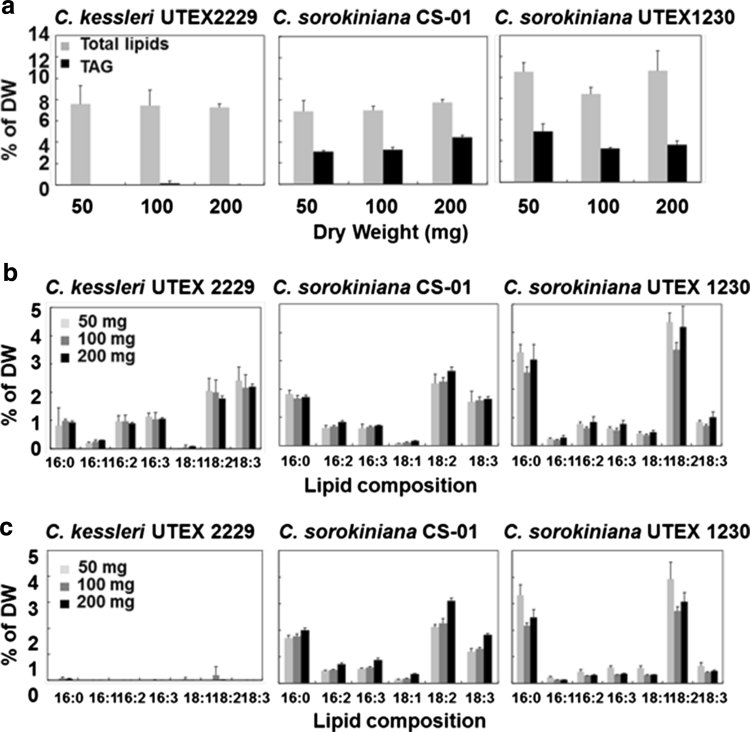
Triacylglycerol (TAG) analysis and quantification are commonly performed by first obtaining a purified TAG fraction from a total neutral lipid extract using thin-layer chromatography (TLC), and then analyzing the fatty acid composition of the purified TAG fraction by gas chromatography (GC). This process is time-consuming, labor intensive and is not suitable for analysis of small sample sizes or large numbers. A rapid and efficient method for monitoring oil accumulation in algae using high performance liquid chromatography for separation of all lipid classes combined with detection by evaporative light scattering (HPLC-ELSD) was developed and compared to the conventional TLC/GC method. TAG accumulation in two Chlamydomonas reinhardtii (21 gr and CC503) and three Chlorella strains (UTEX 1230, CS01 and UTEX 2229) grown under conditions of nitrogen depletion was measured. The TAG levels were found to be 3-6 % DW (Chlamydomonas strains) and 7-12 % DW (Chlorella strains) respectively by both HPLC-ELSD and TLC/GC methods. HPLC-ELSD resolved the major lipid classes such as carotenoids, TAG, diacylglycerol (DAG), free fatty acids, phospholipids, and galactolipids in a 15-min run. Quantitation of TAG content was based on comparison to calibration curves of trihexadecanoin (16:0 TAG) and trioctadecadienoin (18:2 TAG) and showed linearity from 0.2 to 10 μg. Algal TAG levels >0.5 μg/g DW were detectable by this method. Furthermore TAG content in Chlorella kessleri UTEX 2229 could be detected. TAG as well as DAG and TAG content were estimated at 1.6 % DW by HPLC-ELSD, while it was undetectable by TLC/GC method.
三酰甘油(TAG)分析和定量通常首先通过薄层色谱法(TLC)从总中性脂质提取物中获得纯化的TAG组分,然后通过气相色谱法(GC)分析纯化的TAG组分的脂肪酸组成来进行。该过程耗时、费力,不适用于小样本量或大量样本的分析。开发了一种使用高效液相色谱法分离所有脂质类别并结合蒸发光散射检测(HPLC-ELSD)来监测藻类中油脂积累的快速有效方法,并将其与传统的TLC/GC方法进行了比较。测量了在氮耗尽条件下生长的两种莱茵衣藻(21gr和CC503)和三种小球藻菌株(UTEX 1230、CS01和UTEX 2229)中的TAG积累情况。通过HPLC-ELSD和TLC/GC方法测得的TAG水平分别为3-6%干重(衣藻菌株)和7-12%干重(小球藻菌株)。HPLC-ELSD在15分钟的运行中分离出了主要的脂质类别,如类胡萝卜素、TAG、二酰甘油(DAG)、游离脂肪酸、磷脂和半乳糖脂。TAG含量的定量基于与三己酸甘油酯(16:0 TAG)和三油酸甘油酯(18:2 TAG)校准曲线的比较,在0.2至10μg范围内呈线性。该方法可检测藻类中>0.5μg/g干重的TAG水平。此外,还可以检测到克氏小球藻UTEX 2229中的TAG含量。通过HPLC-ELSD估计,TAG以及DAG和TAG含量为1.6%干重,而TLC/GC方法无法检测到。