Department of Earth Sciences, Palaeobiology, Uppsala University, Villavägen 16, Uppsala, 75236, Sweden.
Evodevo. 2014 Apr 3;5(1):14. doi: 10.1186/2041-9139-5-14.
The Onychophora are a probable sister group to Arthropoda, one of the most intensively studied animal phyla from a developmental perspective. Pioneering work on the fruit fly Drosophila melanogaster and subsequent investigation of other arthropods has revealed important roles for Wnt genes during many developmental processes in these animals.
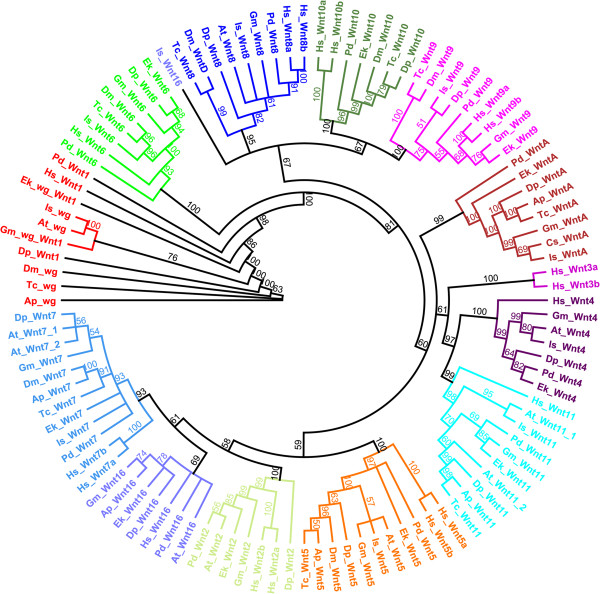
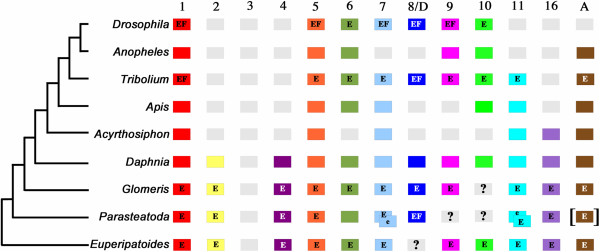
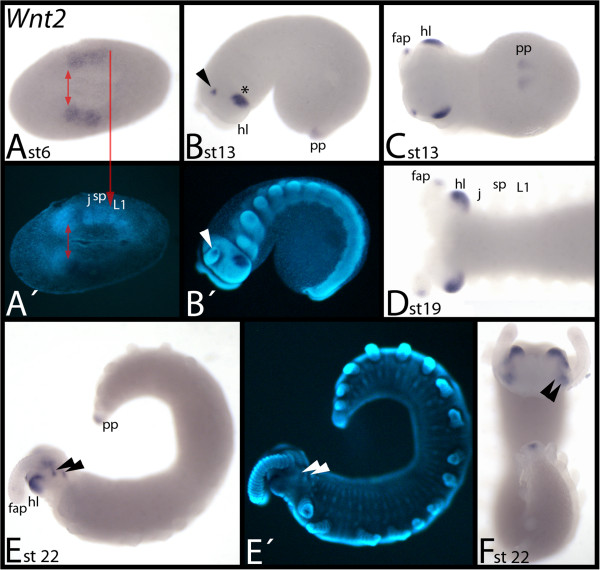
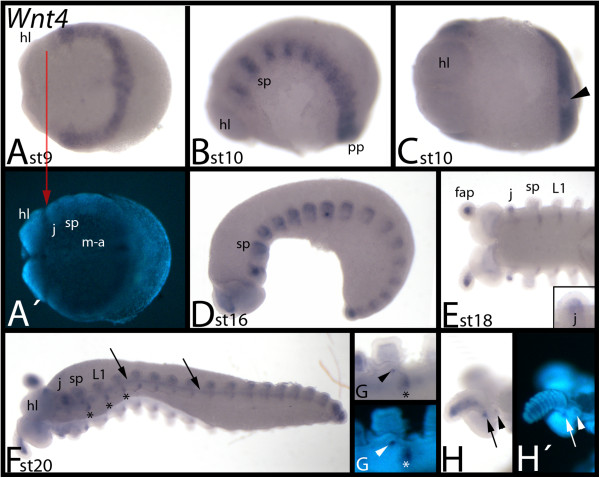
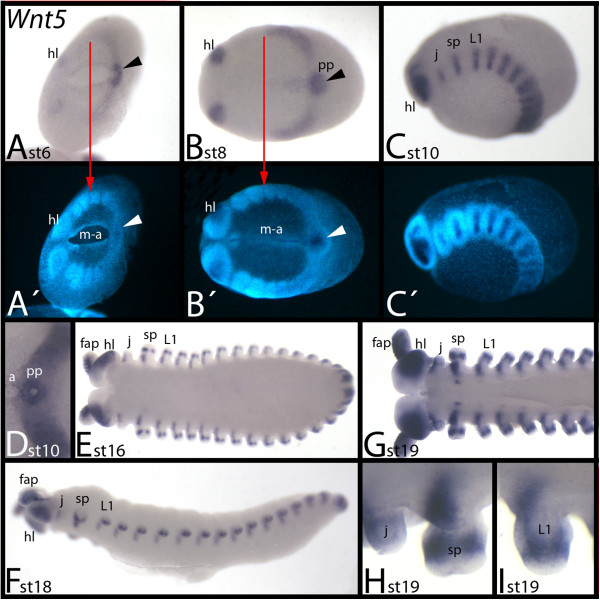
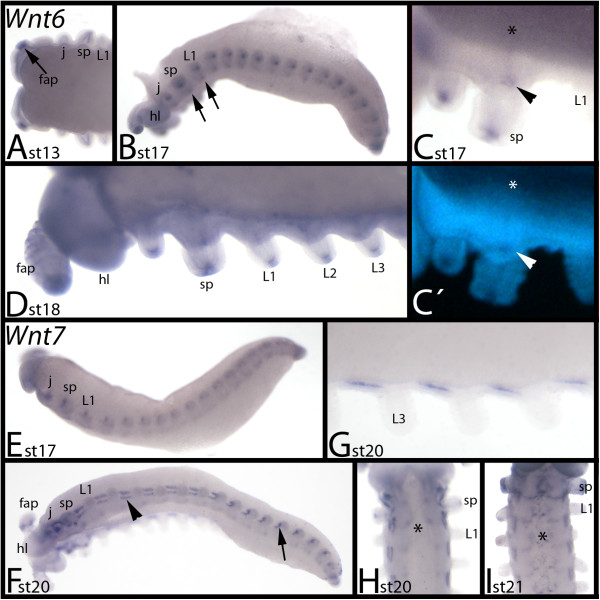
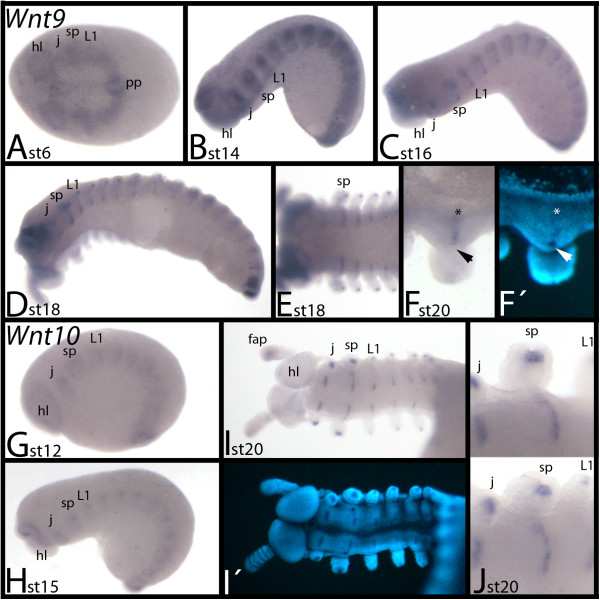
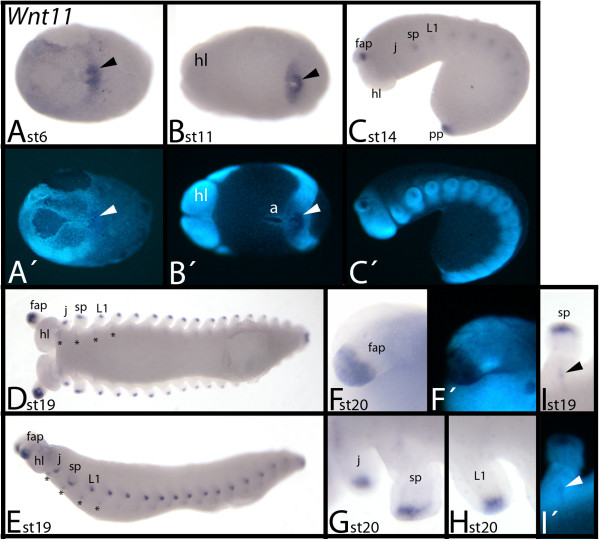
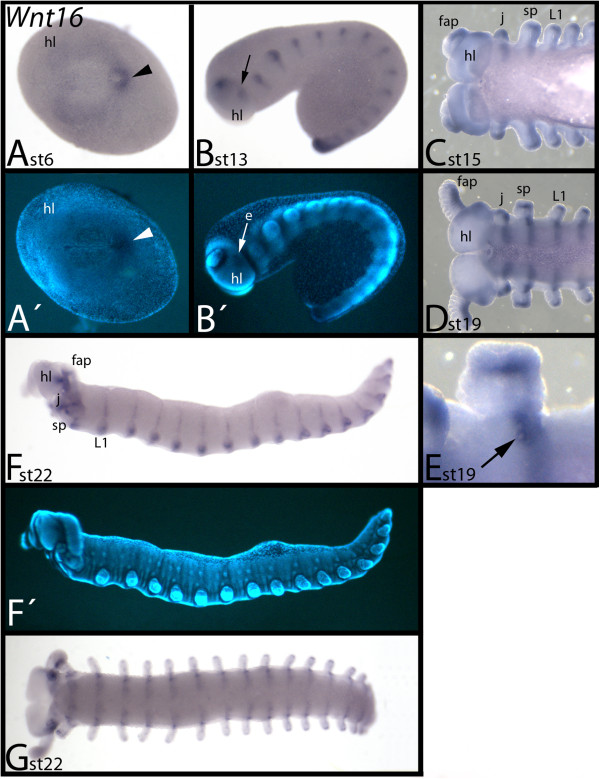
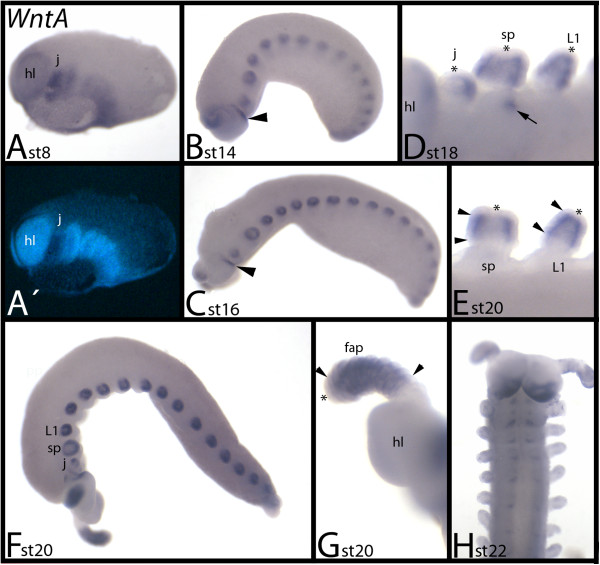
We screened the embryonic transcriptome of the onychophoran Euperipatoides kanangrensis and found that at least 11 Wnt genes are expressed during embryogenesis. These genes represent 11 of the 13 known subfamilies of Wnt genes.
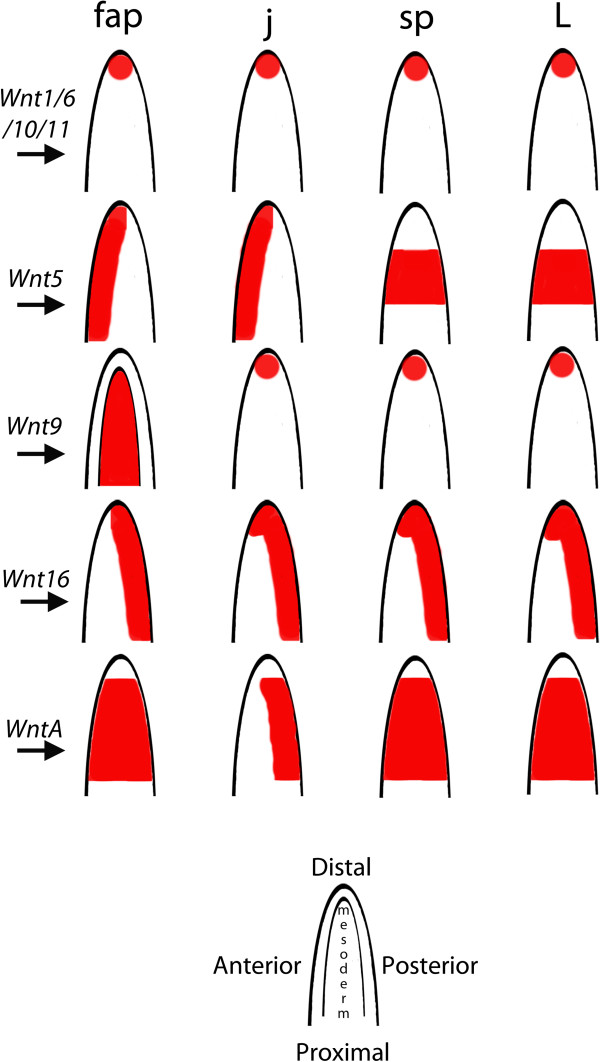
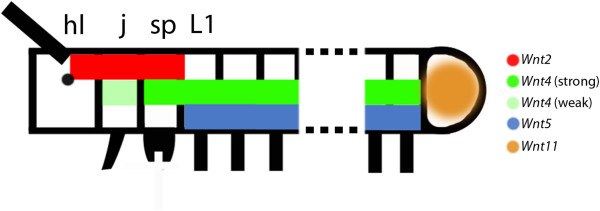
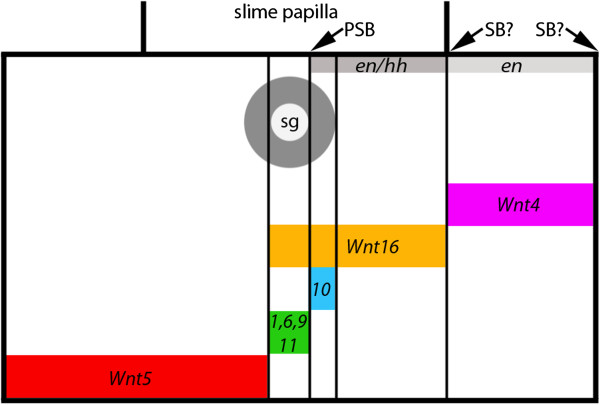
Many onychophoran Wnt genes are expressed in segment polarity gene-like patterns, suggesting a general role for these ligands during segment regionalization, as has been described in arthropods. During early stages of development, Wnt2, Wnt4, and Wnt5 are expressed in broad multiple segment-wide domains that are reminiscent of arthropod gap and Hox gene expression patterns, which suggests an early instructive role for Wnt genes during E. kanangrensis segmentation.
环节动物是节肢动物的可能姊妹群,从发育的角度来看,节肢动物是研究最多的动物门之一。对果蝇黑腹果蝇的开创性研究以及对其他节肢动物的后续研究揭示了 Wnt 基因在这些动物的许多发育过程中的重要作用。
我们筛选了有爪动物 Euperipatoides kanangrensis 的胚胎转录组,发现至少有 11 个 Wnt 基因在胚胎发生过程中表达。这些基因代表了已知的 13 个 Wnt 基因亚家族中的 11 个。
许多有爪动物的 Wnt 基因以与体节极性基因类似的模式表达,表明这些配体在体节区域化过程中具有普遍作用,正如在节肢动物中所描述的那样。在发育的早期阶段,Wnt2、Wnt4 和 Wnt5 在广泛的多个体节宽域中表达,类似于节肢动物的缺口和 Hox 基因表达模式,这表明 Wnt 基因在 E. kanangrensis 体节形成过程中具有早期的指导作用。