Wang Limei, Li Longhui, Chen Xi, Tian Xin, Wang Xiaoke, Luo Geping
State Key Laboratory of Desert and Oasis Ecology, Xinjiang Institute of Ecology and Geography, Chinese Academy of Sciences, Urumqi, China.
Institute of Forest Information Resource Techniques, Chinese Academy of Forestry, Beijing, China.
PLoS One. 2014 Apr 7;9(4):e93566. doi: 10.1371/journal.pone.0093566. eCollection 2014.
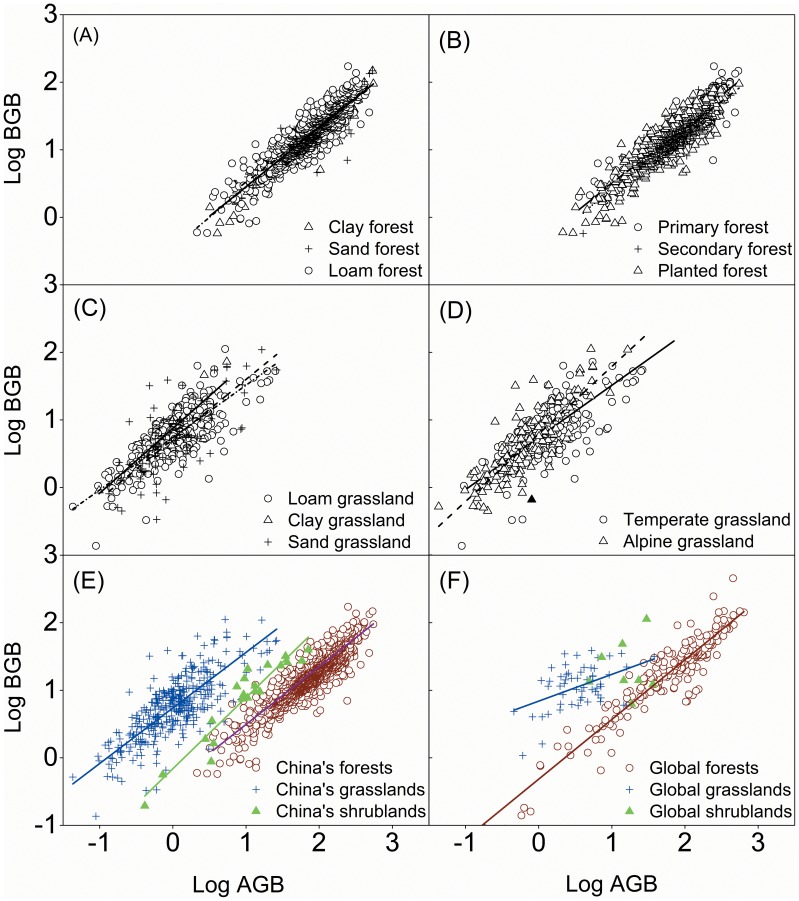
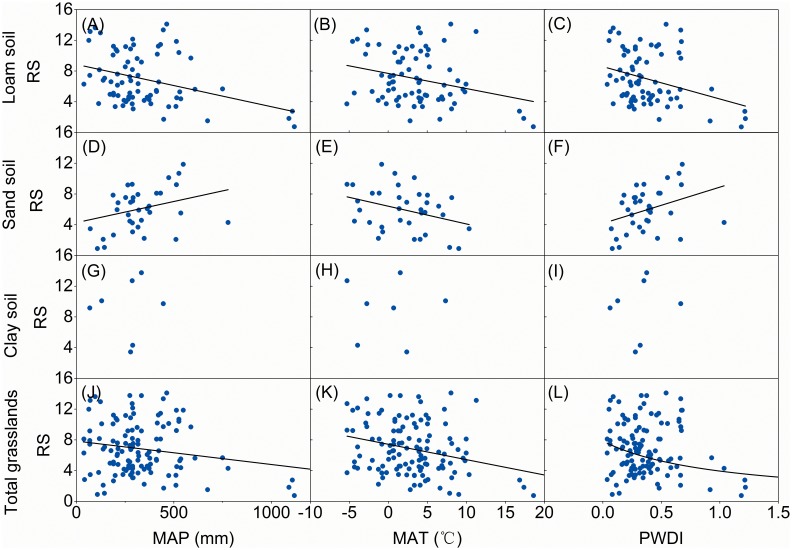
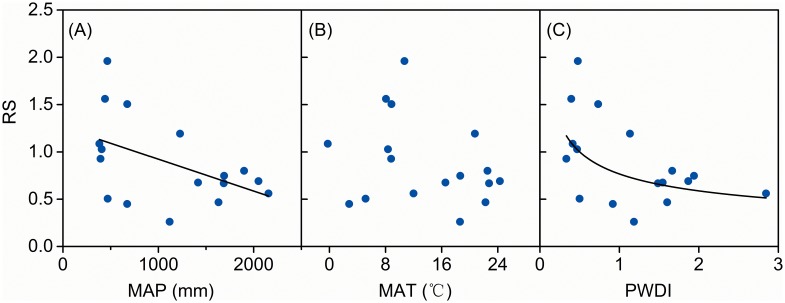
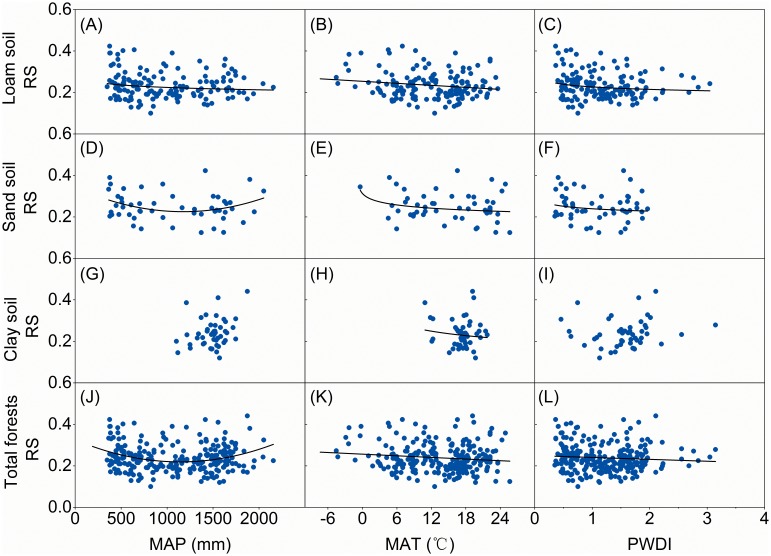
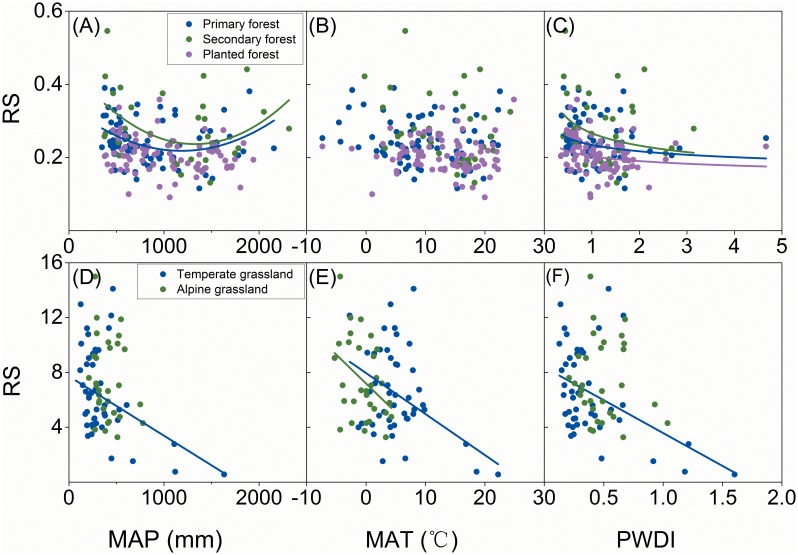
Root to shoot ratio (RS) is commonly used to describe the biomass allocation between below- and aboveground parts of plants. Determining the key factors influencing RS and interpreting the relationship between RS and environmental factors is important for biological and ecological research. In this study, we compiled 2088 pairs of root and shoot biomass data across China's terrestrial biomes to examine variations in the RS and its responses to biotic and abiotic factors including vegetation type, soil texture, climatic variables, and stand age. The median value of RS (RSm) for grasslands, shrublands, and forests was 6.0, 0.73, and 0.23, respectively. The range of RS was considerably wide for each vegetation type. RS values for all three major vegetation types were found to be significantly correlated to mean annual precipitation (MAP) and potential water deficit index (PWDI). Mean annual temperature (MAT) also significantly affect the RS for forests and grasslands. Soil texture and forest origin altered the response of RS to climatic factors as well. An allometric formula could be used to well quantify the relationship between aboveground and belowground biomass, although each vegetation type had its own inherent allometric relationship.
根冠比(RS)通常用于描述植物地下部分与地上部分之间的生物量分配。确定影响根冠比的关键因素并阐释根冠比与环境因素之间的关系,对于生物学和生态学研究而言至关重要。在本研究中,我们汇总了中国陆地生物群落中2088对根生物量与地上生物量数据,以研究根冠比的变化及其对生物和非生物因素(包括植被类型、土壤质地、气候变量和林龄)的响应。草地、灌丛和森林的根冠比中位数(RSm)分别为6.0、0.73和0.23。每种植被类型的根冠比范围都相当广。研究发现,所有三种主要植被类型的根冠比值均与年平均降水量(MAP)和潜在水分亏缺指数(PWDI)显著相关。年平均温度(MAT)也对森林和草地的根冠比有显著影响。土壤质地和森林起源也改变了根冠比对气候因素的响应。尽管每种植被类型都有其固有的异速生长关系,但一个异速生长公式可用于很好地量化地上生物量与地下生物量之间的关系。