Cheng Cheng-I, Lin Yu-Chun, Tsai Tzu-Hsien, Lin Hung-Sheng, Liou Chia-Wei, Chang Wen-Neng, Lu Cheng-Hsien, Yuen Chun-Man, Yip Hon-Kan
Division of Cardiology, Department of Internal Medicine, Kaohsiung Chang Gung Memorial Hospital, No. 123, Ta-Pei Road, Niao-Song, Kaohsiung City 83301, Taiwan ; Chang Gung University College of Medicine, Kaohsiung City 83301, Taiwan.
Chang Gung University College of Medicine, Kaohsiung City 83301, Taiwan ; Department of Neurology, Kaohsiung Chang Gung Memorial Hospital, Kaohsiung City 83301, Taiwan.
Biomed Res Int. 2014;2014:214587. doi: 10.1155/2014/214587. Epub 2014 Feb 27.
It has been reported that leukocyte ROCK activity is elevated in patients after ischemic stroke, but it is unclear whether leukocyte ROCK activity is associated with clinical outcomes following acute stroke events. The objective of this study is to investigate if leukocyte ROCK activity can predict the outcomes in patients with acute ischemic stroke.
We enrolled 110 patients of acute ischemic stroke and measured the leukocyte ROCK activity and plasma level of inflammatory cytokines to correlate the clinical outcomes of these patients.
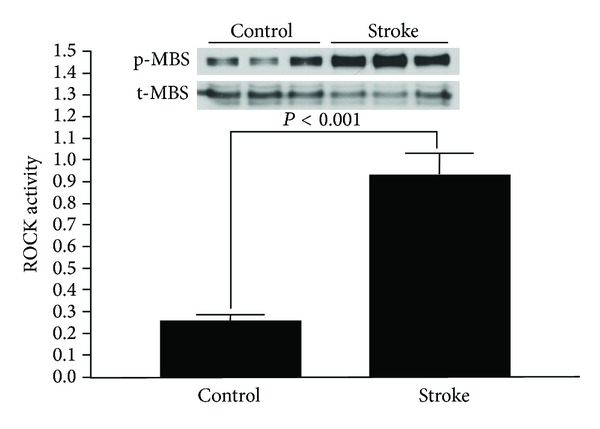
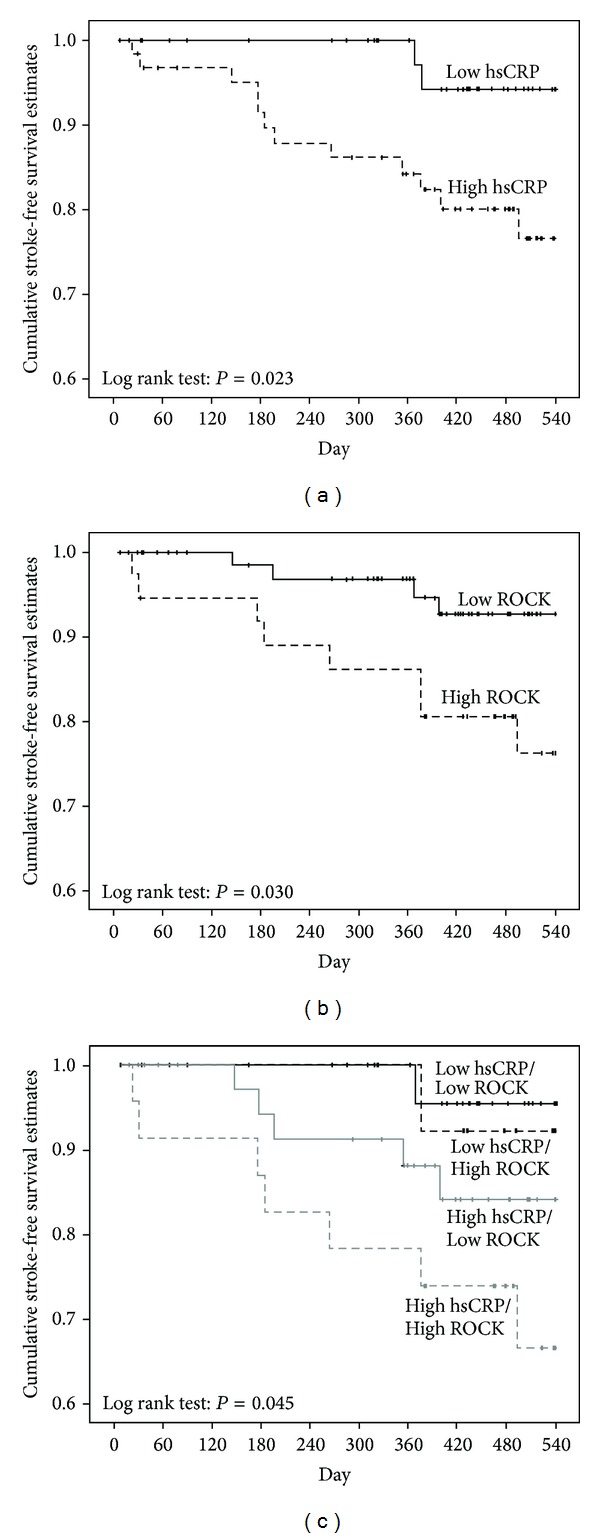
The leukocyte ROCK activity at 48 hours after admission in acute ischemic stroke patients was higher as compared to a risk-matched population. The leukocyte ROCK activity significantly correlated with National Institute of Health Stroke Scale (NIHSS) difference between admission and 90 days after stroke event. Kaplan-Meier survival estimates showed lower stroke-free survival during follow-up period in patients with high leukocyte ROCK activity or plasma hsCRP level. Leukocyte ROCK activity independently predicted the recurrent stroke in patients with atherosclerotic stroke.
This study shows elevated leukocyte ROCK activity in patients with ischemic stroke as compared to risk-matched subjects and is an independent predictor for recurrent stroke.
据报道,缺血性中风患者白细胞的ROCK活性升高,但尚不清楚白细胞ROCK活性是否与急性中风事件后的临床结局相关。本研究的目的是调查白细胞ROCK活性是否能够预测急性缺血性中风患者的预后。
我们招募了110例急性缺血性中风患者,测量了他们白细胞的ROCK活性和血浆炎症细胞因子水平,以关联这些患者的临床结局。
与风险匹配人群相比,急性缺血性中风患者入院后48小时白细胞的ROCK活性更高。白细胞ROCK活性与中风事件入院时和90天后的美国国立卫生研究院卒中量表(NIHSS)差异显著相关。Kaplan-Meier生存估计显示,白细胞ROCK活性高或血浆hsCRP水平高的患者在随访期间无中风生存率较低。白细胞ROCK活性独立预测动脉粥样硬化性中风患者的复发性中风。
本研究表明,与风险匹配的受试者相比,缺血性中风患者白细胞的ROCK活性升高,且是复发性中风的独立预测因子。